
Facebook crypto ads are paid promotions that run across Meta platforms, including Facebook, Instagram, Messenger, and Audience Network. They are used to promote anything connected to cryptocurrency.
And that part is broader than most people think. It’s not only about exchanges or token launches. It also includes wallets, DeFi platforms, mining hardware, blockchain services, crypto education, and even news content.
A common mistake is assuming the rules only apply to crypto exchanges. In reality, Meta’s policy covers a much wider range of crypto-related products. If your project has any link to crypto, it can fall under review.
Even simple things like a tax reporting tool or a blockchain event page are included.
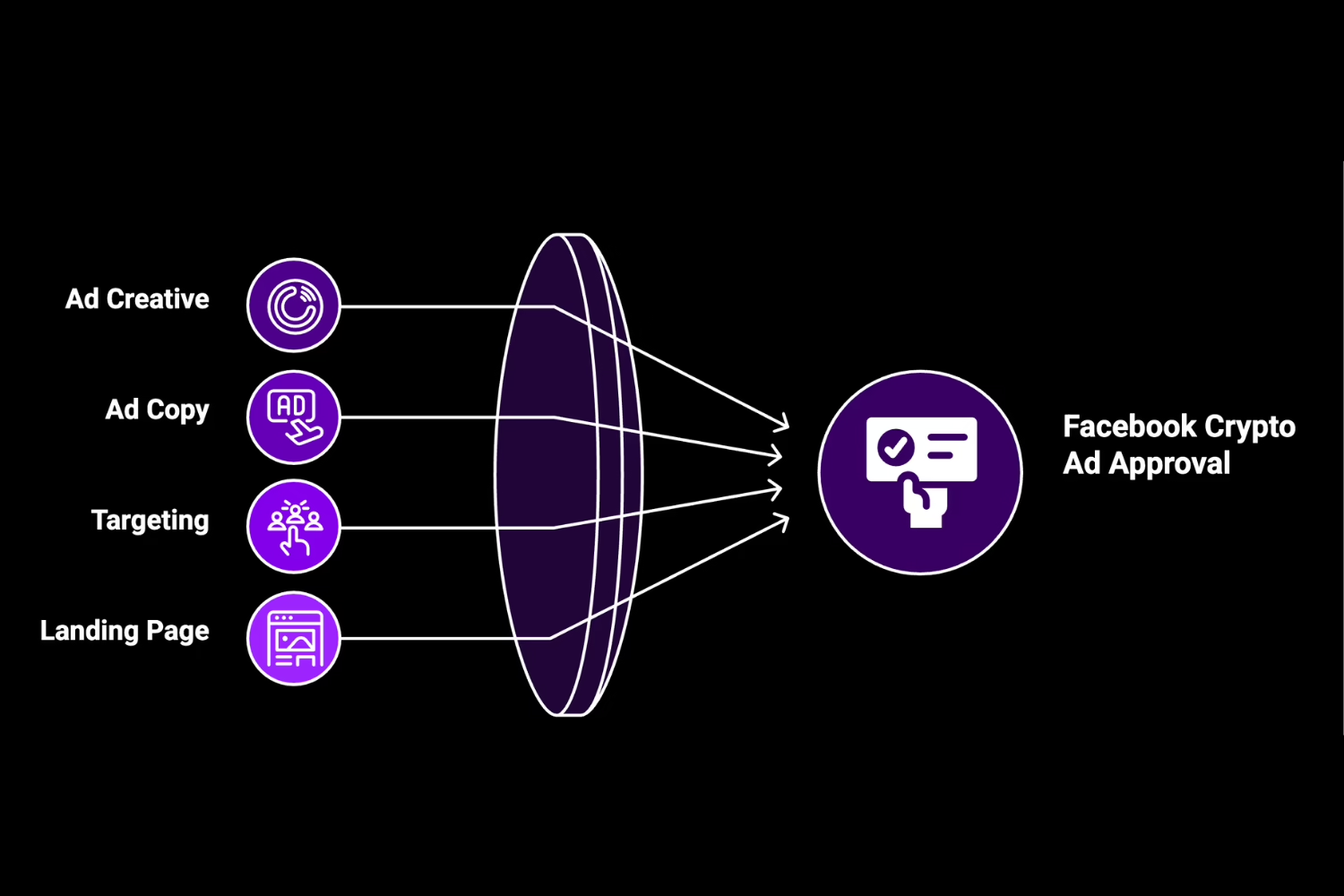
What often surprises teams is how Meta now reviews ads. Since March 2026, they have not evaluated ads separately anymore. They look at everything together, including your ad creative, copy, targeting, and landing page.
If one part feels weak or unclear, especially the landing page, the entire ad can get rejected even if the ad itself is fine.
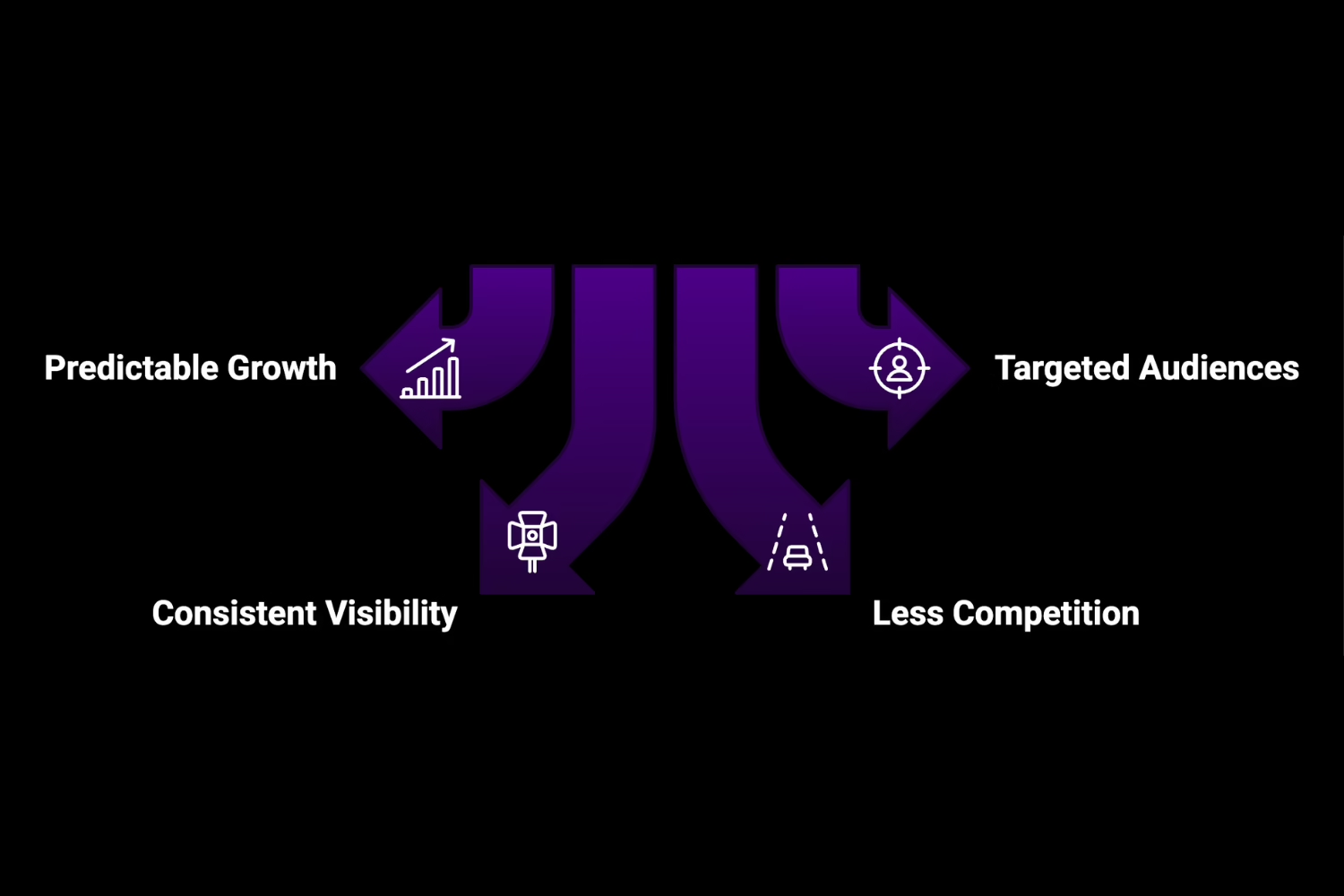
At first, Facebook might not seem like the obvious choice for crypto marketing. But if you can get through the compliance layer, it gives you something most Web3 channels cannot: predictable, scalable growth.
Facebook still offers access to around 3.07 billion monthly active users in 2026, which makes it one of the most powerful platforms for crypto marketing. However, you are not just reaching a big audience. You are consistently reaching the right people. What makes the real difference is targeting. You can take your highest value users, like people who completed KYC or made a deposit, and build Lookalike Audiences from them. Then you refine that audience with crypto and fintech interests. This means you are not guessing who might be interested. You are actively finding more users who behave like your best ones.
There is also a simple distribution problem. Your audience is already on Facebook and Instagram, especially individuals aged 18 to 45, but organic reach is around 1 to 2%. So if you want consistent visibility, you cannot rely on organic alone. Pairing Facebook with top Web3 social media platforms can help you reach more people across both mainstream and crypto-native audiences.
And then there is the part most people miss. Because Meta is strict with crypto, many projects never get approved or give up early. If you do it properly, you end up in a less crowded space. You are still paying higher CPCs, with finance averaging around $3.77, but you are competing with fewer serious advertisers. That changes the dynamics in your favor.
In simple terms, Facebook ads give you control. Instead of relying only on community growth or waiting for attention, you can actively reach, test, and scale what works. For crypto projects that want consistent user acquisition, that control is hard to replace.
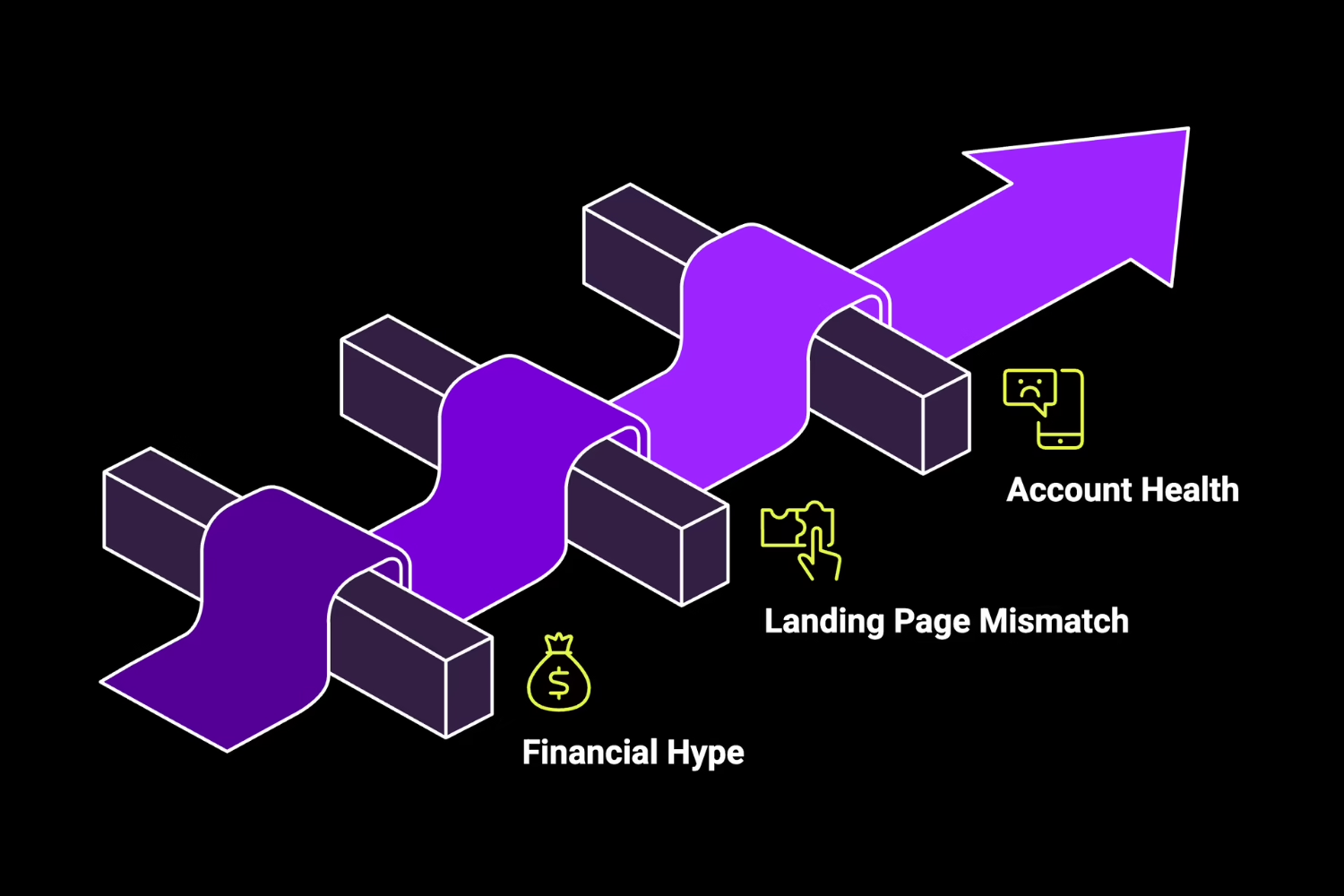
Getting approval from Meta is just the first step. Every ad still goes through automated and human review, and the system has become stricter in 2026. Meta now analyzes your text, visuals, video, and landing page together, so everything needs to be consistent.
Knowing where most ads fail can save you time, budget, and repeated rejections.
Avoid Financial Hype in Your Messaging
One of the fastest ways to get rejected is using strong financial claims like “guaranteed returns,” “risk-free,” or “double your money.” These are clear red flags.
But even softer language can be risky. Meta’s systems now detect meaning, not just exact words. For example, a line like “watch your portfolio grow” combined with a rising chart in your creative can still trigger a rejection.
The safest approach is to stay factual. Explain what your product does instead of what users might earn. And always include a risk disclaimer in the ad itself, not only on your website.
- Good example: “Buy, sell, and manage digital assets through our regulated crypto platform. Cryptocurrency investments involve risk.”
- Bad example: “Start today and watch your investment grow with guaranteed profits.”
Make Sure Your Landing Page Matches Your Ad
A lot of rejections happen here. Your ad can be fully compliant, but if the landing page feels different, the whole campaign can still be rejected.
Your landing page should match the same domain used in your authorization, include a visible risk disclaimer, and use the same messaging style as your ad. It also needs to load properly on mobile.
Since March 2026, Meta has reviewed the ad and landing page as a single unit. So if one side does not match, the entire setup can fail.
Avoid broken links, forced pop-ups, auto downloads, or redirects to other domains. These are small issues, but they often cause unnecessary rejections.
Keep Your Account Health Stable
Every rejected ad affects how Meta reviews your future campaigns. If rejections happen often, your account can lose trust, and new ads will face stricter checks.
You can track your account health score in Meta Business Suite under Account Quality. It helps to review it regularly and keep a simple compliance checklist before submitting ads.
Also, save ads that have already passed review and reuse their structure. It reduces risk and helps you stay consistent across campaigns.
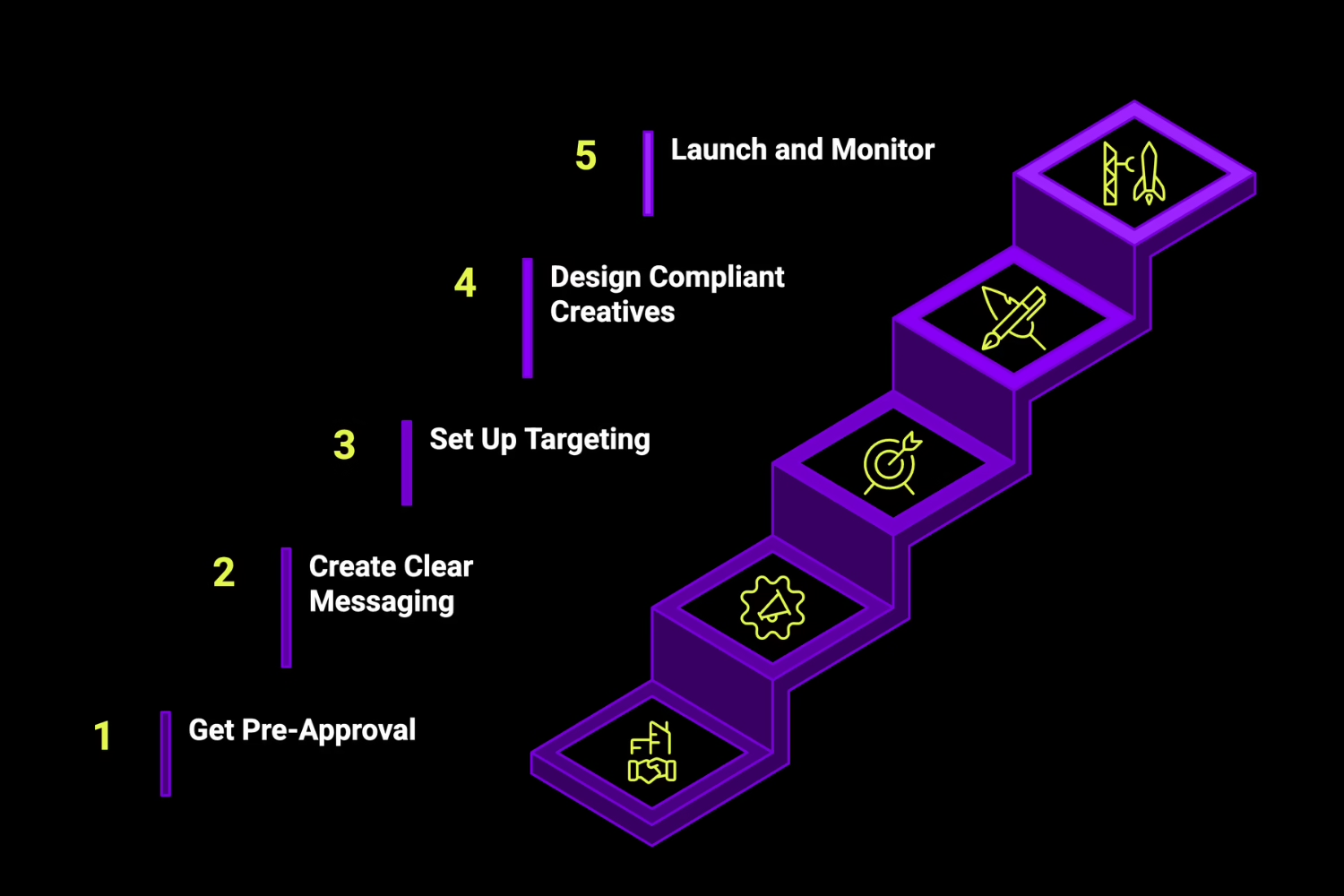
Running crypto ads on Facebook is very different from standard e-commerce or SaaS campaigns. The compliance layer is strict, and small mistakes can easily lead to rejections. But if you follow the right process, it is completely manageable for regulated businesses.
Here is a clear step-by-step workflow.
Step 1: Get Pre-Approval
Start in Meta Business Suite under the Authorization and Verification section. Find the cryptocurrency ads option, click “Request Authorization,” and complete the form.
You will need to select your licensed country, enter your business details, and choose the ad accounts you want to authorize. Then upload your regulatory license, business verification documents like incorporation papers or tax ID, and any supporting proof, such as custody insurance, if required.
You will also need to accept Meta’s Cryptocurrency Ads Addendum and complete domain verification.
Review usually takes 3 to 10 business days, but it can take longer if documents are missing or unclear. It is important to prepare everything before you submit, because incomplete applications reset the process.
Step 2: Create Clear, Responsible Messaging
Instead of hype or urgency, you should explain the product’s actual value. Crypto audiences respond better to transparency than aggressive marketing.
In many cases, community-focused campaigns perform better than return-focused ones. Ads that lead to Discord groups, newsletters, or Telegram communities usually face fewer compliance issues and build stronger long-term engagement. Having well-managed Discord Mods in place before you drive paid traffic also makes a difference, since new users who land in a chaotic server rarely convert or stick around.
If you are targeting EU users, your ads must also comply with the MiCA Article 29 rules. Promotional content must be clear, fair, and not misleading. Risk disclaimers should be visible in the creative itself, not only on the landing page.
Step 3: Set Up Targeting That Won’t Trigger Rejections
Crypto ads can only target users 18 and older, so make that your baseline.
From there, build audiences using crypto, blockchain, and fintech interests. Avoid stacking too many sensitive categories together. This is especially relevant to combinations that mix finance with unrelated, sensitive signals. Also, avoid behavioral signals like “day trading” or “retirement planning,” since these often trigger review issues.
For cold traffic, Lookalike Audiences based on high-quality users like verified KYC or first deposits usually perform better than broad website visitor lookalikes.
And always make sure you only target countries where your license is valid and approved.
Step 4: Design Compliant Creatives
Keep your creatives clean and simple. Product screenshots, app walkthroughs, security features, and educational visuals are usually the safest options for crypto ads.
Avoid using:
- Price charts showing rapid growth
- Profit screenshots or earnings claims
- “Guaranteed returns” messaging
- Countdown timers that create urgency
- “Get rich quick” language
- Rocket, moon, or other hype focused visuals
- Images that imply financial success or luxury lifestyles
Focus on:
- Product functionality
- Platform features
- User experience
- Security and compliance features
- Educational content
- Clear explanations of your service
Meta’s review system also checks whether your visuals match your ad copy. If your text is educational but your creative suggests financial gains, the ad may still be rejected.
Always include a visible risk disclaimer in the ad itself, not just on your website.
When choosing ad formats, start with static images or carousel ads, as they typically pass review more easily than video. If you use video, keep it short, clear, and focused on your product rather than potential investment outcomes.
Step 5: Launch, Monitor, Refine
Start with a small budget, usually around $50 to $150 per ad set per day. This gives the algorithm room to learn without risking large losses if something gets flagged.
Avoid scaling too quickly after approval, because sudden budget increases can trigger additional review for crypto campaigns.
Check account quality regularly during the first weeks. If something gets rejected, review the exact issue, fix it properly, and only then resubmit. If you simply resubmit without changes, it can hurt your account trust.
Another important thing is to focus on real outcomes, such as sign-ups, app installs, or completed KYC, rather than impressions or clicks.
Try to run campaigns consistently rather than in short bursts, since steady activity builds more stable account performance over time.
Paid ads work best when they are part of a broader strategy. Pairing your Facebook campaigns with a crypto press release at launch, for example, helps reinforce credibility and gives your audience multiple touchpoints before they convert.