
Web3 Storytelling: How to Effectively Tell Your Brand Story

Web3 Storytelling

The Web3 market could reach $41.45 billion by 2030, yet most projects today will not last that long. Not because their technology fails, but because few people outside the core team understand what the project does or why it matters.

Too often, brilliant teams launch products, post whitepapers full of jargon, and wonder why their community stays quiet. The problem is not the product. It is the story.

As an experienced Web3 marketing agency, we know that storytelling is what makes projects memorable. This guide shows you how to craft a brand narrative that builds trust, grows your community, and works even when the market turns red.

What Is Web3 Storytelling and Why Should Crypto Brands Have It?

What Is Web3 Storytelling

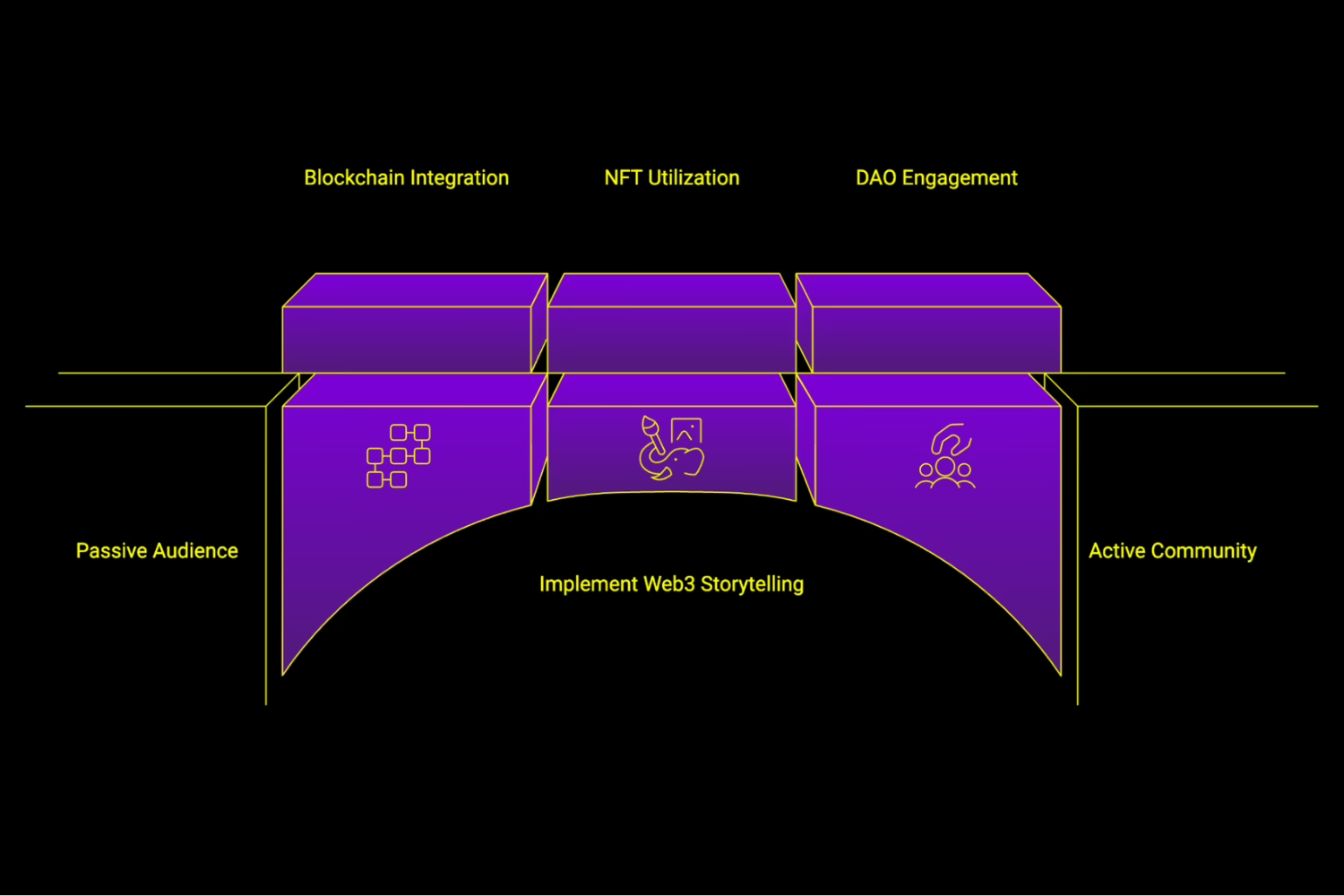
Web3 storytelling is the way brands build narratives using decentralized technologies such as blockchain, NFTs, and DAOs.

What makes it different from Web2 marketing is participation. In traditional marketing, a company creates a message and shares it with a passive audience. People consume the content and maybe share it. The interaction usually ends there.

In Web3, the audience is not passive. They are token holders, governance participants, and active community members. They can vote, contribute, and shape the direction of a project. This shift from audience as consumer to audience as co-creator completely changes how brands should communicate.

Here’s why this matters for crypto marketing specifically:

  • It turns technical complexity into something people can understand and connect with emotionally.
  • It transforms whitepapers into visions and roadmaps into meaningful journeys.
  • It builds trust that supports long term growth, even during bear markets.
  • It makes your brand stand out in a crowded market where thousands of projects compete for attention.

Your audience is not thinking about your consensus mechanism. They are thinking about their problems, their goals, and the future they want to be part of. Your story should speak to that.

A 2024 Nielsen survey found that 76% of marketers believe Web3 technologies will significantly transform digital advertising within the next five years. Brands that define their narrative early will have a clear advantage. If you are building crypto marketing strategies without a storytelling framework, you are already behind.
What Are the Unique Challenges of Web3 Storytelling?

What Are the Unique Challenges of Web3 Storytelling?

Web3 storytelling is not traditional brand communication with a blockchain angle. It operates under completely different conditions, and even experienced marketers struggle to adapt. 

Here are the main challenges.

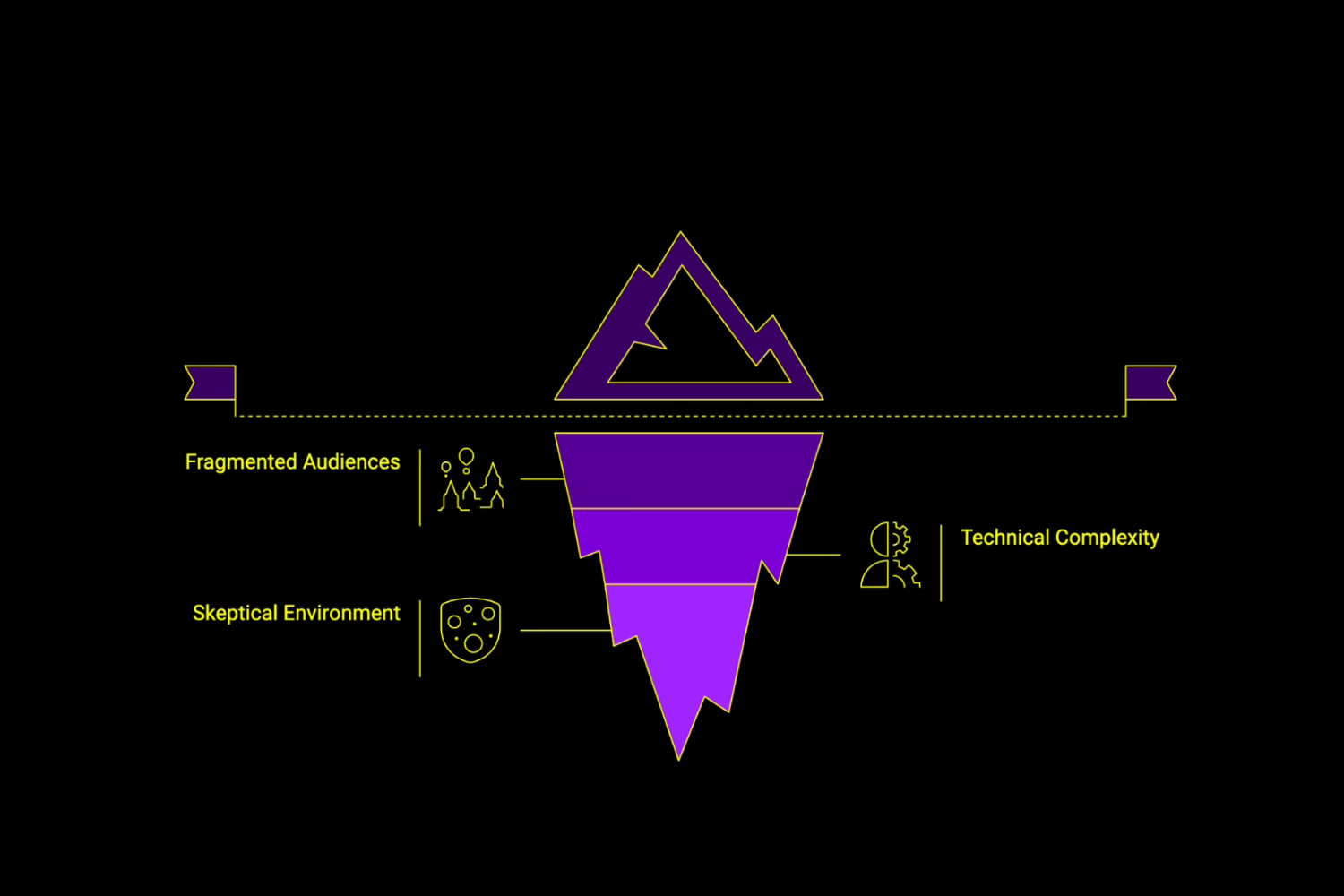
Fragmented Audiences and Platforms

Web3 users do not move through a neat marketing funnel. They might discover your project on X, review your code on GitHub, debate it in Telegram, participate in governance forums, and track activity on-chain all in the same week. There is no single entry point and no predictable path.

Each platform has its own culture. Crypto X (Twitter) rewards bold takes and fast commentary. Telegram groups often demand technical details and yield breakdowns. Communities around different ecosystems behave differently as well. Crypto Discord users tend to prefer fast and casual communication. Ethereum communities are often more formal and speculative. Cosmos users usually expect deep documentation before engaging.

At the same time, decentralized teams operate across time zones with contributors posting independently. This is why maintaining one consistent brand voice becomes difficult.

This is not just a channel issue. It is a messaging issue. Your core narrative must remain stable while tone and framing adapt to different environments. Many projects fail here and end up sounding like a different brand on every platform.

Technical Complexity vs. Accessibility

Your audience is radically diverse. Some users understand advanced tokenomics and DeFi mechanics. Others are still learning how wallets work.

Many teams respond by oversimplifying their messaging. That often alienates experienced users without truly helping newcomers. The better approach is layered communication. Beginners should be able to grasp the core idea quickly, while experienced users can explore deeper technical details if they choose.

When updates are too technical, people disengage. When messaging feels shallow, they lose respect. The goal is accessibility without condescension. Projects that manage this balance tend to build stronger and more inclusive communities.

Building Trust in a Skeptical Environment

The industry’s history of hacks, rug pulls, and failed promises means that every new project starts with skepticism around it. Traditional marketing signals such as celebrity endorsements or flashy campaigns often raise more questions than confidence.

In Web3, credibility comes from transparency, consistent delivery, open communication, and token structures that match your stated values. If your narrative emphasizes community ownership, your governance and allocation model must reflect that. Storytelling in this space only works when it aligns with verifiable actions.

How to Create Effective Web3 Storytelling for Your Crypto Brand?

Now that we understand the challenges, let’s focus on how to actually do this well. No matter the size of your project, one rule matters more than anything else.

Position Your Audience First

How to Create Effective Web3 Storytelling for Your Crypto Brand

Your audience should be the hero of the story. Your brand should be the guide that helps them succeed.

Many founders get this wrong. They talk about what they built, how advanced their tech is, or how experienced the team is. That makes the company the main character. But people do not connect with brands that only talk about themselves.

We can highlight 4 common framing approaches in Web3 brand narratives:

  1. Company-focused messaging talks mostly about achievements and features. It often sounds impressive, but it does not make the audience feel involved.
  2. Founder-focused messaging centers on the founder’s journey. This can work if it connects to the audience’s goals, but it can easily become too personal and lose relevance.
  3. User-focused messaging puts the community first. The user becomes the hero, and the product becomes the tool that helps them grow, earn, build, or participate. In Web3, this approach works especially well because people value ownership and involvement.
  4. Movement-focused messaging connects the project to a bigger mission, such as building a decentralized internet or a fairer financial system. This can be powerful, but only if real actions support it. Big ideas without proof quickly lose credibility.

A common mistake is assuming that users care about the same things the founder cares about. That is not always true. If your audience wants better analytics tools, but your messaging focuses on political or ideological themes, the story will not connect.

Here is a simple test. Look at your website or social channels and ask: who is the main character? If the answer is your team or your technology, your message needs adjustment.

Pro Tip: Before writing any brand copy, answer two questions clearly. Who exactly is your audience? And what real change does your project create for them? When you define those two things, your storytelling becomes much easier and much stronger.

Master the Art of the Hook
How to Create Web3 Storytelling by Master the Art of the Hook

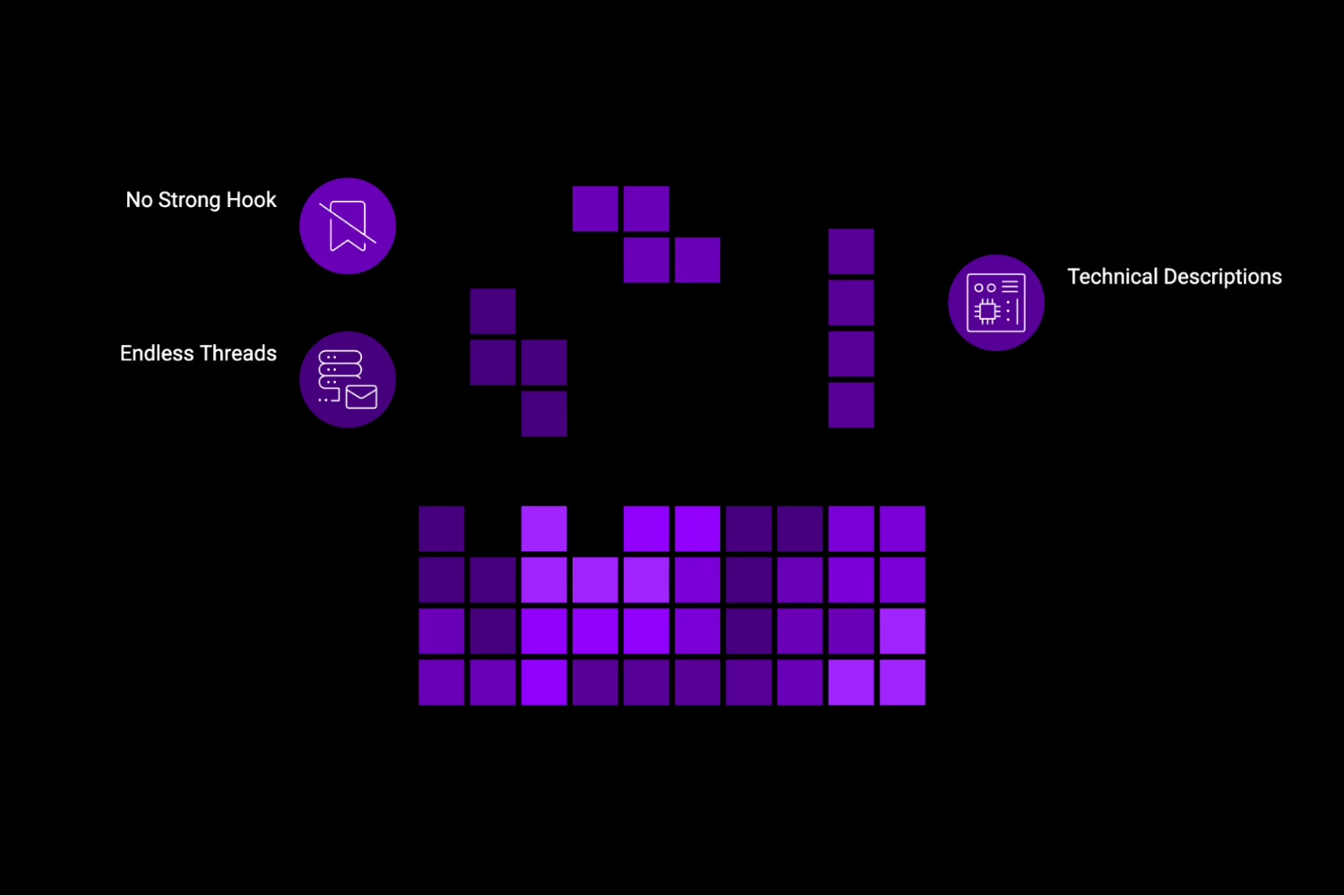
Attention in Web3 is limited. Your audience scrolls through endless threads, Discord messages, and Telegram chats every day. If your message does not catch interest quickly, it gets ignored.

Every story maps to one of two archetypes:

  • The hero leaves the familiar world to grow (your user adopts your product, and their reality changes)
  • Something unfamiliar arrives and disrupts the status quo (your project enters a broken market and changes the game)

A strong hook creates curiosity, tension, or surprise. It makes the reader feel something before they’ve even processed the information. And the best Web3 hooks layer multiple narrative devices at once:

  • Reference an industry-shaking event (a market crash, a regulatory crackdown, a major exploit)
  • Add personal foresight (“We saw this coming before the dust settled”)
  • Reveal the pivot (“That’s exactly why we built what we built”)

Think about where your current brand messaging starts. Does it open with a technical description of what you built? Or does it open with the tension, the problem, the broken status quo that your audience already feels in their gut?

If your first line is about your technology, you’re losing people before they ever get to the good stuff. Start with the tension. Build from there.

Develop Your Core Narratives
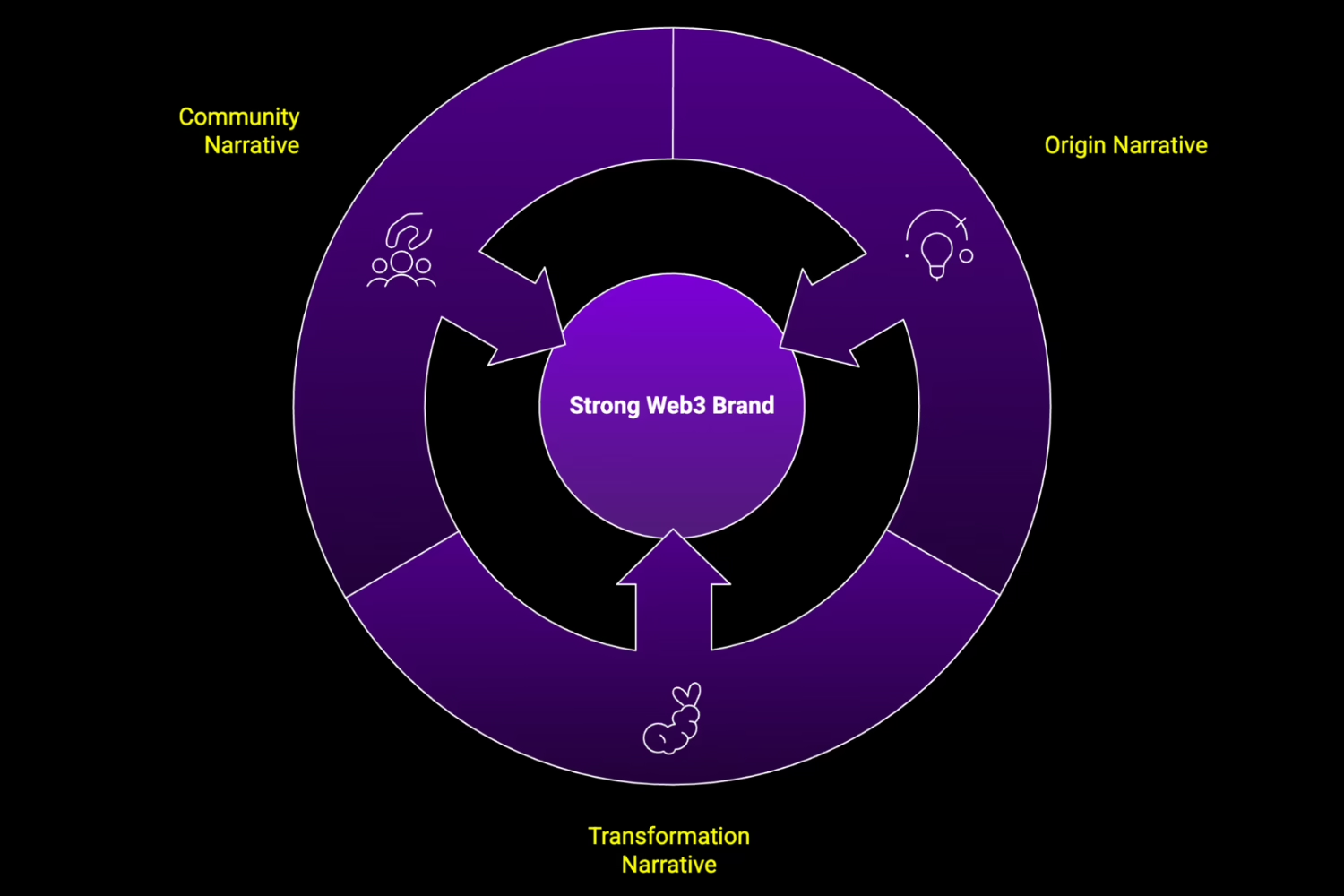
Develop Your Core Narratives for web3 storytelling

A strong Web3 brand does not rely on one single story. It builds a small system of clear, connected narratives that stay consistent across every platform.

Every crypto brand should define 3 core narratives.

  1. Origin narrative: This explains why your project exists. It should focus on the real problem that pushed you to build. It is not about the year you launched or the size of your team. It is about the broken system you saw and decided to fix. For example, instead of saying you started a company in 2023, explain the gap in the market or the repeated failure that made your solution necessary.
  2. Transformation narrative: This shows what changes for the user. What becomes easier, safer, or more profitable after they adopt your product? Paint a clear picture of the “after” state. People are not buying features. They are buying a better outcome.
  3. Community narrative: In Web3, users are not just customers. They are contributors, voters, builders, and advocates. Your story should explain how people can participate and shape the future of the project. If your messaging does not include a clear role for the community, it misses a core part of what makes Web3 different.

Your token structure must support your story. If you claim to prioritize community ownership but most tokens are controlled by insiders, people will notice. In crypto, data is public. If your structure contradicts your messaging, credibility disappears quickly.

To stay consistent across platforms, keep your core narratives stable but adjust how you present them:

  • For journalists and media, focus on clear data, proof, and industry relevance.
  • For your Discord or Telegram community, highlight participation, updates, and recognition.
  • For investors, emphasize long-term vision, measurable progress, and a realistic roadmap.

When your origin, transformation, and community narratives all support each other, your brand feels clear and intentional instead of scattered.

What's the Structure of Storytelling for Web3 Brands?

To build a strong Web3 narrative, it helps to think in terms of structure. Your brand story should not change depending on where it appears. Instead, it should follow a clear framework that works across your pitch deck, website, investor materials, and community channels.

The Two Pillars:

  1. Framing means deciding whose journey your story follows. In Web3, the most effective approach is to position your audience as the hero and your brand as the guide that supports their progress. When your messaging consistently reflects this perspective, your communication feels relevant and personal rather than self-focused.
  2. Hooks determine how you capture attention and build emotional momentum. A strong hook usually begins with a real problem, shows that you recognized it early, and explains why your solution exists. This structure works across formats, whether you are writing a short post, a blog article, or delivering a keynote presentation.

The Four-Part Narrative Arc:

  1. The problem statement should clearly describe the broken reality that existed before your project. This part needs to be specific and grounded in real user experiences so that your audience immediately recognizes the tension.
  2. The change or catalyst introduces what your project makes possible. The emphasis should be on the shift in circumstances, not on a technical feature list. Technology supports the transformation, but it should not replace the explanation of why the change matters.
  3. The transformation paints a clear picture of what life looks like after adoption. This is where you describe the improved future your audience wants to experience and make that outcome feel tangible.
  4. The community role explains how users participate in shaping what comes next. In Web3, audiences are not just observers. They can vote, contribute ideas, support growth, and influence direction. Your narrative should clearly show how they become part of the ongoing story.

What Makes This Structure Uniquely Web3?

Web3 gives you narrative tools that don’t exist in traditional marketing:

  • Tokens reflect your brand story. Well-designed tokens show what your project values. For example, if you emphasize community ownership, your governance structure and token allocation should clearly reflect that principle.
  • NFTs help tell an evolving story. They can highlight milestones, represent changing roles, or give members a tangible way to engage with the project as it grows.
  • DAOs let your community shape the story. When members vote on decisions or funding, they are actively influencing the project instead of just following along.
  • On-chain transparency builds trust. Because data such as volume, usage, or transactions is publicly verifiable, your statements can be checked in real time, showing that your brand promises match measurable results.

Real-World Examples That Show This in Action:

1. Etherium

Ethereum never positioned itself as “we built a blockchain.” From day one, the narrative was about a movement for a more decentralized and fair internet. That purpose-driven framing is a big reason why Ethereum’s community remained loyal through multiple bear markets and countless competitors.

2. Polygon

Polygon (formerly Matic Network) positioned itself as the “Value Layer of the Internet,” bridging blockchain technology and real-world applications. Co-founder Jaynti Kanani’s journey from humble beginnings to building a multi-billion-dollar network added personal depth. Community-led programs like Developer Guilds and Village Wonders extended the narrative beyond the core team.

3. Bored Ape

Bored Ape Yacht Club created a fictional world where crypto-wealthy apes congregated in a yacht club. Silly? Maybe. But the narrative of exclusivity and belonging gave 10,000 NFT holders a shared identity. “The Bathroom,” a digital graffiti board only accessible to holders, reinforced community ownership of the story. Jimmy Fallon and Stephen Curry amplified what was already a resonant narrative.

4. DC

DC Comics’ Batman Bat Cowl Collection showed how even a legacy brand can do this. DC gave Web3 fans meaningful creative input while protecting Batman’s broader canon. The result: a community-created villain that appeared in actual mainstream DC comics. That’s genuine co-creation with real stakes.

How Web3 Marketing Agencies Help You with Web3 Storytelling

A Messari survey found that over 62% of Web3 startups launching a tokenized product worked with a dedicated marketing agency. That number keeps growing because most Web3 teams are strong builders but often struggle to communicate their value. Storytelling and narrative strategy require a different skill set than protocol development.

Here’s what a specialized Web3 marketing agency actually does for your storytelling:

Narrative Architecture 

They create core messaging that stays consistent across all platforms but adapts in tone depending on context. Your whitepaper, founder AMA, Discord announcements, and press coverage should all feel like one brand speaking to different audiences.

For example, when we helped launch Bron, a self-custody wallet. The challenge was not the technology, but perception and fear. The underlying narrative we built was simple: crypto will not achieve mainstream adoption if self-custody remains too complex and risky for everyday users.

We positioned the problem around a painful reality: someone can lose access to their private keys and instantly lose their entire savings. Not because of a hack, but because they lost a phone, upgraded a device, or misplaced a recovery phrase. That fragility creates fear, and fear blocks adoption.

Instead of leading with technical features, we built a brand story around usability, confidence, and real-world security. The message was clear: self-custody should not feel like a liability.

Audience Research

Agencies combine social listening, on-chain data, and community signals to understand how your audience actually behaves, rather than assuming they think like the team. Most narrative misfires happen because there is a gap between perception and reality.

In Bron’s case, we identified that developers often see private key ownership as empowerment, while average users see it as stress. Many users are afraid of making one small mistake that could cost them everything. That insight shaped the entire communication strategy.

Cross-Platform Consistency

They make sure your social media, PR outreach, community channels, and investor decks all tell the same story. It sounds obvious, but few teams execute this well.

When messaging changes from one platform to another, people get confused. Confusion leads to doubt. A strong agency makes sure the core message stays clear everywhere, even if the tone changes slightly for different audiences.

Token Launch Communication

Agencies align messaging with tokenomics so your story remains credible when the token goes live. If your private sale tells one story and your public sale tells another, trust suffers.

During a token launch, emotions run high, and small mistakes can damage credibility. Clear and consistent communication helps prevent misunderstandings about supply, utility, or long-term plans. When the story and the token model match, the project feels more trustworthy.

Media and Community Framing

They adjust storytelling for different audiences while keeping the core truth intact. Journalists, Discord communities, and institutional investors all require different approaches, but the narrative foundation stays the same.

For Bron, we worked with content creators to tell real-life stories instead of using technical language. One creator shared how a friend lost their entire crypto portfolio after upgrading their phone. They could not access their wallet again. There was no way to recover it. Years of savings were gone.

We also spoke about real safety risks. In some cases, people have been linked to their wallets publicly and then targeted in real life. These are serious and scary situations. By talking about these real examples, the message felt honest and relatable.

Only after showing these problems did we introduce Bron’s solution. The wallet was designed to reduce these risks while still giving users control of their assets.

Content Production at Scale

Agencies produce threads, blogs, AMAs, long-form guides, and educational content that explains complex products clearly, without oversimplifying.

Once the story was clear, every piece of content followed the same message. Creators did not just promote a wallet. They talked about real mistakes people make, real fear, and real loss. Then they showed how Bron was solving these issues.

This made the promotion feel natural and believable.

Strong storytelling is not about hype. It is about clarity. When your product is complex and your audience is mixed, a clear narrative becomes your biggest growth asset.

Narrative Architecture 

They create core messaging that stays consistent across all platforms but adapts in tone depending on context. Your whitepaper, founder AMA, Discord announcements, and press coverage should all feel like one brand speaking to different audiences.

A good example of this is our case of helping launch Bron, a self-custody wallet. The challenge was not the technology, but perception and fear. The underlying narrative we built was simple: crypto will not achieve mainstream adoption if self-custody remains too complex and risky for everyday users.

We positioned the problem around a painful reality: someone can lose access to their private keys and instantly lose their entire savings. Not because of a hack, but because they lost a phone, upgraded a device, or misplaced a recovery phrase. That fragility creates fear, and fear blocks adoption.

Instead of leading with technical features, we built a brand story around usability, confidence, and real-world security. The message was clear: self-custody should not feel like a liability.

Audience Research

Agencies combine social listening, on-chain data, and community signals to understand how your audience actually behaves, rather than assuming they think like the team. Most narrative misfires happen because there is a gap between perception and reality.

In Bron’s case, we identified that developers often see private key ownership as empowerment, while average users see it as stress. Many users are afraid of making one small mistake that could cost them everything. That insight shaped the entire communication strategy.

Cross-Platform Consistency

They make sure your social media, PR outreach, community channels, and investor decks all tell the same story. It sounds obvious, but few teams execute this well.

When messaging changes from one platform to another, people get confused. Confusion leads to doubt. A strong agency makes sure the core message stays clear everywhere, even if the tone changes slightly for different audiences.

Token Launch Communication

Agencies align messaging with tokenomics so your story remains credible when the token goes live. If your private sale tells one story and your public sale tells another, trust suffers.

During a token launch, emotions run high, and small mistakes can damage credibility. Clear and consistent communication helps prevent misunderstandings about supply, utility, or long-term plans. When the story and the token model match, the project feels more trustworthy.

Media and Community Framing

They adjust storytelling for different audiences while keeping the core truth intact. Journalists, Discord communities, and institutional investors all require different approaches, but the narrative foundation stays the same.

For Bron, we worked with content creators to tell real-life stories instead of using technical language. One creator shared how a friend lost their entire crypto portfolio after upgrading their phone. They could not access their wallet again. There was no way to recover it. Years of savings were gone.

We also spoke about real safety risks. In some cases, people have been linked to their wallets publicly and then targeted in real life. These are serious and scary situations. By talking about these real examples, the message felt honest and relatable.

Only after showing these problems did we introduce Bron’s solution. The wallet was designed to reduce these risks while still giving users control of their assets.

Content Production at Scale

Agencies produce threads, blogs, AMAs, long-form guides, and educational content that explains complex products clearly, without oversimplifying.

Once the story was clear, every piece of content followed the same message. Creators did not just promote a wallet. They talked about real mistakes people make, real fear, and real loss. Then they showed how Bron was solving these issues.

This made the promotion feel natural and believable.

Strong storytelling is not about hype. It is about clarity. When your product is complex and your audience is mixed, a clear narrative becomes your biggest growth asset.

Wrapping Up

Telling your story well is just as important as building your product. In Web3, people move fast, trust is low, and attention is hard to get. Even the best technology can be ignored if your audience does not understand why it matters.

A strong story shows your audience that they are the hero and your brand is there to help them achieve something important. Start with a hook that grabs attention, and build a story that includes three main parts: why the project started, how it changes things, and how the community can take part. Using Web3 tools like tokens, NFTs, DAOs, and on-chain proof makes your story real and lets people be part of it.

The best time to set up your story is before your next launch. Planning early makes sure your message is clear, consistent, and believable across all channels. Whether you do it yourself or work with an agency, having a clear story helps your project stand out, earn trust, and keep growing over time.

If you’re ready to get your storytelling right, reach out to our team for a free consultation. We’ll help you figure out where your narrative stands today and what it’ll take to make it stick.

Telling your story well is just as important as building your product. In Web3, people move fast, trust is low, and attention is hard to get. Even the best technology can be ignored if your audience does not understand why it matters.

A strong story shows your audience that they are the hero and your brand is there to help them achieve something important. Start with a hook that grabs attention, and build a story that includes three main parts: why the project started, how it changes things, and how the community can take part. Using Web3 tools like tokens, NFTs, DAOs, and on-chain proof makes your story real and lets people be part of it.

The best time to set up your story is before your next launch. Planning early makes sure your message is clear, consistent, and believable across all channels. Whether you do it yourself or work with an agency, having a clear story helps your project stand out, earn trust, and keep growing over time.

If you’re ready to get your storytelling right, reach out to our team for a free consultation. We’ll help you figure out where your narrative stands today and what it’ll take to make it stick.

FAQ

What Are Web3 Storytelling Elements?

Web3 storytelling is different because the audience is involved, not just watching. Key elements include community participation, tokens and NFTs for ownership, DAOs for voting, blockchain proof for transparency, and interactive formats that let the story change over time. These features make the audience feel like they are part of the story, not just readers.

What Are the 7 Elements of Digital Storytelling?

The classic elements are point of view, dramatic question, emotions, voice and tone, economy, pacing, and atmosphere. Web3 adds three more: ownership through tokens or NFTs, community participation, and on-chain proof. Together, these elements make stories engaging, interactive, and trustworthy.

What Are the 4 P’s of Storytelling?

The four P’s are people, place, plot, and purpose. People are the audience and characters, place is the setting, plot is the story arc from problem to change, and purpose is the reason the story matters. In Web3, the community is both the audience and the hero of the story.

What’s the Best Web3 Storytelling Method?

The best method is to make the audience the hero and the brand the guide. This creates an emotional connection and encourages the community to take part and share the story. Using layered hooks and a consistent narrative across platforms makes the story clear and memorable.

Who Is the “Hero” in a Web3 Narrative?

The hero is always the audience: users, token holders, or community members. The brand acts as the guide who helps them achieve something meaningful. When the audience is the hero, they feel ownership and are more likely to support and share the project.

How Can I Use NFTs for Storytelling?

NFTs can be part of the story, not just collectibles. They can represent story chapters, characters, or milestones and give holders ways to vote or unlock new content. This makes the story interactive and gives people a real connection to the project.

Table of Contents