Top 10 Web3 Social Media Platforms in 2026: Own Your Data, Earn Your Worth
- thekollab
- 15 min read
- What Are Web3 Social Media Platforms and How Do They Work?
- Top Web3 Social Media Platforms You Need to Know
- What Are the Benefits of Using Web3 Social Media Platforms?
- What are the Challenges of the Crypto Social Media Platforms?
- How to Empower Your Brand with Web3 Social Media Marketing
- What Are the Benefits of Using Web3 Social Media Platforms?
- The Bottom Line: Where Web3 Social Goes From Here
- FAQ
Mainstream social media platforms such as Facebook, Instagram, and TikTok might not be the go-to for a crypto project. On most of them, you are not even allowed to advertise your project.
Here are Web3 social media platforms that flip that script completely. Decentralized social media platforms were created by crypto users for crypto enthusiasts. Their goal is to provide timely updates, share new ideas, and monetize your insignis and ideas. At the moment, there are more than 50 web3 social platforms. Of course, their user base is not close to those of Facebook or Instagram, but here you can be sure your content reaches the right audience.
As a web3 marketing agency, we closely follow many crypto social media platforms to stay up-to-date. Based on our experience, we came up with a list of the top 10 Web3 social media dapps for 2026.
What Are Web3 Social Media Platforms and How Do They Work?
Before jumping to the list of the best Web3 social platforms, let’s discuss the differences between Web3 social media and traditional social media.
When talking about popular crypto social platforms, you probably think about X, Discord, or Telegram, and you are not wrong. Those play a significant role in the crypto community, but there are platforms that are exclusively for Web3.
To understand the difference between mainstream and Web3 social media, think of the first one as your landlord when renting an apartment. They set the rules, kick you out whenever they want, and sell your furniture (your data) to the highest bidder. When it comes to Web3 social media, you are in your own house. You make the rules and create value.
These platforms run on blockchain tech, which sounds complex but really just means three things:
- Data Ownership – Your content lives on-chain or in decentralized storage. No one can delete your account because you posted something controversial.
- Token Incentives – You get tokens from the value you create.
- Community Governance (DAOs) – Token holders vote on everything from feature updates to content policies. No more algorithm changes that tank your reach overnight.
We’re looking at a 51.9% compound annual growth rate. North America alone accounts for $2.9 billion of this market. That’s not speculation, that’s adoption.
Top Web3 Social Media Platforms You Need to Know
Now, let’s go to the main part. Our team has handpicked these web3 platforms. We have tested them personally. We considered the Blockchain platforms used, what features they offer, their limitations, and what they are best suited for.
Farcaster
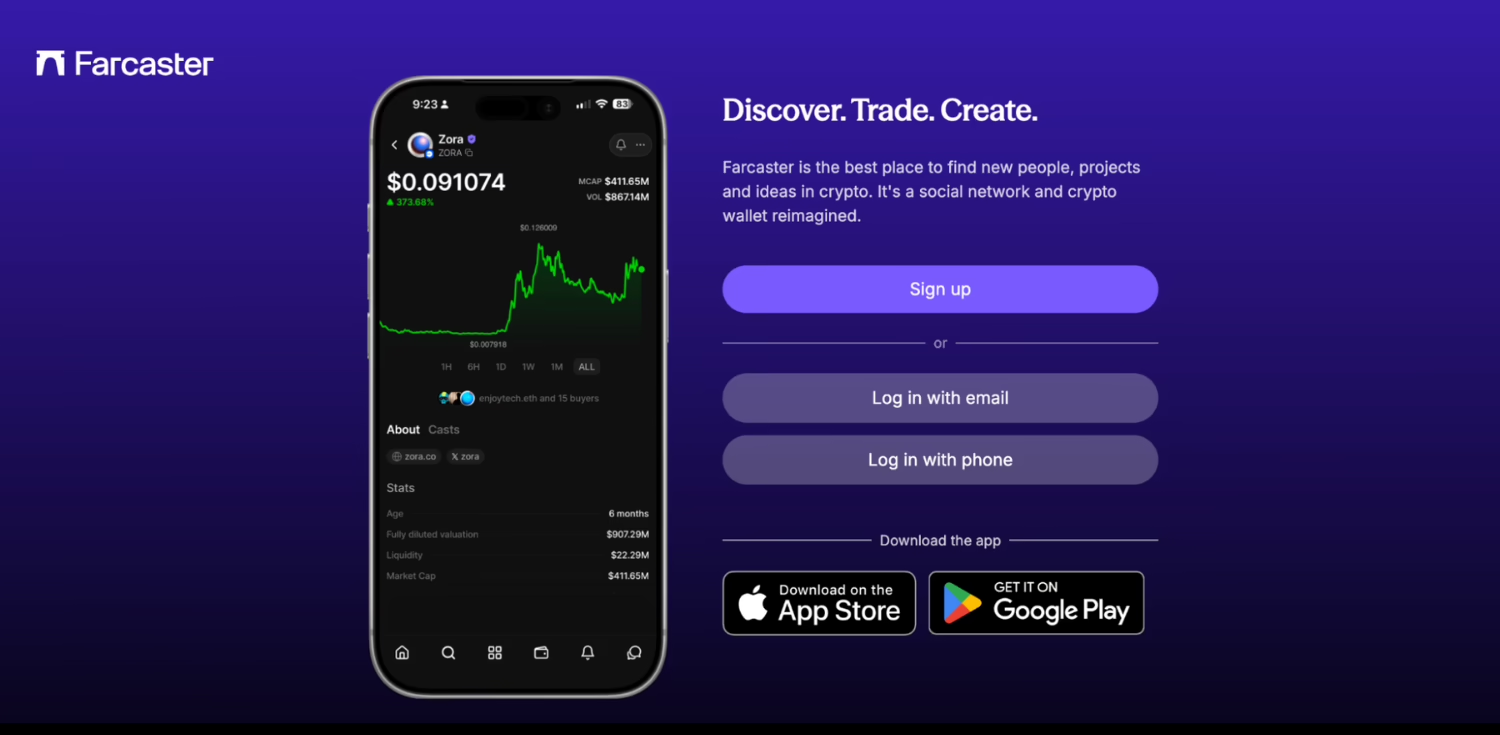
Farcaster is a decentralized social network built by ex-Coinbase devs Dan Romero and Varun Srinivasan. You may know this one as Warpcast. Farcaster runs on Optimism’s Layer 2 Ethereum. This isn’t another Twitter clone; it’s a protocol-first architecture that lets developers build multiple apps on the same social graph. It is a great platform for Web3 developers, crypto-native communities, and DAOs.
Blockchain: Optimism (Ethereum L2)
Key Features:
- Farcaster Pro at $120/year (sold 10,000 subscriptions in 6 hours, generating $1.2 million)
- Cross-chain support
- Weekly creator rewards distributing $25,000+ in USDC
Limitations: They raised $150 million at a $1 billion valuation, but daily active users hover around 40,000-60,000. That’s tiny compared to Web2, but these are high-value, crypto-native users.
Best for: Builders and Web3 teams who want direct access to crypto’s inner circle.
Lens Protocol
Next on our list is Lens Protocol. It was created by Aave’s team, the lending DeFi protocol. Lens’ unique feature treats every user profile as an NFT. This sounds weird until you realize it means true ownership and composability over your account. Lens Protocol provides infrastructure for creating decentralized social media platforms where users have full control over their content and data. This makes it great for crypto content creators and developers building social apps. Developers can build interconnected social apps.
Blockchain: Polygon (moving to ZK-powered chain)
Best for: Content creators, developers building social apps
Key Features:
- Modular smart contracts (plug-and-play social features)
- ENS addresses work as handles
- Profile portability (your followers come with you)
Limitations: Despite many great features for developers, it is not very user-friendly for other users, which is why it is not a mainstream platform.
Best for: Creators who want maximum flexibility and developers building social apps.
Steemit
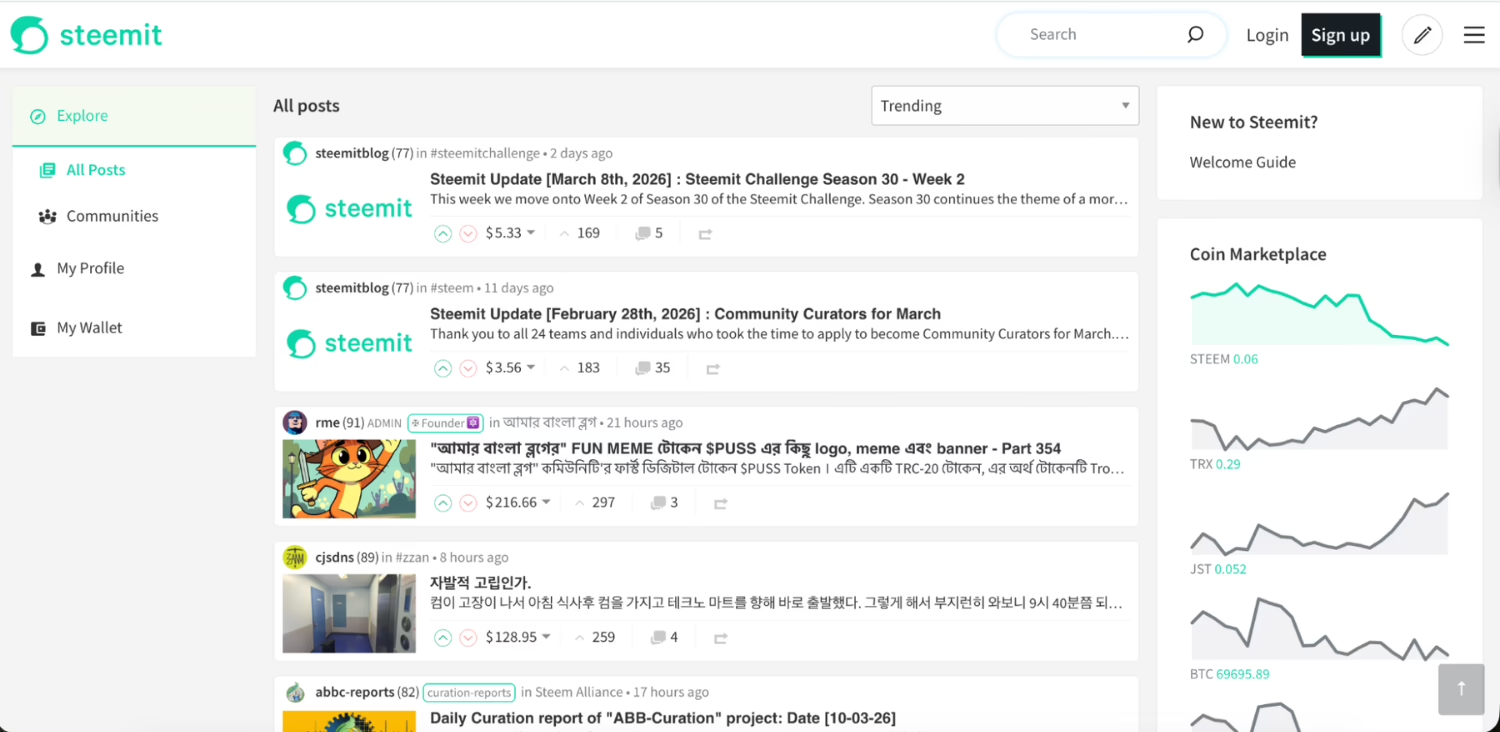
Steemit is considered an OG of Web3 social. It was launched way back when most people did not know what Bitcoin was. Steemit is known for its token-based content rewards. Although it is not as popular as before, it still has a loyal user base. Some users say that it looks and feels like Reddit, but there is one notable difference: you earn STEEM tokens for quality posts. It is a web3 platform for users interested in classic blogging with blockchain-based rewards.
Blockchain: Steem
Best for: Bloggers, long-form content creators
Limitations: The platform shows its age. The UX feels like 2017 (because it basically is), and community drama led to forks like Hive. But it still has die-hard users who’ve been earning consistently for years.
Verdict: Best for writers who value proven tokenomics over shiny features.
Paragraph
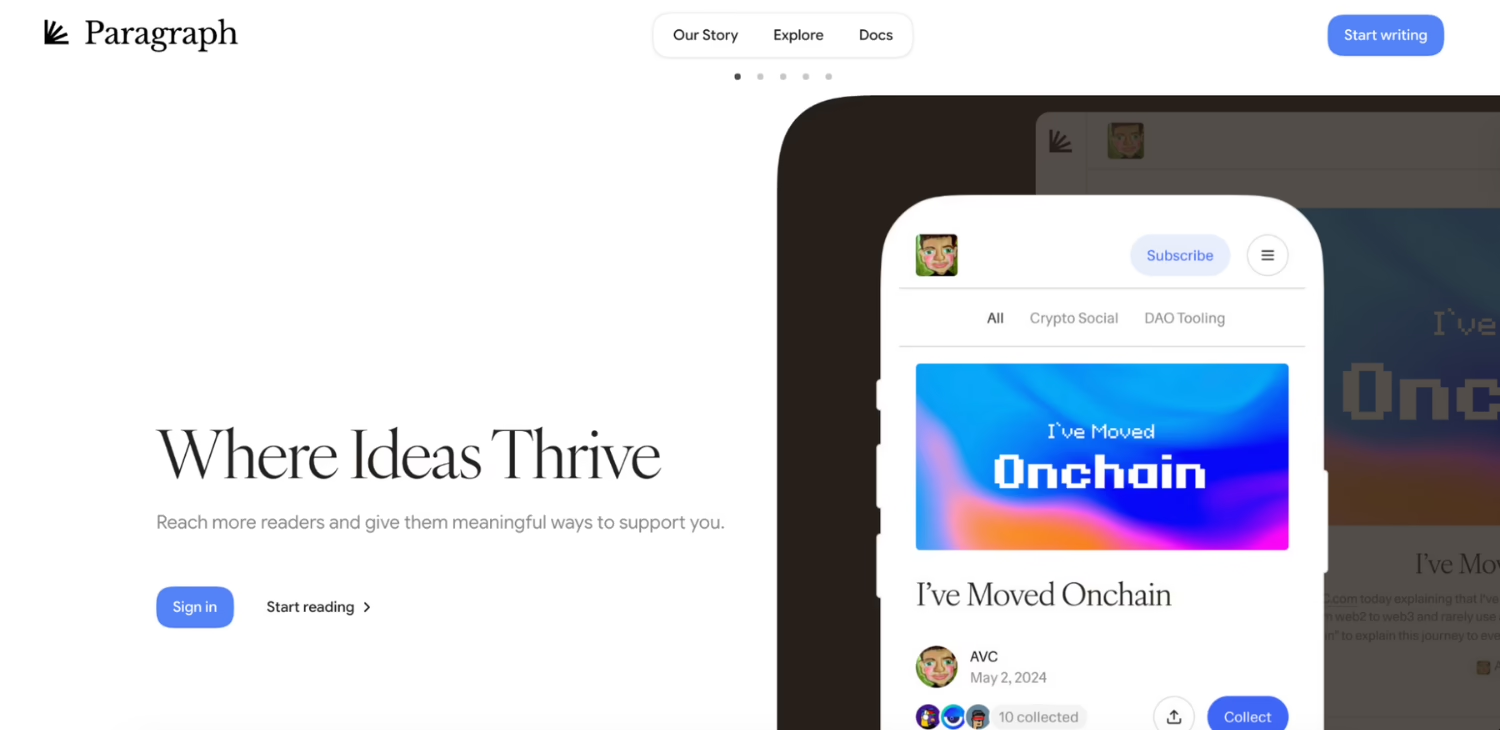
You may know it is Mirro.xyz. Paragraph is a platform for writers to share their ideas and get rewarded for them. It is like a Medium for crypto natives, although the platform is not exclusive to crypto enthusiasts. Monetization works as follows: writers mint articles as NFTs, readers can collect them, and revenue is generated directly through crypto. No ads, no subscriptions, just peer-to-peer value transfer. This is a great option for crypto writers, journalists, and thought leaders.
Blockchain: Ethereum
Key Features:
- NFT article minting
- Direct crypto tipping
- Crowdfunding for articles
- Clean, minimalist interface
Limitations: You need a Web3 wallet just to read the content. That’s a barrier for ordinary users.
Best for: Serious crypto content creators who want to monetize their expertise.
Audius
Audius is a web3 social media platform that allows artists to have full control over their music and the revenue it generates. Its blockchain-backed infrastructure lets musicians share tracks, build audiences, and get paid directly, without any record labels. If the fans want to support artists, they do it via $AUDIO tokens, engage through exclusive drops, and access unique content. Audius became a hub for Independent artists and podcast creators who want full creative and financial control.
Blockchain: Solana/Ethereum
Limitations: High competition from Web2 giants. Not the best UI/UX.
Best for: audio creators tired of streaming platforms.
Diamond App
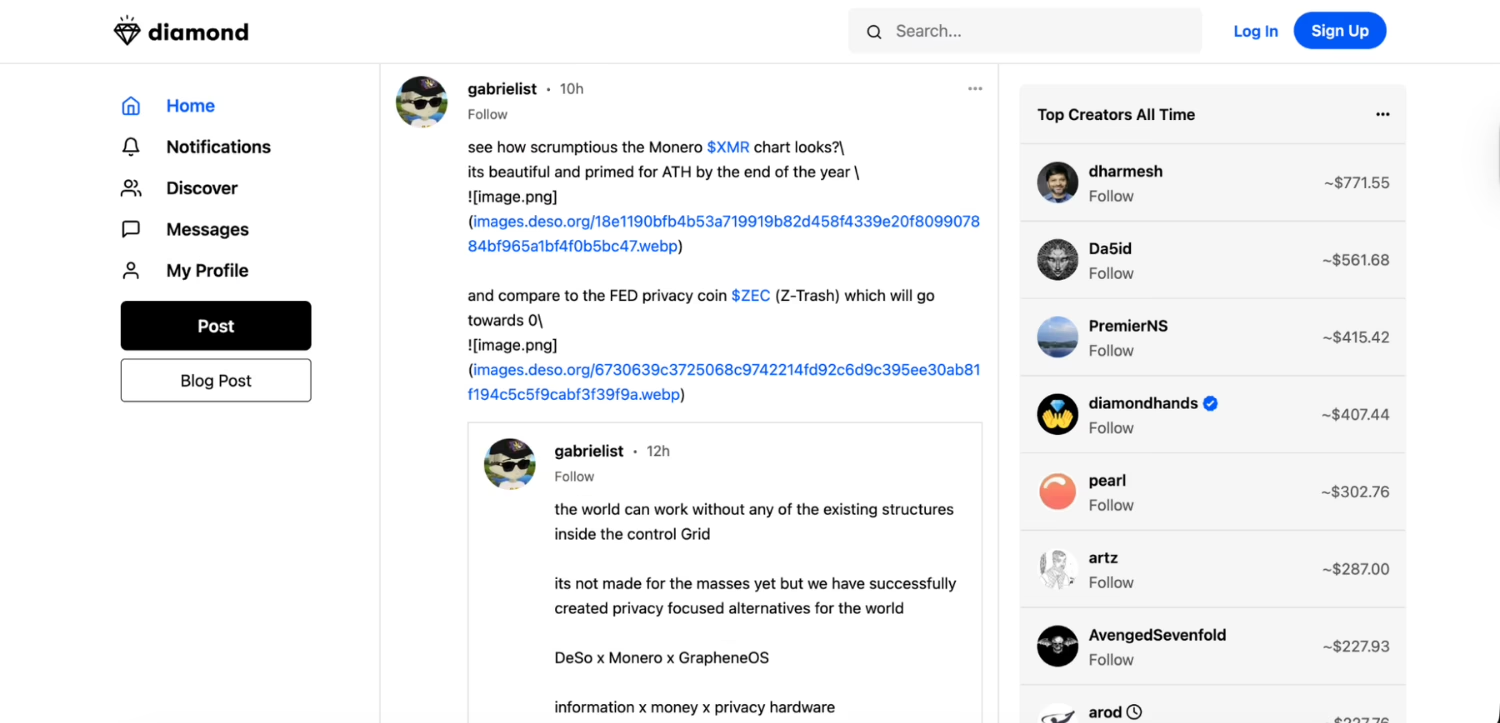
Next on our list of decentralized social media platforms is Diamond App. It is built on the DeSo blockchain technology. DeSo’s goal is to provide users with control over their social identities and give them the ability to monetize their content and influence.
At first glance, Diamond App looks like Twitter, but it offers a unique concept called creator coins. The idea is that each user creates individual tokens. These creator coins represent the user’s reputation and influence within the social platform. Users can buy, sell, and hold creator coins from various profiles, including their own, providing an avenue to invest in creators they believe in.
However, unlike on Web 2.0 social media platforms, likes on the Diamond App can be converted into actual currency. Diamond App has a tipping system (in diamonds) that lets users send crypto to their favorite creators. This allows creators to earn actual money for the “likes” delivered by fans. Creators can also mint their posts as NFTs and turn them into digital collectibles.
Blockchain: DeSo
Limitation: the user base is small.
Best for: Creators who want to experiment with cutting-edge monetization.
Mastodon
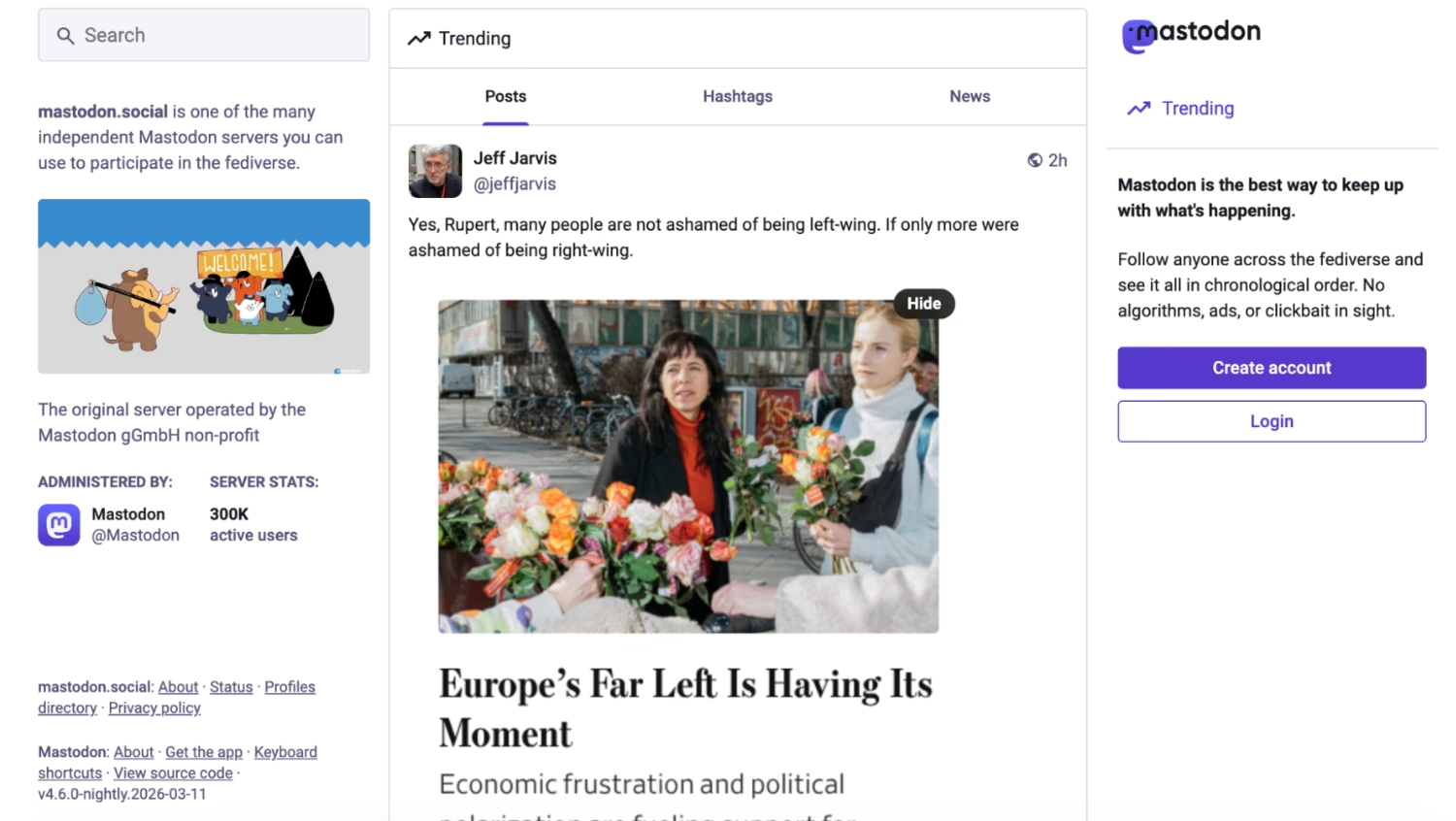
Mastodon is different from other decentralized social media. It isn’t blockchain-based. It uses the ActivityPub protocol for federation. Also, it doesn’t offer tokenized rewards. What it does is offer control, privacy, and a break from corporate algorithms.
Protocol: ActivityPub (not blockchain)
Limitations: No tokens, no crypto wallet needed.
Best for: Privacy advocates and beginners who are exploring decentralized social media platforms.
Minds
Next on our list of decentralized social media platforms is Minds. It positions itself as an open-source alternative to mainstream social media. Minds was founded on the principle of digital freedom. It gives users transparency, privacy, and full control over their data and content.
Mind rewards the participation of users. Active users earn Minds tokens for posting and commenting. You can use these tokens to boost your content, tip other creators, or exchange them for other currencies. It is a great way to turn everyday social activity into a passive income opportunity. In addition, Mind offers end-to-end encrypted messaging, which gives privacy-conscious users a sense of security and privacy.
For businesses, Minds offers a transparent pay-to-boost system where token spending directly determines content reach, without hidden algorithms.
Blockchain: Ethereum
Limitation: Smaller audience reach compared to mainstream platforms.
Best for: Businesses and creators who prioritize privacy, transparency, and censorship resistance.
Chingari
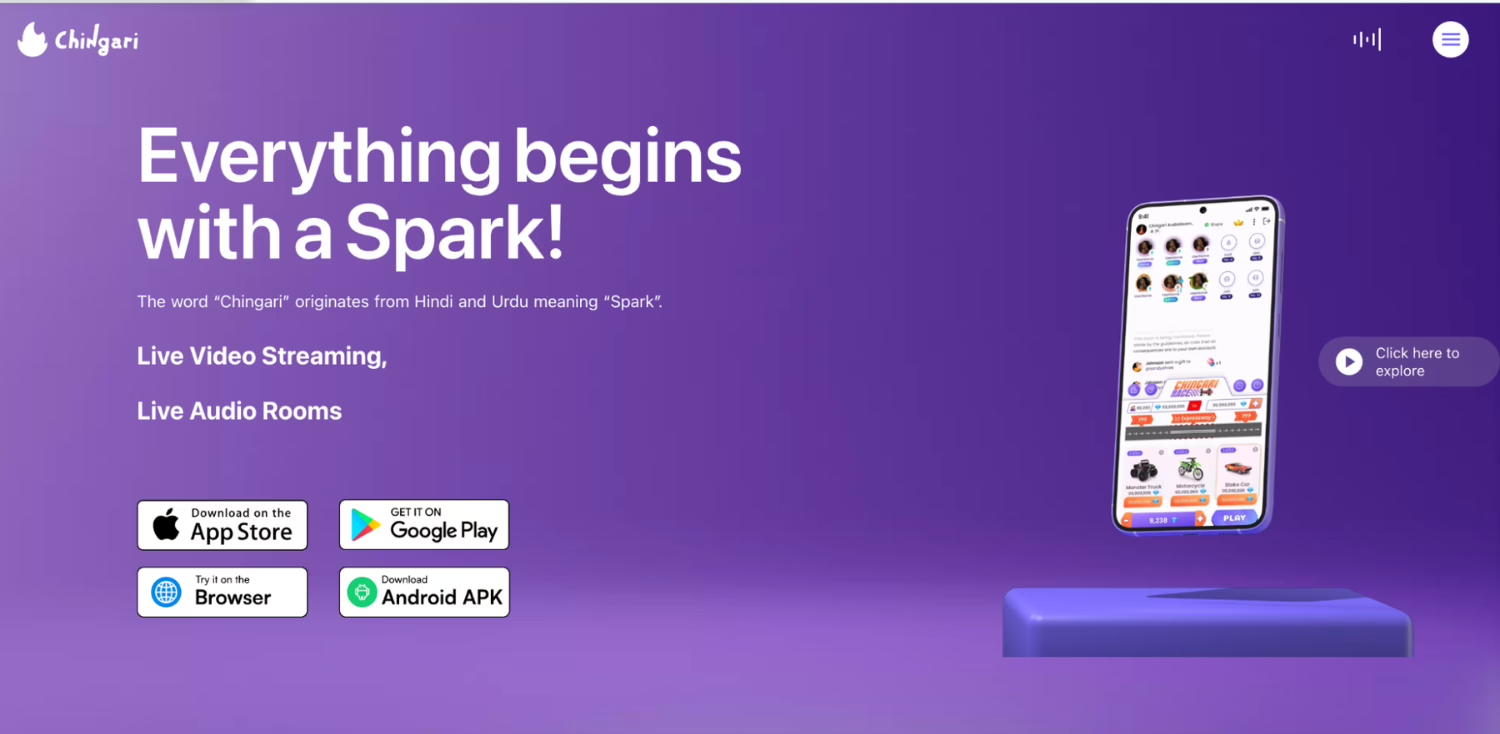
Chingari is a Web3 short-video platform built on the Solana blockchain. Originally, it was created as an Indian alternative to TikTok, but it has since evolved into a full Web3 social network. It is powered by its GARI token. It rewards creators directly for the content they produce and the audiences they build.
On the surface, Chingari resembles TikTok or Instagram, with users scrolling through short videos. But underneath, a token economy runs the platform. Creators earn GARI tokens based on views and engagement. Plus, viewers can tip their favorite creators directly through the app. This creates a two-sided economy where both content quality and community interaction are financially rewarded.
For businesses, Chingari presents a unique opportunity to tap into a fast-growing, creator-driven audience. Chingari is particularly popular across South and Southeast Asia. You can sponsor content, run token-based campaigns, and engage audiences in ways that go far beyond traditional social media advertising.
Blockchain: Solana
Limitation: Audience is heavily concentrated in South Asia, limiting global reach.
Best for: Brands targeting emerging markets and creators in the short-video space.
Bluesky
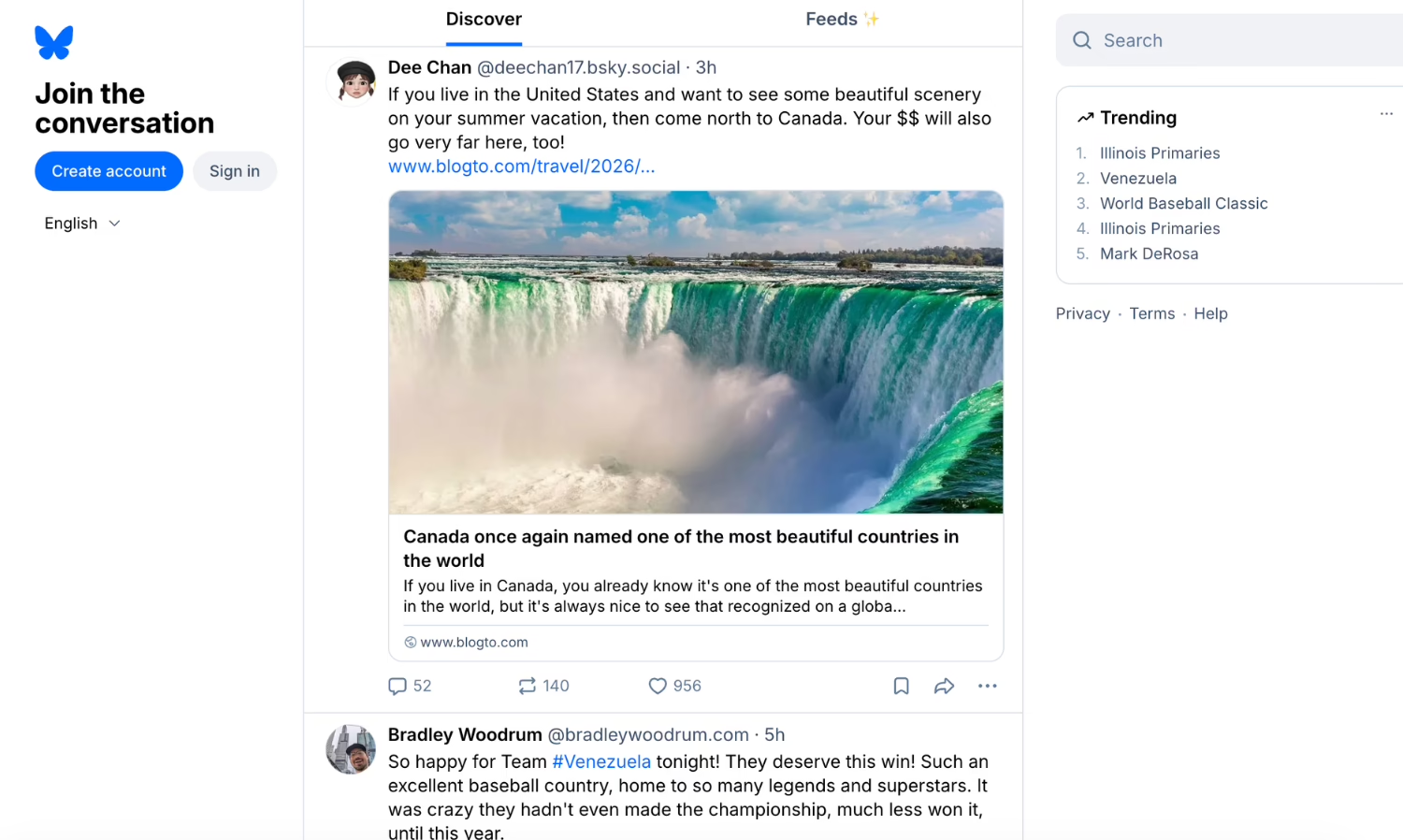
Last but not least is Bluesky. It is built on the AT Protocol. Unlike many Web3 platforms, Bluesky does not rely on a traditional blockchain. Instead, it uses a federated open protocol that allows anyone to build their own social network that interoperates with Bluesky’s wide ecosystem.
BlueSky’s key feature is its portability. Users own their identity and social graph, meaning they can move their followers and content across different apps built on the AT Protocol without having to start from scratch.
For businesses, Bluesky offers an early-mover advantage. The platform is growing rapidly as users seek alternatives to X, and brands that establish a presence now can build authentic communities before the space becomes oversaturated.
Blockchain: AT Protocol
Limitation: Monetization tools for creators and businesses are still in early development.
Best for: Businesses and thought leaders looking to build an engaged audience in a Twitter-like environment with decentralized ownership.
What Are the Benefits of Using Web3 Social Media Platforms?
Web3 social media platforms offer benefits that traditional centralized platforms simply cannot match.
User Control and Data Ownership
Unlike traditional platforms that harvest and monetize users’ data, Web3 social media platforms prioritize user control over personal information, content, and online identity. This reduces the risk of data exploitation or manipulation by centralized entities. With Web3 social media platforms, you are the owner of your data.
Better Privacy and Security
A decentralized social media platform distributes information across multiple nodes. This makes data breaches significantly more difficult. Web3 platforms reinforce this with supreme privacy technologies such as encryption and zero-knowledge proofs. This provides users with stronger privacy assurances and significantly reduces the likelihood of unauthorized access compared to traditional social media’s data practices.
Freedom from Censorship
As mentioned above, most traditional social networks have very strict policies regarding crypto, especially when it comes to advertising. In contrast, Web3 social platforms do not have content censorship and allow users to freely express their opinions without fear of their posts being removed or demonized.
Financial Incentives and Monetization
Another strong benefit that web3 social networks have is that they reward users for meaningful contributions. Whether you create content, curate quality posts, or participate in governance, you will receive some sort of reward, usually in the form of tokens that you can use within the platform. This creates real financial incentives for active participation and content creation.
Data Portability
Web3 platforms are built for interoperability. They are meant to enable seamless integration with other decentralized applications (DApps). This allows users to move their data across services freely, reducing lock-in and giving individuals control over their digital footprint.
What are the Challenges of the Crypto Social Media Platforms?
- The Learning Curve: When you move from a traditional web2 platform that many of us grew up with, there is a learning curve, including a different interface, wallet, and private key setup.
- Smaller Number of Users: Despite the crypto industry’s rapid growth, the number of daily users of decentralized social media networks remains very small compared to mainstream platforms. For example, Farcaster has an average of 60,000 daily users, while Facebook has more than 2,000,000,000 daily users.
- Messy Content Moderation: Decentralized moderation sounds great until someone posts genuinely harmful content. Each platform handles this differently. Unfortunately, no platform has found an effective way to deal with this type of content.
- Scalability Costs Real Money: Unlike Facebook, where you can post as much as you want for free, on some of the crypto social media platforms, you need to pay.
How to Empower Your Brand with Web3 Social Media Marketing
Web3 social media marketing opens up a world of new opportunities for companies and individuals who are willing to engage authentically with a highly discerning audience. To achieve success on these platforms, regular posting is not enough; it requires a strategic, community-driven approach.
Engage Your Community
First, you need to understand your target audience. Web3 communities are passionate, opinionated, and quick to spot inauthentic messaging. If you want to gain invaluable insights about what their audience actually cares about, you need to actively participate in polls, discussions, and governance conversations.
Leverage Educational Content
Educational content works great on web3 social media platforms. You can break down your project, its use case, and its value proposition in clear, accessible terms. Web3 audiences reward transparency and knowledge-sharing. This makes educational content a reliable path to building credibility and organic reach on Web3 social media platforms.
Create Buzz with Incentives and Contests
Tokenized ecosystems of the decentralized networks make incentive-driven campaigns a natural fit in the community. Giveaways, contests, and token reward programs can generate significant buzz and attract early adopters and existing community members. These mechanisms drive awareness and create genuine participation. All of this strengthens your community.
Ready to Take Your Web3 Brand to the Next Level?
It can be challenging to navigate the fast-moving world of Web3 social media marketing. It takes more than a good strategy, the right network, and expertise. At theKOLLAB, we specialize in crypto marketing for blockchain, DeFi, NFT, and other types of projects. Help them build real momentum through KOL partnerships, social media management, community management, and PR.
If you are ready to explore opportunities in Web3 social media marketing, feel free to contact us so we can help you build something worth talking about.
The Bottom Line: Where Web3 Social Goes From Here
Web3 social media isn’t replacing Facebook tomorrow, but something is shifting. Creators are tired of building audiences they don’t own. Users are done being the product.
The platforms are still a bit rough. The UX needs work. But Facebook started in a dorm room, and every revolution looks impossible until it isn’t.
The future of social media won’t be fully centralized or fully decentralized. The smart move is positioning now. Let’s talk about your project.
FAQ
How do Web3 platforms pay users?
Most of the time, they use token rewards for creating content, posts, and participating. But each platform has its own way. For example, Farcaster distributes $25,000+ in USDC weekly. Lens enables NFT sales of content. Steemit pays STEEM tokens based on upvotes. Mirror lets writers sell articles as NFTs directly to readers.
How is Web3 social media different from Web2?
Web2 platforms monetize your data through ads and keep all revenue. Web3 platforms reward users with tokens, let you own your data, and enable community governance. Your followers are portable between apps, content lives on-chain or IPFS, and no single entity controls the platform.
What is the largest Web3 social media platform?
By user count, Mastodon leads with 2M+ users (though it’s federated, not blockchain-based). For true Web3 platforms, Audius dominates with millions of monthly users. Farcaster and Lens Protocol lead in the crypto-native space with smaller but highly engaged user bases.
Do I need a crypto wallet to use Web3 social media?
For most Web3 platforms, yes. Farcaster, Lens, Mirror, and Diamond all require wallets. Mastodon doesn’t since it’s not blockchain-based. Some platforms like Audius offer limited functionality without wallets but unlock full features when you connect one.
What is SocialFi?
SocialFi combines social media with decentralized finance. Users earn tokens for social activities, can stake creator coins, and participate in platform economics. Think Instagram meets DeFi. The market’s already worth $2.4 billion and growing fast.