
Founded | 2009 |
Location | Menlo Park, California |
AUM | Over $42 billion across all funds |
Investment Stage | Seed to growth-stage |
Focus Areas | Infrastructure, DeFi, Layer 1/2, AI-crypto convergence |
Notable Portfolio | Coinbase, Uniswap, Solana, Dapper Labs, Optimism |
Andreessen Horowitz, often called a16z, is one of the top crypto venture capital firms in 2026. Marc Andreessen and Ben Horowitz started the firm, and they’ve been investing in crypto projects since 2013.
In early 2026, a16z raised over $15 billion across multiple funds. While this round didn’t include their dedicated crypto fund, it shows the scale and confidence they have in emerging tech.
Their 17-point roadmap for 2026 gives a peek into what they believe the future of crypto looks like. They’re focused on things like AI agents that use crypto infrastructure, payments becoming native to blockchain networks, and verifiable cloud computing. A recent $15 million investment in Babylon Labs’ Bitcoin staking protocol shows they are still actively funding new projects.
What sets a16z apart is their long-term thinking. They often hold investments for over 10 years, which is perfect if your project needs time to grow and scale.
Best for: Teams building foundational crypto infrastructure who need patient capital and want access to one of the strongest networks in tech and finance.
Founded | 2013 |
Location | Menlo Park, California |
AUM | $4.7-5.8 billion |
Investment Stage | Seed to growth-stage |
Focus Areas | DeFi, blockchain infrastructure, token funds |
Notable Portfolio | 1inch, Alchemy, Bitstamp, Circle |
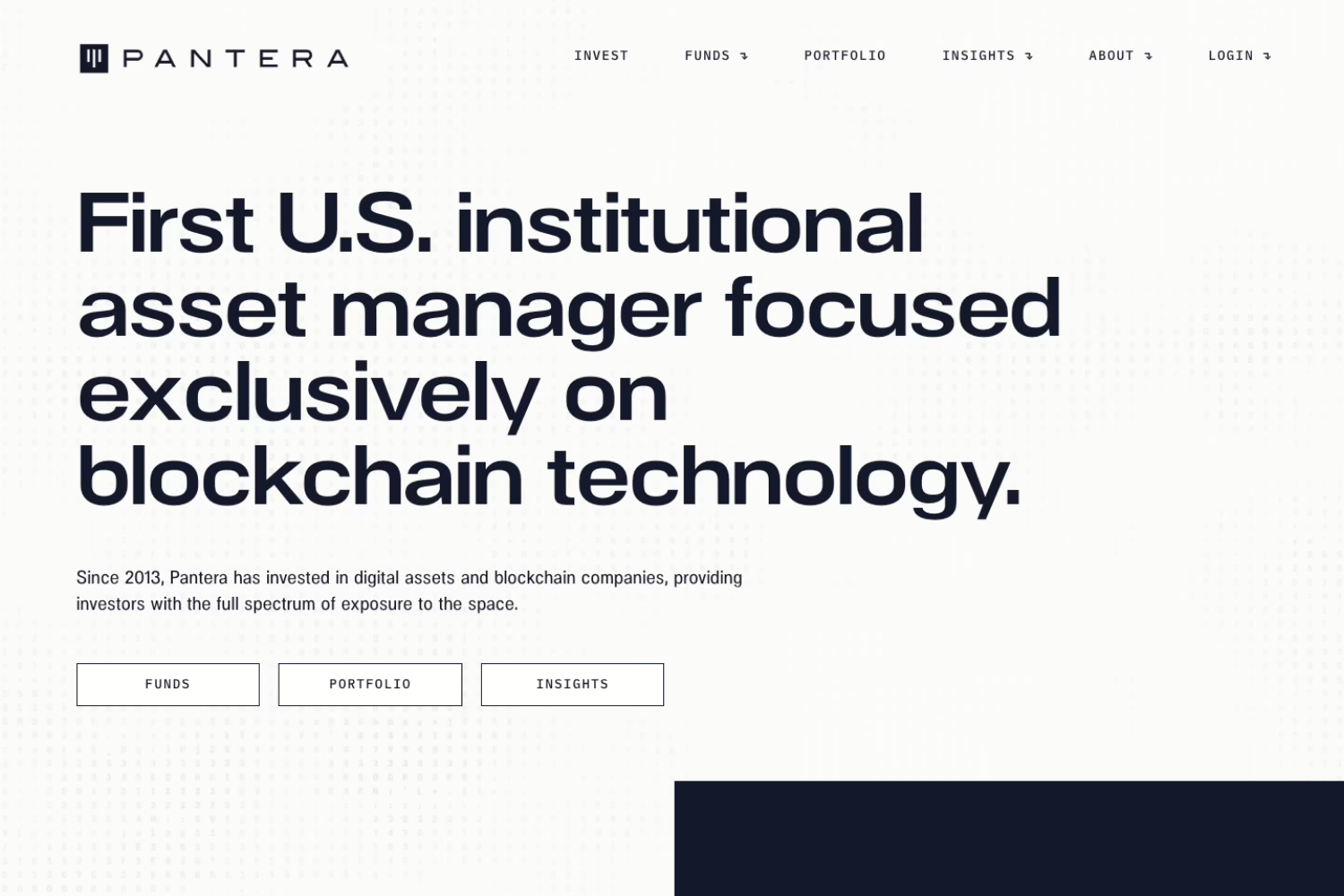
One of the top crypto venture capital firms, Pantera Capital, was the first U.S. institutional firm focused entirely on blockchain and crypto. Dan Morehead, who previously served as CFO at Tiger Management, founded the firm in 2013. They made early Bitcoin investments at $65 per BTC, showing their long-term confidence in the space.
Their current Fund V targets $1 billion, with the first close already completed. Pantera has invested in around 100 venture-backed companies and 110 early-stage token projects, giving them one of the widest crypto VC footprints.
For 2026, Pantera calls it “The Year of Structural Progress.” They are focusing on prediction markets, stablecoin growth, and navigating regulatory clarity after SEC settlements. Unlike some investors who only provide capital, Pantera often leads about half of the deals they invest in, meaning they actively guide and supports the companies they sponsor.
Best for: Teams looking for a crypto-native investor with deep experience, who can provide not just funding but guidance through different market cycles.
Founded | 2018 |
Location | San Francisco, California |
AUM | Approximately $2.5 billion |
Investment Stage | Early-stage to growth |
Focus Areas | DeFi, Layer 1/2, cryptography, protocol design |
Notable Portfolio | Coinbase, Uniswap, Optimism, MakerDAO, dYdX, Flashbots |
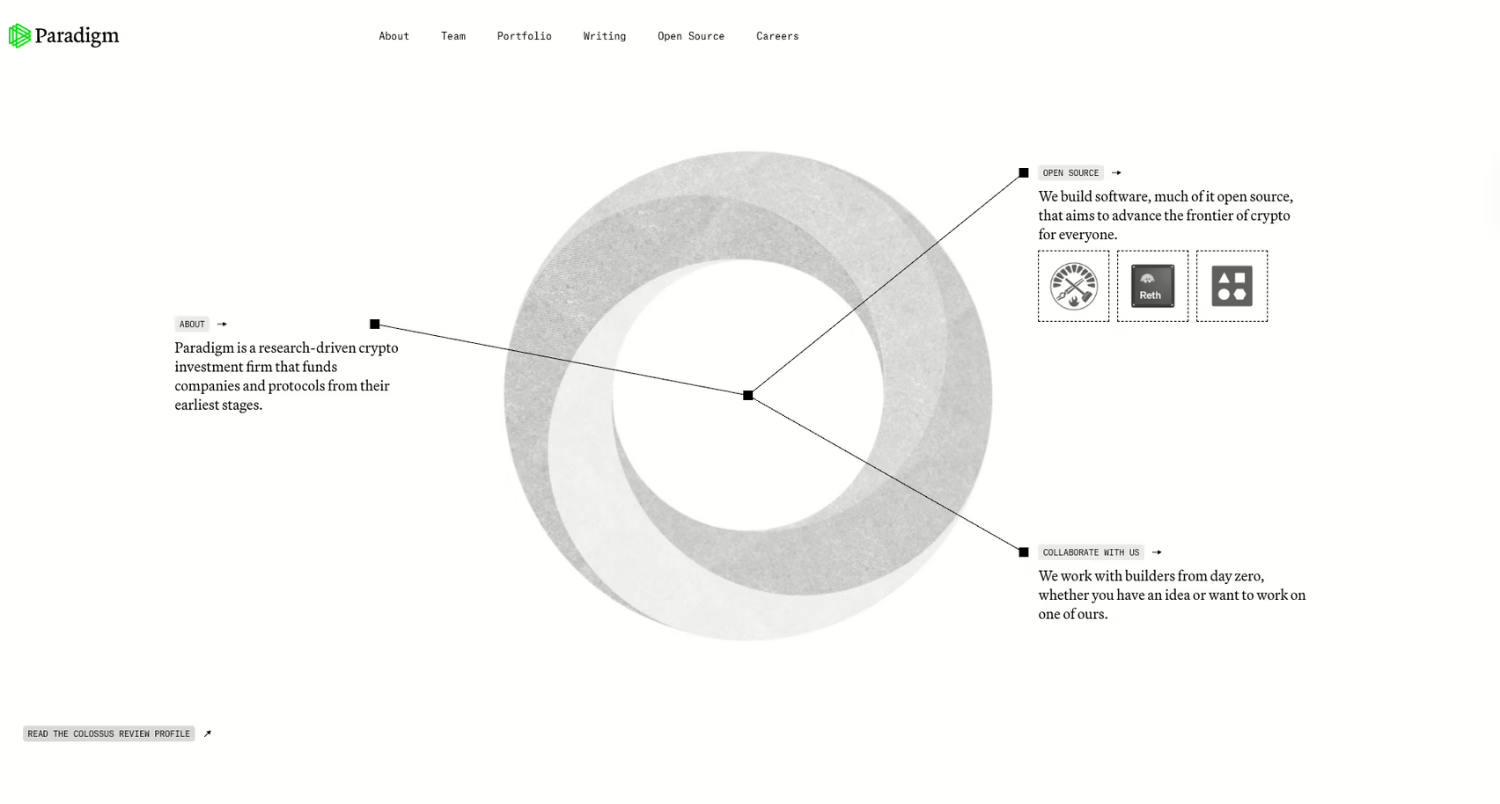
One of the best crypto venture capital firms, Paradigm, was founded by Fred Ehrsam, co-founder of Coinbase, and Matt Huang, a former Sequoia partner. Since 2018, they have become known as one of the most research-driven crypto investors. Their approach goes beyond funding. They actively contribute to open-source projects, help troubleshoot protocol issues, and support governance decisions for the projects they back.
Their Paradigm One fund, launched in 2021 with $2.5 billion, was the largest crypto VC fund at the time. They are now raising a new fund targeting $750 to $850 million. Recent investments include a $1 billion round for the prediction market platform Kalshi, valued at $11 billion. Paradigm’s investments range from $1 million to over $100 million, which allows them to support companies at multiple growth stages.
Even with leadership changes, including Ehrsam stepping down as managing partner in 2023, Paradigm continues to focus on technically complex projects and AI integration alongside crypto.
Best for: Teams building technically sophisticated products who want an investor deeply involved in protocol design, cryptography, and research-driven development.
Founded | 2018 |
Location | San Francisco, California |
Portfolio Size | 400+ investments, 350+ active companies |
Investment Stage | Seed and early-stage |
Focus Areas | Layer 1 protocols, Web3 infrastructure, DeFi, security |
Notable Portfolio | OpenSea, Uniswap, Magic Eden, Etherscan, Polygon, Sui |
Coinbase Ventures is the strategic investment arm of Coinbase and has quickly become one of the most active crypto venture capital firms in 2026. Since its launch, it has supported over 400 projects and contributed to more than one billion dollars in generated assets, backing many of the projects that have become widely recognized in the industry.
In the second quarter of 2025, Coinbase Ventures led with 25 deals, surpassing other major investors. Their 12 ideas for 2026 show where they see the most potential, including real-world asset perpetuals, composable perpetual DEX markets, unsecured credit and lending protocols, proof of humanity solutions, and AI-powered smart contract development.
The value of working with Coinbase Ventures is not only about funding. Startups gain potential integration with Coinbase’s platform, access to its large user base, and guidance on navigating complex regulatory challenges, learning from a company that has experienced them all firsthand.
Best for: Early-stage teams building products that can integrate with the Coinbase ecosystem and benefit from exchange-level regulatory expertise.
Founded | 2016 |
Location | San Francisco, California |
AUM | Approximately $5-5.6 billion |
Investment Stage | Early-stage |
Focus Areas | Layer 1 blockchains, decentralized governance |
Notable Portfolio | Coinbase, Cosmos Network, Uniswap, Solana, Polkadot, Tezos |
Another top crypto venture capital firm we have included in our list is Polychain Capital. It was founded by Olaf Carlson-Wee, Coinbase’s first employee. The firm became famous for earning investors a 2,303% return in 2017, turning an initial $14,502 into $150 million in fees over several years. One of their most profitable early bets was a major stake in Ethereum when it traded for less than $12.
In 2022, Polychain raised $750 million for their third fund with support from major investors like Tiger Global and Temasek Holdings. Their backers include top names in venture capital, such as Andreessen Horowitz, Sequoia Capital, Pantera Capital, and others.
As one of the top crypto venture capital firms, Polychain combines the approach of a crypto hedge fund and a venture capital firm, giving them the flexibility to invest in both liquid tokens and venture equity. For example, in mid-2025, they led a $9.5 million funding round for Blueprint Finance.
Best for: Teams building Layer 1 blockchains or decentralized governance systems who want an investor with deep protocol expertise and a proven track record of supporting foundational crypto infrastructure.
Founded | 2012 |
Location | Greater New York |
Portfolio Size | 200+ equity investments, 50+ fund investments |
Investment Stage | Seed to public markets |
Focus Areas | Blockchain infrastructure, CeFi, DeFi, GameFi |
Notable Holdings | Coinbase, Circle, Ledger, BitPay, Kraken, Ripple |
Barry Silbert built DCG to be more than a traditional venture capital firm. The company acts as a crypto ecosystem builder, with investments in over 25 countries, subsidiaries including Grayscale Investments, CoinDesk, and Genesis Trading, and stakes in nearly every major crypto company.
DCG invests at every stage, from seed funding to public markets. They also provide debt financing to fintech startups, which gives them additional connections across the crypto ecosystem. Their portfolio spans major companies such as Coinbase, Circle, Blockchain, Ledger, BitPay, Acala, ShapeShift, Aurora, Arcana, CoinList, Kraken, Ripple, and NEAR.
Silbert himself has invested in over 200 companies globally. Owning CoinDesk adds media influence and strengthens DCG’s ability to shape narratives in the crypto space.
Best for: Companies looking for an investor who can support them through every stage of growth, from early funding to public markets, while providing ecosystem-wide connections and guidance.
Founded | 2019 |
Location | San Francisco/Boulder |
AUM | Over $1.4 billion |
Investment Stage | Seed to growth-stage |
Focus Areas | DeFi, Layer 2, stablecoins, AI integration |
Notable Portfolio | Synthetix, Chainlink, The Graph, Chainflip |
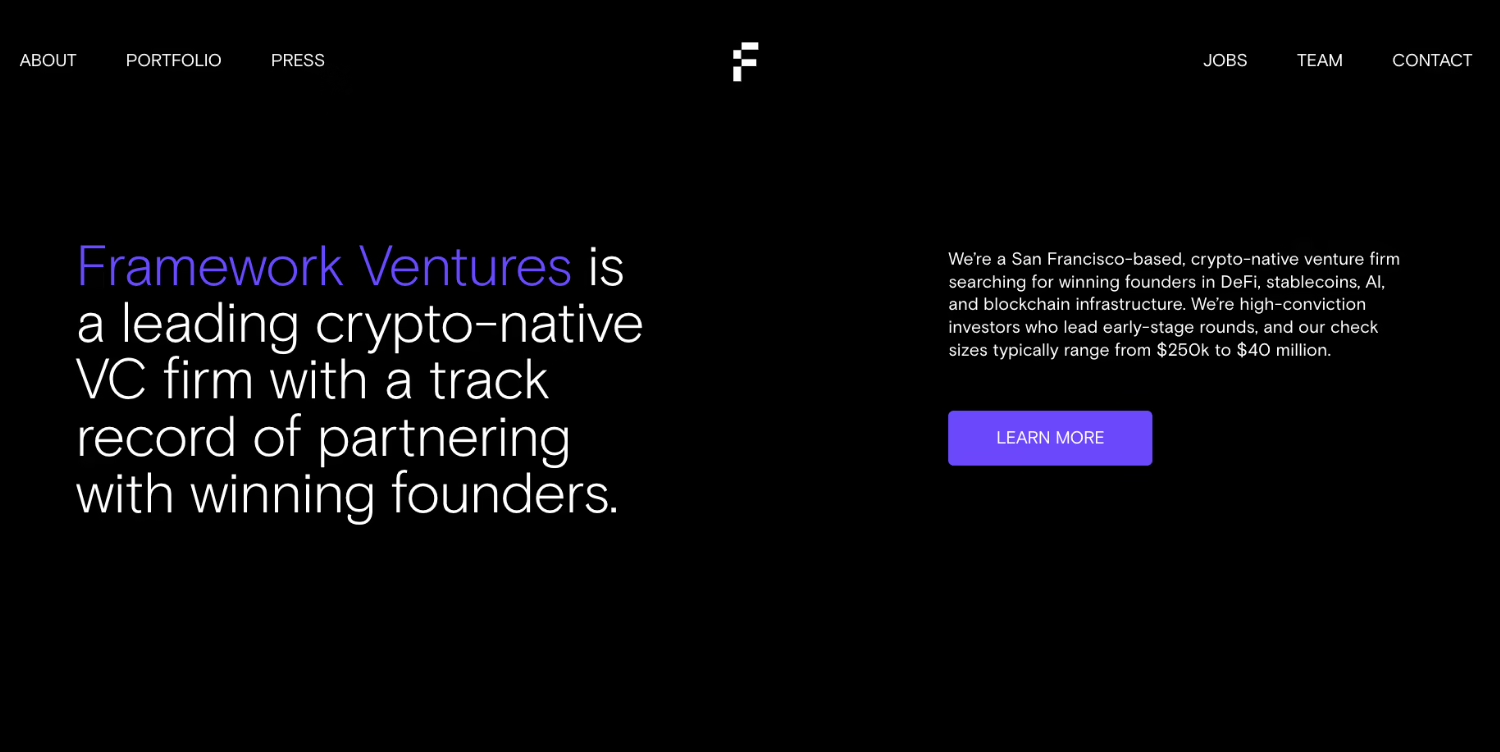
Framework Ventures presents itself more as a technology company than a top crypto venture capital firm. They not only invest but also build products and services to support the blockchain networks in their portfolio. This creates a partnership that goes beyond writing checks.
With more than 130 companies backed and investment sizes ranging from $250,000 to $40 million, Framework Ventures supports projects from the seed stage all the way to growth. Their focus on DeFi, Layer 2 solutions, and cross-chain interoperability makes them a strong match for teams working in these areas.
A unique feature they offer is a token-gated knowledge base for founders in their portfolio, giving curated resources and partnership opportunities. The team of technologists, researchers, and investors actively participates in protocol governance, helping the projects they back grow in a hands-on way.
Best for: Teams building in DeFi and Layer 2 who want investors to actively participate in governance and contribute to development alongside them.
Founded | Early pioneer (one of the first blockchain VCs) |
Location | San Francisco, California |
AUM | Over $2 billion |
Investment Stage | Seed to late-stage growth |
Focus Areas | Tokenization, stablecoins, supply chain, blockchain infrastructure |
Portfolio Size | 170+ invested companies |
Blockchain Capital is one of the earliest crypto venture capital firms. Their years of experience give portfolio companies access to decades of insights and know-how.
The firm manages over $2 billion and has realized more than $300 million in assets since its launch, showing an ability to identify promising projects and help them reach successful exits. Their investment process is deeply research-driven, supported by extensive market analysis.
Their focus on tokenization and stablecoins aligns with the trends many VCs see dominating 2026. Blockchain Capital takes a long-term approach with founders, seeking partnerships that go beyond the initial investment and help companies grow over the years.
Best for: Founders who want to work with experienced investors, benefit from research-driven guidance, and gain a pioneer’s perspective on the blockchain space.
Founded | 2018 |
Location | San Francisco (global presence including Asia) |
AUM | Approximately $3 billion |
Investment Stage | All stages |
Focus Areas | Cross-chain, DeFi, infrastructure, Layer 1 blockchains |
Notable Portfolio | Avalanche, Near Protocol, MakerDAO, Matter Labs (zkSync) |
Dragonfly Capital was founded by Bo Shen to connect East and West in crypto innovation. Shen previously helped bring some of the first Chinese Internet companies public on NASDAQ, giving him insight into cross-border opportunities that many Western VCs might miss.
The firm’s third fund closed at $650 million in 2022, more than doubling the size of their previous funds. Limited partners include Tiger Global, KKR, and Sequoia China, reflecting strong institutional confidence in Dragonfly’s approach.
Managing partner Haseeb Qureshi has a unique background as a professional poker player who became a software engineer at Airbnb and Earn.com, which Coinbase later acquired. He believes that 2026 will favor projects with proven crypto infrastructure rather than those relying on hype or narrative.
Dragonfly often co-invests with firms like Sequoia Capital, which gives portfolio companies access to both networks and additional support for growth.
Best for: Teams aiming for the Asian market or a cross-chain focus who want investors with global reach and experience bridging different crypto ecosystems.
Founded | 1972 |
Location | Multiple global offices |
Crypto Fund Target | $500-600 million (2022) |
Investment Stage | Seed to growth-stage |
Focus Areas | ZKP technologies, AI/ML, blockchain infrastructure |
Notable Recent Deals | Kalshi ($1B at $11B valuation), StarkWare, Iron Fish |
Sequoia Capital is one of the best crypto venture capital firms, which has invested in companies like Apple, Google, and LinkedIn. They started a dedicated crypto focus in February 2022 with a $500-600 million fund.
They are particularly interested in zero-knowledge proof technologies, which help blockchains run more privately and efficiently. Their crypto investments include StarkWare, Iron Fish, and Espresso Systems, supporting projects that build the core parts of blockchain systems.
Most of their crypto investments are in U.S.-based companies, especially in early growth stages. Their global offices, including Sequoia China and Sequoia India, also invest in fintech and crypto startups at various stages.
While one investment, FTX Series E, didn’t work out, Sequoia’s long history of successful tech and crypto investments shows that they have strong experience and a valuable network.
Best for: Teams building blockchain infrastructure who want support and connections from a top venture capital firm.

Founded | 2014 |
Location | Hong Kong |
Portfolio Size | 600+ companies and altcoin assets |
Investment Stage | Various |
Focus Areas | GameFi, NFTs, metaverse, digital ownership |
Notable Portfolio | Axie Infinity, OpenSea, Dapper Labs, Yuga Labs |
Animoca Brands, a top crypto venture capital firm, is both a game development company and a venture capital firm. Yat Siu and David Kim started it in 2014, and in 2018, they shifted focus to blockchain gaming and NFTs. They have built platforms like The Sandbox, Moca Network, and Open Campus while investing in more than 600 companies.
Their valuation grew from $2.2 billion in 2021 to over $5 billion. In 2026, Animoca plans a reverse merger with Currenc Group Inc. to go public on NASDAQ, with current shareholders keeping around 95% ownership.
Recent moves include a Web3 accelerator in the U.K. with Coinbase, Fabric Ventures, and Founders Factory, offering £250,000 in funding and a 16-week program, as well as a partnership with GROW Investment Group for crypto and traditional finance projects aimed at family offices.
Best for: GameFi, NFT, and metaverse teams who want an investor with real experience in both building and funding digital worlds.
Founded | 2015 |
Location | United States, Asia, and Europe |
Portfolio Size | 127+ companies |
Investment Stage | Early-stage to growth |
Focus Areas | Blockchain infrastructure, DeFi platforms |
Notable Portfolio | Skip, Spectral, Injective |
Jump Crypto is the venture capital arm of Jump Trading, one of the world’s leading quantitative trading firms. This gives them something many crypto VCs don’t have: deep knowledge of trading and market-making.
They combine venture capital funding with insights from traditional finance, helping portfolio companies understand liquidity, trading behavior, and market dynamics. Jump Crypto also researches emerging projects and provides tools and guidance to help them reach the market successfully. Their global presence across the U.S., Asia, and Europe means companies get support no matter where they operate.
Best for: DeFi and blockchain infrastructure teams that want investors with trading expertise, market-making connections, and a practical approach to building protocols.