
1. Wintermute
Wintermute is one of the most active liquidity providers in crypto, moving around $15 billion in daily trading volume across more than 65 exchanges. Their OTC desk alone handled over $2 billion in spot trades in a single day in late 2024, and their volumes have continued to grow rapidly since then.
What stands out to us is how much of their operation is built around speed and consistency. Wintermute uses high-frequency trading systems that complete trades in microseconds. This helps exchanges and platforms maintain tight spreads even during volatile market conditions. They also launched Bebop, their own decentralized exchange, which gives them direct exposure to both centralized and on-chain liquidity.
Today, Wintermute supports liquidity for more than 150 tokens and operates around the clock, making them a reliable option for large-scale trading environments.
Best for: Wintermute is great for exchanges and platforms that need deep, algorithm-driven liquidity with institutional-level execution.
2. Amber Group
Amber Group is a global digital asset firm that went public in 2025 as Amber International, now listed on NASDAQ under the ticker AMBR. They work with more than 2,000 institutional clients and have headquarters in Singapore, supported by a team of over 500 people worldwide.
Amber was founded by former professionals from Morgan Stanley, Goldman Sachs, and Bloomberg. It originally launched as Amber AI, focusing on using machine learning to improve pricing and execution in crypto markets. That data-driven approach still defines how the company operates today.
The group provides liquidity across both centralized and decentralized markets, supporting over 200 crypto tokens and integrating with more than 60 digital asset exchanges. This broad reach allows Amber to serve institutions that need exposure to different market structures without relying on a single liquidity source.
Best for: Amber Group is a top choice for institutional clients that are looking for flexible liquidity solutions across both CeFi and DeFi.
3. Galaxy Digital
Galaxy Digital, founded by Mike Novogratz, manages more than $2.5 billion in assets and works with over 960 institutional trading counterparties. As a publicly listed company, Galaxy operates under strict governance and reporting standards, which is a major reason institutions feel comfortable working with them.
From our perspective, Galaxy’s strength is its range. Their trading platform provides liquidity across hundreds of cryptocurrencies, while Galaxy Ventures actively invests in companies building the broader crypto ecosystem. That combination allows them to act as a wholesale liquidity hub rather than just a market maker. During periods of high volatility, Galaxy’s setup helps keep markets functioning when liquidity often dries up elsewhere.
Best for: Institutions that place a high priority on transparency, governance, and regulatory alignment are usually the ones that choose Galaxy Digital.
4. Cumberland (DRW)
Cumberland executes around 1 million trades per day and can handle up to 1,000 trades per second. As the crypto trading arm of DRW, a firm founded in 1992, they bring decades of traditional market experience into digital assets.
Cumberland focuses heavily on institutional OTC trading across spot, options, futures, and forward contracts. With the backing of DRW’s broader trading infrastructure and a team of over 1,600 employees, they are built for scale. Their pricing and execution systems are created for improving trade outcomes, which often deliver better prices than what’s available on public exchanges for large orders.
Best for: If you’re executing large OTC trades that need discretion and price improvement, Cumberland is a go-to choice for you.
5. GSR Markets
GSR helps keep crypto markets liquid, especially when trading is just starting or when activity is low. This usually happens when a new token launches or when a market doesn’t yet have many buyers and sellers.
They act as a market maker across hundreds of tokens by placing buy and sell orders so traders can enter and exit without big price jumps. For many projects, GSR is involved from the start. They help set up the order book, watch how trading behaves, and adjust liquidity as volume changes.
Instead of relying on one exchange, GSR spreads liquidity across multiple platforms. This reduces the risk of empty order books or sudden price gaps. GSR operates under regulations in the UK, the US, and Singapore. Their “GSR One” platform lets teams see order book depth, trades, and liquidity performance in real time.
Best for: It’s great for token projects that need stable liquidity during launches and early trading.
6. B2Broker
B2Broker is more for brokers than individual traders. Their setup connects brokers to large liquidity pools coming from prime brokers and major banks through a Prime of Prime model. This means brokers get access to deep liquidity without having to build those relationships themselves.
Here, liquidity is combined with trading technology, so brokers can launch faster. According to B2Broker’s own data, many brokers go live in about 10 working days using their full stack. This matters because liquidity only works well when it is tightly connected to the trading platform.
B2Broker supports crypto alongside other asset classes, which helps brokers offer consistent pricing and execution across markets.
Best for: Brokers that want ready-to-use liquidity and trading infrastructure from day one are the ones that go for B2Broker
7. DWF Labs
At DWF Labs, we see a unique mix of liquidity services combined with real support for Web3 projects. They provide market-making across more than 800 trading pairs on 60+ exchanges, meaning they help keep markets active and prices stable, no matter the token or volume.
What makes DWF different is how they blend traditional market-making with OTC trading and strategic investments. If you’re building a Web3 project, they don’t just provide liquidity; they help with marketing, community-building, and even hackathons to grow your ecosystem.
They also invest directly in Web3 projects, but their liquidity role stays active after funding. They continue supporting markets as tokens grow and trading expands.
Best for: If you have Web3 projects that want ongoing market-making liquidity, not just short-term support, definitely consider DWF.
8. Uniswap
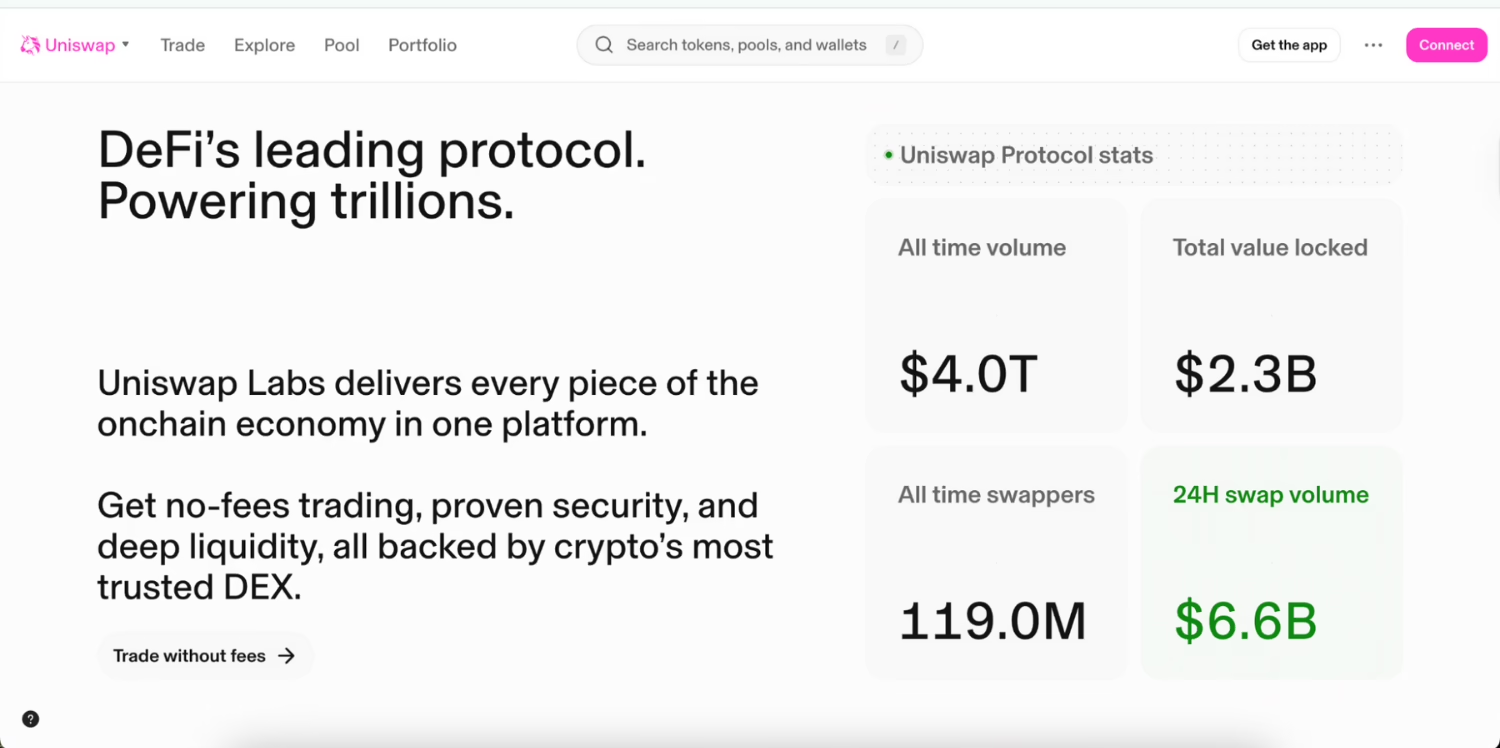
If you’re trading or providing liquidity in the DeFi market, Uniswap is one of the most important platforms to know. We like how Uniswap makes liquidity open and permissionless. With this, anyone can add tokens to liquidity pools and earn fees when people trade.
Uniswap’s liquidity is spread across 14+ blockchains like Ethereum, Arbitrum, Polygon, and many more, which means you can trade a huge variety of tokens with minimal delays. Their concentrated liquidity model lets liquidity providers focus their capital where it is most valuable: improving efficiency and reducing slippage for traders.
You don’t have to rely on big institutions here, because Uniswap puts the power in the hands of users and developers, and keeps the system transparent and decentralized. If you’re diving into DeFi, understanding how Uniswap manages liquidity is key.
Best for: Traders and users who want open, decentralized liquidity without middlemen.
9. PancakeSwap
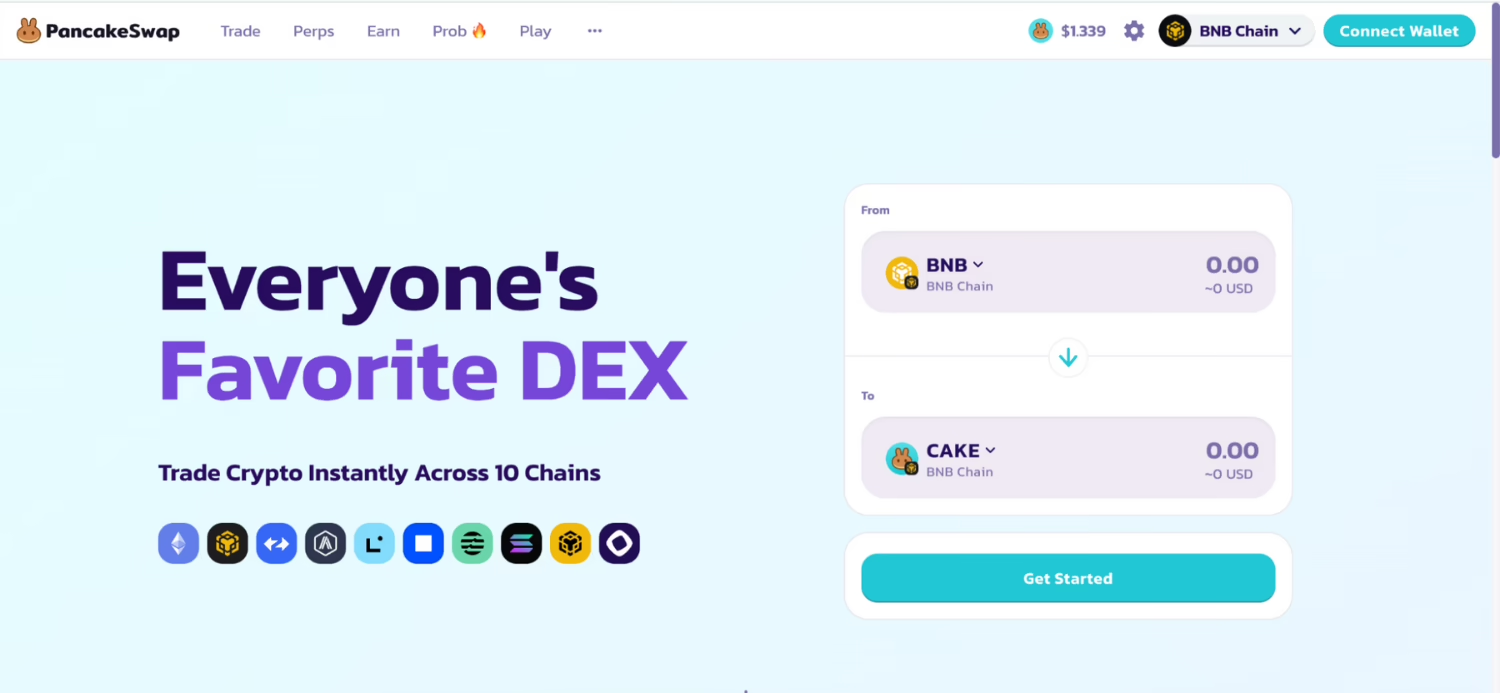
PancakeSwap is one of the biggest decentralized exchanges, especially on BNB Chain. By January 2025, this DEX had reached $78.4 billion in trading volume, and continued to rise to $81 billion in February.
People like PancakeSwap because it offers more than just trading. You can earn rewards through yield farming and staking, participate in lotteries, collect NFTs, and even trade perpetual futures. Their SpringBoard tool helps game developers launch tokens with smart vesting schedules, making it easier to build communities around new projects.
If you want to save on fees, PancakeSwap’s low rates, which range from 0.01% to 1% depending on the pool, can make a big difference on every trade.
Best for: PancakeSwap is great for traders who want low fees and many ways to earn across multiple blockchains.
10. Curve Finance
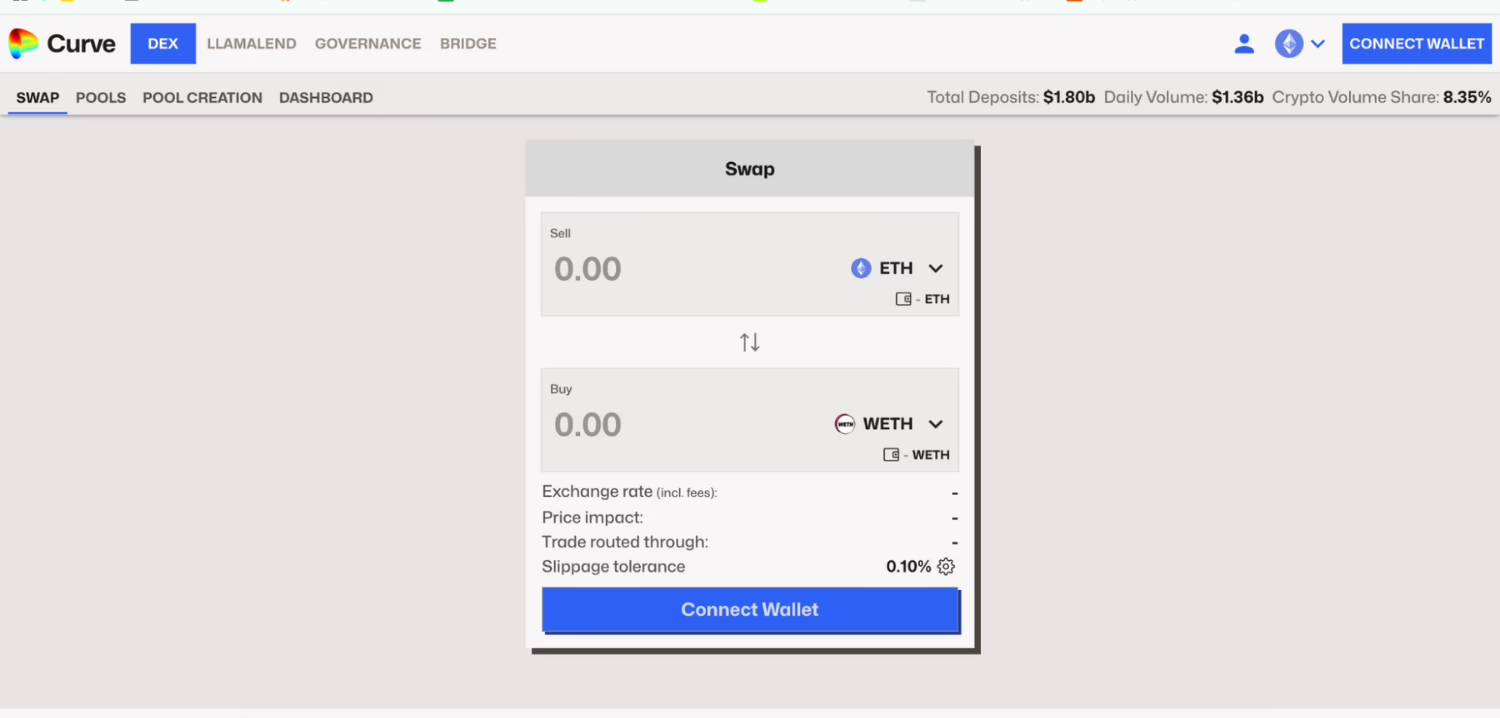
Curve Finance is a platform that helps you swap stablecoins and similar tokens with very little extra cost. Stablecoins are digital coins that keep their value steady, like US dollars, so it’s important to trade them without changing their price too much.
What makes Curve special is its focus on stable assets. It uses a smart algorithm made specifically to keep prices stable and reduce fees when swapping tokens that have similar values. This helps traders move large amounts without causing big price jumps.
Curve is also a key part of many DeFi projects because it supports stablecoin liquidity efficiently and integrates with other protocols for lending and staking. Many big traders and institutions rely on Curve for smooth, low-cost stablecoin trades.
Best for: Anyone who wants to swap large amounts of stablecoins without affecting their prices.