
Now, let’s break down each element of marketing and understand how to build a strategy for your ICO. We will cover how to build a strong foundation and an engaged community. In addition, we will talk about running a PR and KOL campaign.
Build a Strong Foundation with a Comprehensive Whitepaper
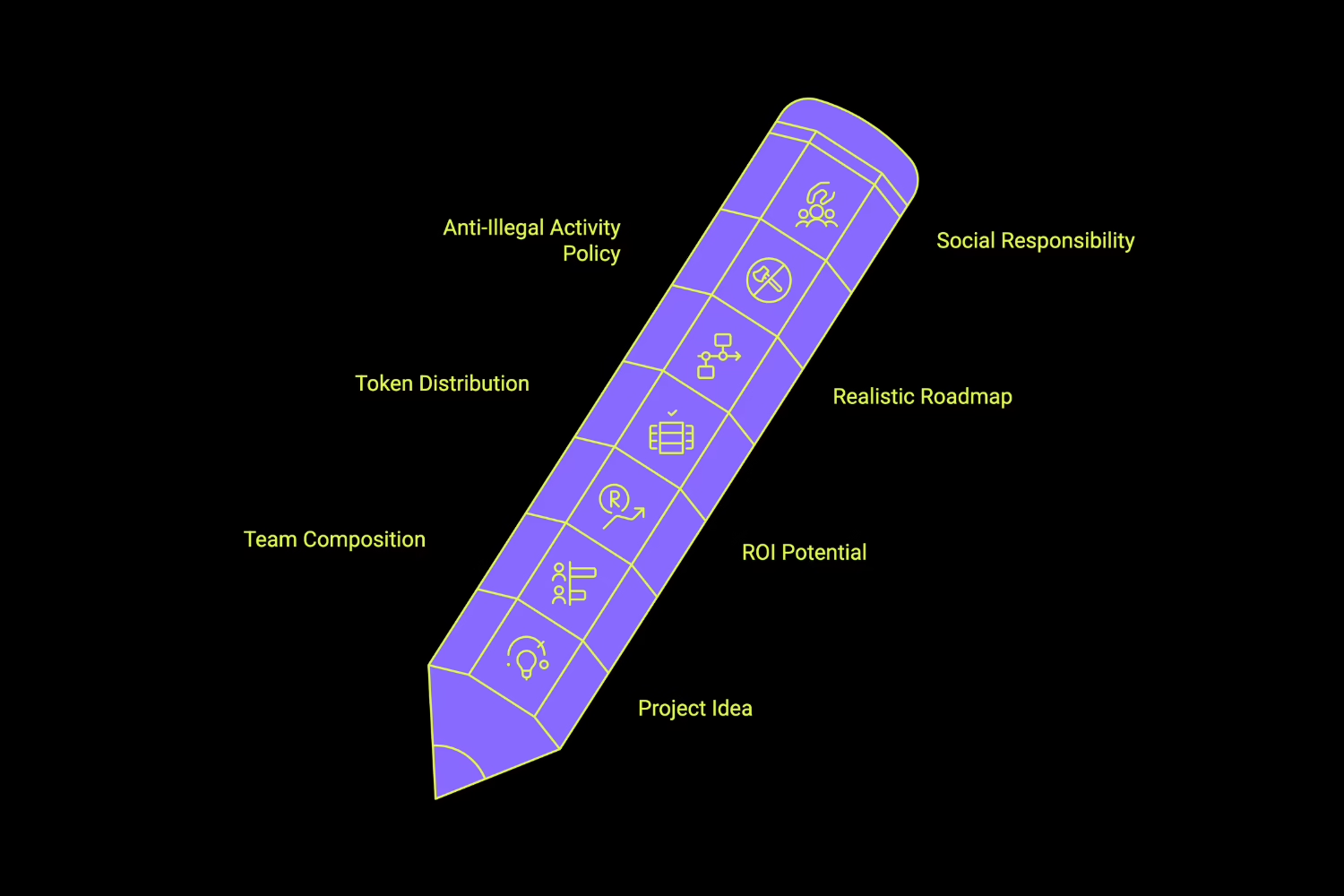
In crypto marketing, a whitepaper isn’t just a formality; it is the backbone of your ICO marketing. So, what does a properly structured whitepaper need to cover? It needs to cover your tokenomics in detail, explain your technology clearly, lay out the roadmap, and introduce your team with full transparency. Do not skip any of these elements, if you do not want to lose investors. A scussesful whitepaper should have these elements:
- The idea of the project
- The composition of the team and the competenceof the team members
- The reasonable size of ROI;
- Distribution of tokens;
- Realistic Roadmap;
- Anti-illegal activity policy;
- Social responsibility of your business.
Build a Well-Designed Website and Optimize It For Search Engines
For the whitepaper, you need a well-designed website. It needs to look professional and load fast. Do not forget about calls-to-action that guide people toward the next step. Do not overlook the importance of SEO for crypto and ICO projects. Lately, it has become one of the most reliable growth channels.
With paid ads restricted across major platforms, organic search is often where investors first discover new token projects. A strong SEO strategy helps an ICO build visibility, credibility, and long-term momentum beyond the token sale itself.
Here is what you need to do on your website:
First of all, you need content on your website. Content marketing is all about long-term value for users. In ICO marketing, the key is finding a balance between educational and promotional content. From our professional experience, we conclude that long-format content, such as blog posts and videos, consistently performs well for ICO projects.
Content that ranks in crypto rarely looks like a general blog article. Instead, it reads like a research paper. Your content has to explore industry problems, explain why existing solutions fail, or break down how decentralised systems improve outcomes. From our experience, this type of content performs well in search results. Plus, it naturally attracts backlinks from crypto blogs.
Another type of content that works well is comparison content. For this type of article, you can compare ICOs with IDOs and IEOs, or analyze different blockchain architectures. These articles will help investors make informed decisions and keep them engaged longer on the site.
Project-focused content should explain why the protocol was built, how the tech stack works, and where the token creates real utility. Investors are increasingly sceptical, and content that prioritises clarity over hype builds stronger trust signals.
For ICO marketing, your SEO strategy needs to target a very specific set of keywords. Many ICOs make the mistake of only targeting broad keywords like “upcoming ICOs” or “best ICOs.” These terms are very competitive and often attract low-intent users. A more effective approach is to build keyword clusters around investor intent. Try targeting project-specific keywords, such as the project name, token name, tokenomics, whitepaper, roadmap, and launch details. They usually bring high-quality traffic. Anyone searching these terms is already deep in research mode and likely to convert.
In addition, informational keywords are valuable. These keywords focus on the problem the protocol is solving, such as DeFi infrastructure or AI-powered blockchain tools. This type of content attracts early-stage investors who are researching narratives, not just tokens.
Investor education keywords also play an important role. Searches around how ICOs work, how to evaluate token projects, and the differences between ICOs, IDOs, and IEOs help position the project as transparent and investor-friendly.
Earn Backlinks from Real Crypto Sources
Backlinks remain one of the strongest ranking factors, but in crypto, they must be handled carefully. Low-quality links from spammy networks can do more harm than good. The focus should be on earning links from reputable crypto publications, blockchain blogs, ICO listing platforms, and industry media.
One way to earn high-quality backlinks is to focus on founder-led content. Guest posts and expert commentary under real names are far more valuable than generic posts. You should also give interviews or appear on top crypto podcasts. All of this will build your authority and strengthen E-E-A-T signals over time.
Agile Your SEO Strategy with the ICO Lifecycle
SEO should evolve alongside the ICO timeline. Before launch, you should focus on building authority, producing educational content, and ranking for branded and project-specific keywords.
During the token sale, you need to frequently update your content, make announcements for investors, and provide fresh data.
After the ICO, SEO should transition toward product adoption, ecosystem growth, developer documentation, and real-world use cases. This will make sure your continuity to receive organic traffic and long after the token sale ends.
Build a Community for an ICO
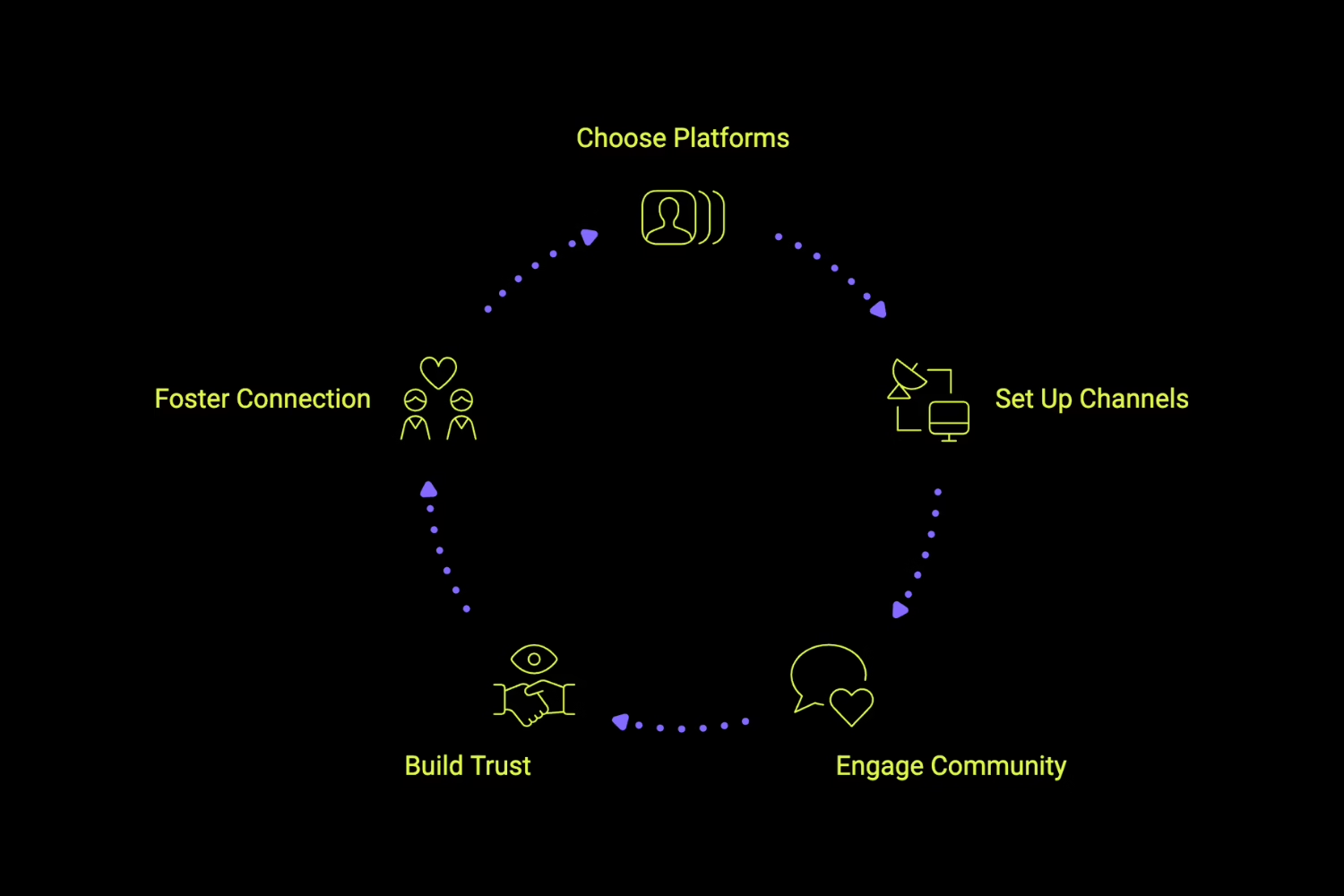
Your community can make or break your ICO project. It needs to trust you, understand your project, and feel like they’re part of a new great innovation in the industry. That emotional connection often matters more than your technical side.
Let’s start with choosing the platforms. The most common platforms are Telegram, Discord, X(Twitter), and Reddit. Let’s take a look at each one:
- Telegram groups work great for timely updates. It can handle groups up to 200,000 members. It is perfect for broad outreach.
- Discord offers structured channels and role-based permissions, ideal for building deeper connections with your core supporters.
- Twitter/X remains the go-to for real-time announcements and viral moments,
- Reddit, with its large selection of crypto sub-reddits, connects you with the hardcore crypto enthusiasts who can become your strongest advocates.
Managing these crypto communities takes real work. Set up dedicated channels for different purposes: announcements, general discussion, technical support, and even off-topic chat. We recommend using moderation bots to handle spam, but don’t automate everything. People can easily tell when they’re talking to a bot versus a real human.
When your team shows up consistently to answer tough questions, it demonstrates confidence in your project. Quick response times to community concerns show you’re engaged. These are the keys to building an engaged community around your ICO
But here’s a critical point: Make sure your participation is authentic. It is much better than aggressive promotion. Join conversations naturally, provide value, and avoid the hard sell.
Start Influencer and KOL Marketing Campaigns
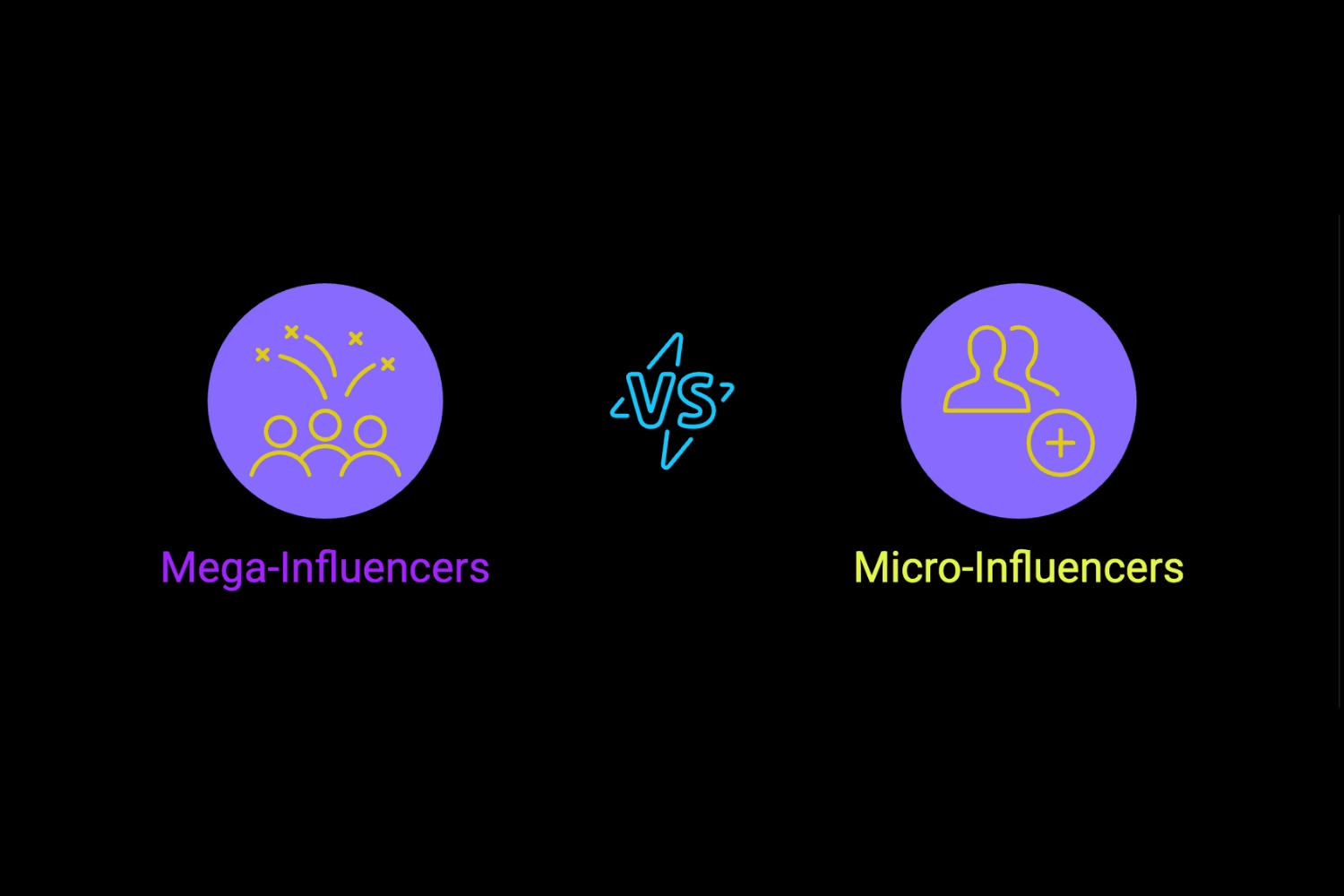
For ICOs, crypto influencer marketing has become absolutely critical, with 89% of businesses reporting better ROI from influencer marketing compared to other strategies. Some companies have shifted away from mega-influencers toward micro-influencers with 10,000 to 50,000 followers. In some cases, smaller creators generate 2-3x higher click-through rates and conversions.
From our professional experience, we noticed that in some cases, a KOL with 20,000 engaged followers who actually trust them has delivered results comparable to those of someone with a million followers. This shows that audience engagement is more important than the number of followers.
When selecting KOLs, look beyond follower counts. Make sure to check engagement rates, past endorsements, and credibility within the crypto community. There are many great crypto influencers on X (Twitter) and those who run YouTube channels. Make sure to pick the ones that match your end goal and audience.
Budget allocation depends on your stage. Early-stage projects typically allocate 10-15% of marketing budget to KOL campaigns, growth-stage companies bump that up to 20-25%, while scaling projects might dedicate 30% or more. For context, $3,000 to $7,000 monthly can secure 2-3 niche KOLs, one sponsored YouTube video. Mid-tier campaigns running $15,000 to $40,000 monthly can coordinate 5-10 KOLs across multiple platforms.
Here is one example from our experience. When we partnered with Masa, the goal wasn’t hype; it was gaining real investor trust. Through a carefully designed KOL campaign, Masa’s CoinList community sale sold out in just 17 minutes, with demand far exceeding available supply. Over 52,000 people registered, but only a fraction were able to secure tokens, showing just how strong the interest was. The momentum didn’t stop there; the token later launched on major exchanges like Bybit, KuCoin, and Huobi, proving that the campaign didn’t just drive attention but attracted serious, long-term participants.
Launch PR Campaigns for ICO Marketing
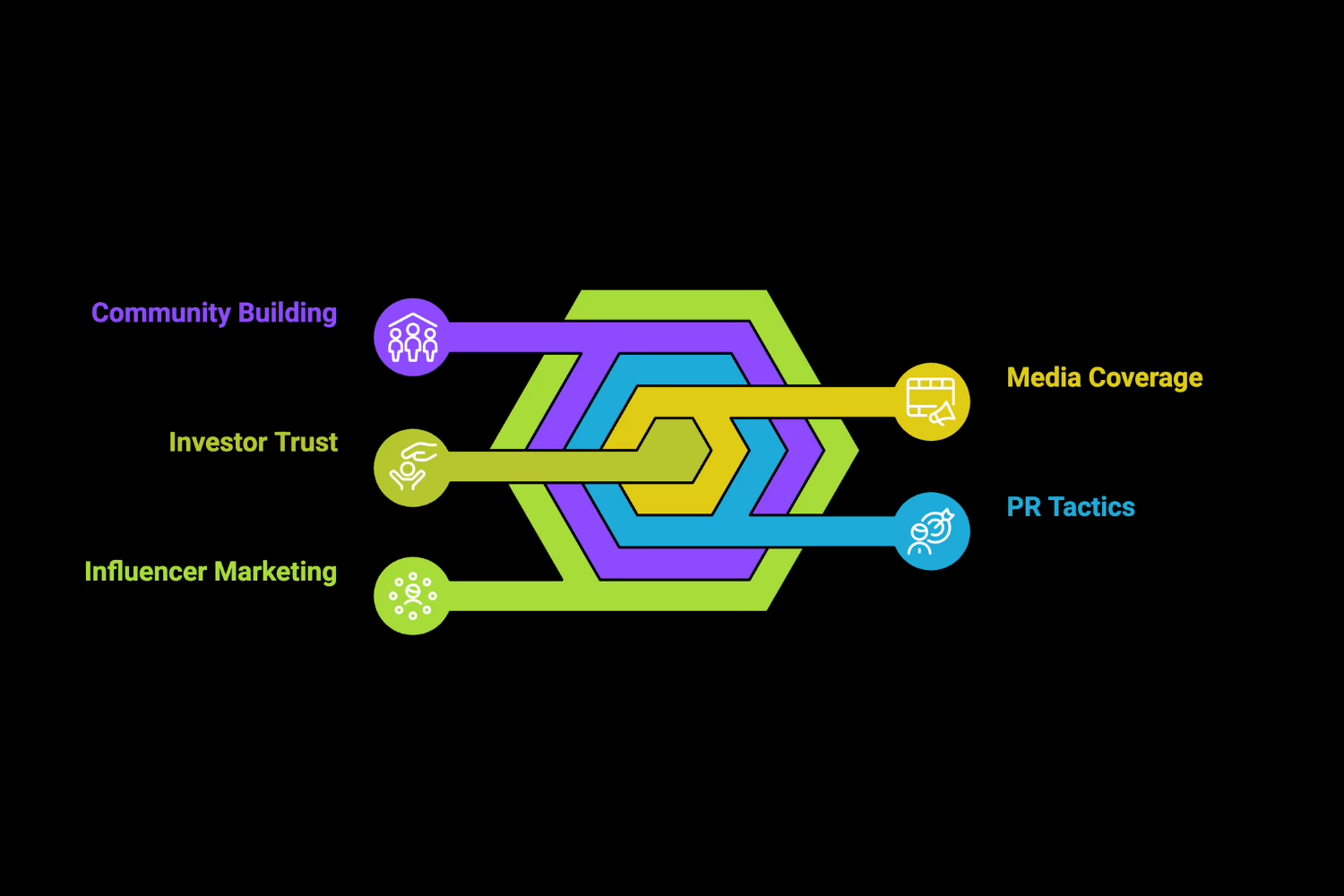
Crypto PR is one of the core elements in the ICO marketing strategy. In an ICO space, media coverage from reputable crypto publications helps validate your project and build credibility before the token sale begins.
A strong PR campaign for an ICO project can use tactics such as founder interviews and timely announcements around real milestones, such as audits, partnerships, or launch dates. This kind of third-party validation often converts better than paid ads alone.
If you are wondering when to start media outreach, the answer is before launch. During this stage, PR will amplify momentum, helping maintain trust and long-term visibility after the sale. When combined with community building and influencer marketing, PR helps turn awareness into real investor trust.
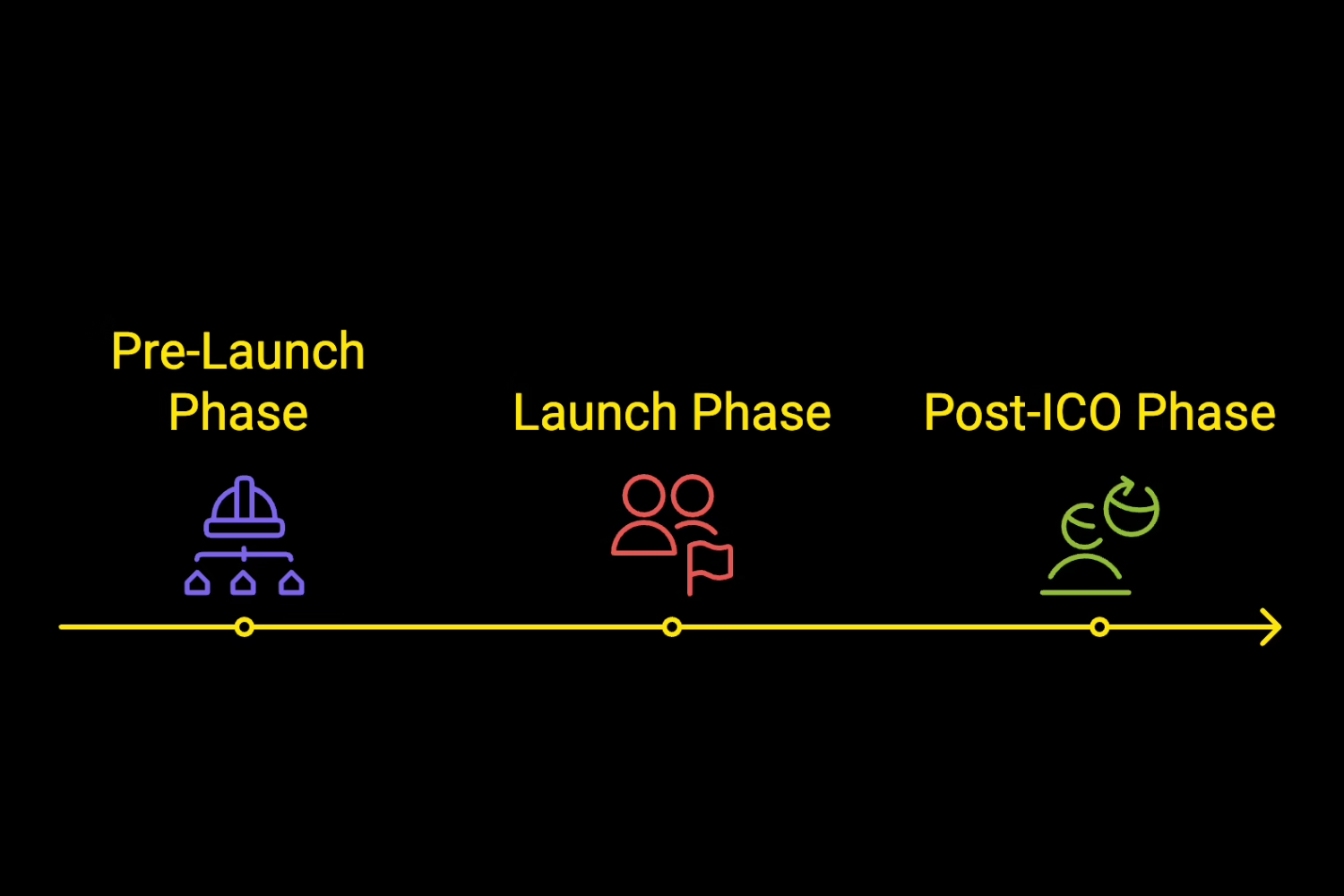
In fact, time plays a crucial role in ICO projects. We suggest dividing your campaign into three distinct phases:
- The pre-launch phase can run 3-6 months before your ICO. During it, you should focus on building foundations. Complete your whitepaper, launch your website, establish a social media presence, and start growing organic community interest. We can also start reaching out to KOLs and media outlets, as these relationships take time to build.
- During the launch phase, everything kicks into high gear. Coordinated KOL campaigns go live across platforms. Here, daily community engagement is non-negotiable. At this stage, you should also launch paid advertising campaigns, which will need constant tracking and optimization.
- The post-ICO phase often gets overlooked, but it’s where many projects fail. To avoid that, you need to maintain your community engagement. Otherwise, you will inevitably have a drop-off after the token sale. Regular development updates prove you’re building what you promised. Exchange listing campaigns maintain momentum and give investors confidence in liquidity.