
So, which companies are really leading in crypto asset management today? We’ve done the homework, sifting through AUM figures, product offerings, client feedback, and market positioning to bring you the 10 firms that stand out this year.
Let’s break them down.
Quick Comparison of Top 10 Crypto Asset Management Firms
Company | AUM | Best For | Key Differentiator |
Grayscale | Largest crypto-focused | Track record seekers | Longest operating history |
Bitwise | $15B+ | Product variety | 67% Solana ETF market share |
Coinbase | $516B managed | Integrated services | Exchange + asset management combo |
Galaxy Digital | $4.6B | Full-service needs | Merchant bank model |
Pantera | $4.8-5B | Crypto pioneers | First US Bitcoin fund |
Multicoin | ~$9B | Thesis-driven | Concentrated, high-conviction |
BlackRock | $83B+ (IBIT alone) | TradFi institutions | Career risk elimination |
Fidelity | Growing | Compliance-first | Regulatory focus |
DCG | 200+ investments | Ecosystem exposure | Holding company model |
CoinShares | European leader | European investors | Zero-fee products |
1. Grayscale Investments
Best for: Investors who are looking for the longest track record in crypto-focused asset management
Grayscale is the largest crypto-focused asset manager. Founded in 2013, it has been around longer than most crypto firms, which is important in a space where many companies come and go quickly.
The team combines over 130 years of traditional finance experience with 50 years of digital asset expertise. This mix of old-school finance knowledge and modern crypto knowledge shows in how they design and manage their products.
In the first quarter of 2026, Grayscale added four new assets to their watchlist, bringing it to a total of 36. These include smart contract platforms, tokenized assets, AI-related tokens, and decentralized physical infrastructure networks. This shows they are staying ahead of market trends, not just managing established cryptocurrencies.
Key Highlights:
- Largest crypto-focused asset manager by AUM
- Founded in 2013, one of the longest operating histories in the space
- 36-asset watchlist for Q1 2026 covering emerging sectors
- Strong blend of TradFi and crypto expertise
Why Consider Them: They offer products that have been tested through multiple market cycles, which makes them a reliable choice for managing digital assets safely and professionally.
2. Bitwise Asset Management

Best for: Advisors and institutions wanting a wide range of products backed by strong research
Bitwise manages over $15 billion in client assets across more than 40 investment options. These include ETFs, private funds, hedge fund strategies, separately managed accounts, and staking services.
The team has over 140 professionals working from offices in San Francisco, New York, and London. Their global presence helps them manage crypto markets that operate 24/7.
Bitwise also dominates the Solana ETF market, controlling about 67% of the total as of early 2026. Their annual research and predictions reports are widely followed in the industry. For 2026, they expect ETFs to buy more than the entire new supply of Bitcoin, Ethereum, and Solana combined as institutional demand grows.
Key Highlights:
- $15 billion+ in client assets across 40+ products
- 67% market share in Solana ETFs
- 140+ professionals across three global offices
- Respected research and predictions reports
Why Consider Them: Bitwise provides access to passive and active strategies, staking opportunities, and high-quality research that helps advisors make informed decisions.
3. Coinbase / Coinbase Asset Management
Best for: Those wanting integrated exchange and asset management services under one roof
Coinbase is more than an exchange. As of Q3 2025, they manage $516 billion in assets, about 16% of the total crypto market. Their “everything exchange” approach combines crypto, equities, prediction markets, and commodities across spot, futures, and options products.
Their asset management arm offers the Coinbase US Bitcoin Yield Fund (USCBYF), which gives Bitcoin exposure while generating extra yield through private credit lending and trading. This is helpful for institutions that don’t want their Bitcoin sitting idle.
Coinbase also partners with Apollo Global Management to create stablecoin credit strategies. This brings together stablecoins, private lending, and tokenized assets in one product. Partnering with a $600 billion+ asset manager shows their scale and credibility.
Key Highlights:
- Single platform for custody, trading, and asset management
- Deep liquidity and infrastructure built at a global exchange scale
- Yield-focused products for large Bitcoin holders
- Ability to partner with major traditional finance firms
Why Consider Them: Coinbase simplifies crypto operations. Custody, trading, asset management, and yield products are all under one roof, reducing complexity and counterparty risk. This makes it easier for institutions to manage large crypto positions efficiently.
4. Galaxy Digital
Best for: Sophisticated institutions seeking full-service digital asset financial services
Galaxy Digital works more like a crypto investment bank than a standard asset manager. As of late 2024, it managed about $4.6 billion in client assets and supported more than $4.5 billion in assets through additional services.
One area where Galaxy stands out is treasury management. Institutions use Galaxy to move, trade, and manage large crypto balances. These services have handled over $2.5 billion in trading volume. By the end of Q3 2025, Galaxy held $1.9 billion in cash and stablecoins, giving it a strong financial cushion during volatile markets.
Galaxy is also well known for its market research. Its yearly outlook reports are closely followed because they are based on real-deal activity and ongoing conversations with institutions. For 2026, Galaxy expects strong ETF inflows and more crypto companies entering public markets.
Key Strengths:
- Acts as a crypto investment bank, not just a fund manager
- Strong treasury management services for large balances
- Solid balance sheet that supports operations during market stress
- Deep insight from active institutional deal flow
Why Consider Them: Beyond managing assets, they offer trading, advisory, investment banking, and infrastructure exposure. This makes them a strong choice for firms that want a long-term partner rather than a single investment product.
5. Pantera Capital
Best for: Investors seeking a true crypto pioneer with venture and hedge fund strategies
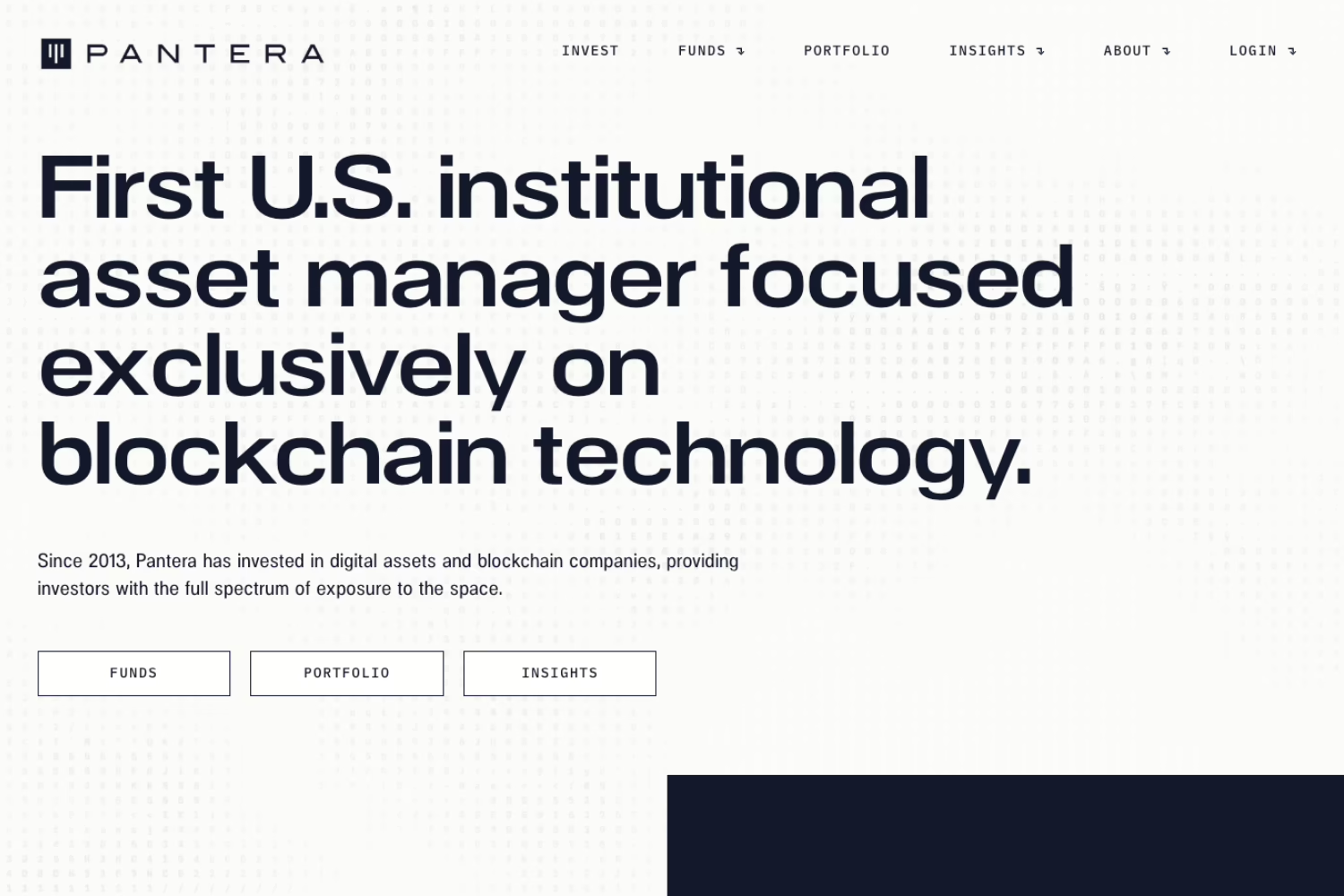
Pantera Capital is one of the earliest institutional players in crypto. They launched the first U.S. investment fund focused on Bitcoin when Bitcoin was still priced at $65. Today, Pantera manages around $4.8 to $5 billion across three main strategies: passive funds, hedge funds, and venture capital.
What sets Pantera apart is its venture activity. The firm has invested in more than 330 crypto companies. This gives Pantera early access to new products, business models, and technology long before they reach public markets. That insight feeds directly into how they think about long-term crypto trends.
Pantera also publishes market outlooks that focus on where crypto is heading next. For 2026, they point to tokenized assets and practical AI tools becoming more common in everyday crypto use, especially for research, analysis, and monitoring activity across networks.
Key Strengths:
- One of the earliest institutional crypto investors in the U.S.
- Combines venture investing with hedge and passive strategies
- Large portfolio of early-stage investments
- Strong long-term view on emerging crypto trends
Why Consider Them: Pantera offers something most asset managers cannot. Their venture investments let them see what is being built before it becomes widely available. For investors who want exposure to both mature crypto assets and early innovation, Pantera provides a broader perspective than traditional managers.
6. Multicoin Capital
Best for: Thesis-driven investors seeking concentrated, high-conviction crypto exposure
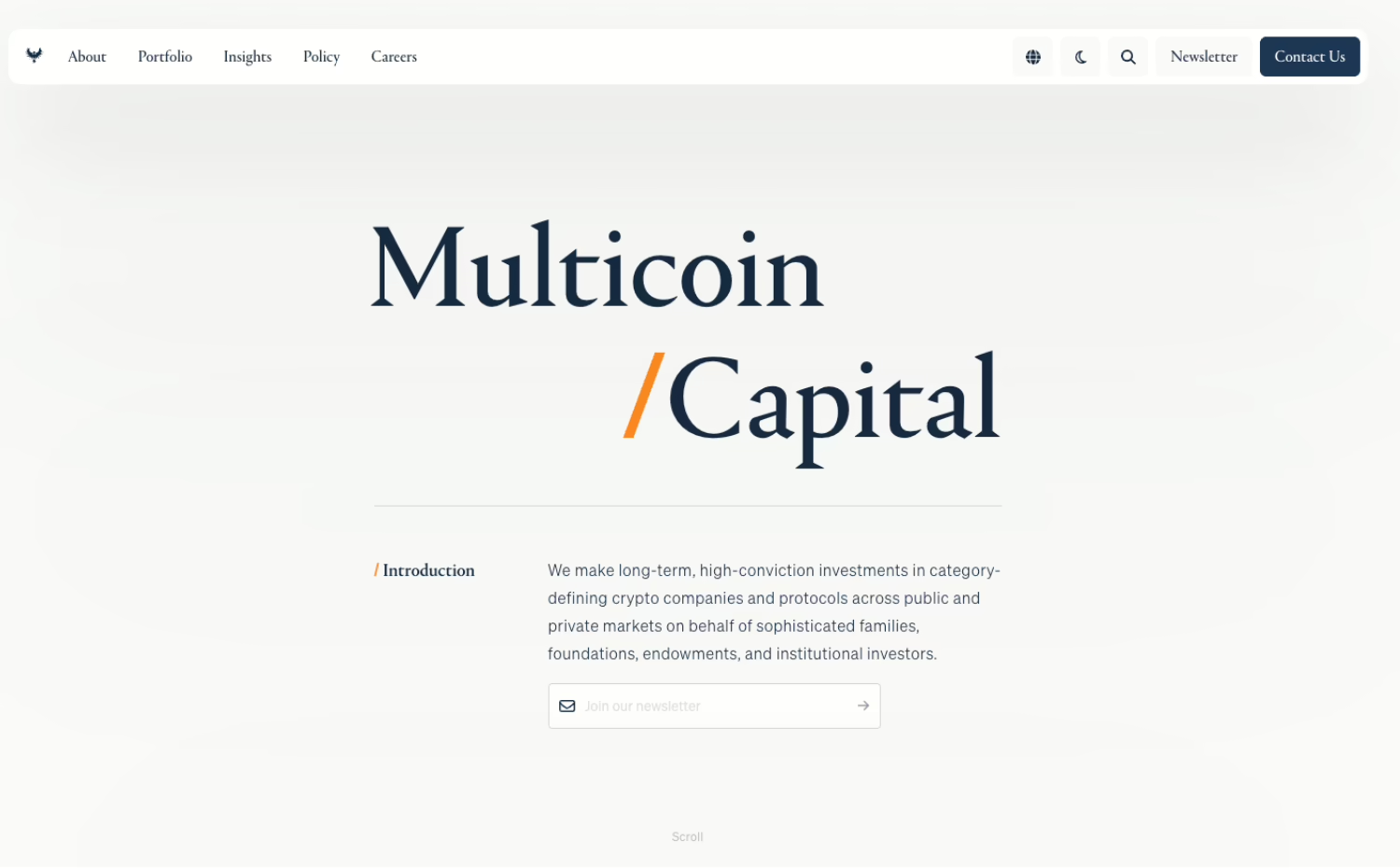
Multicoin Capital manages close to $9 billion in crypto assets, making it one of the larger crypto-focused investment firms. Founded in 2017, the firm is known for taking clear positions rather than spreading capital across the entire market.
They invest in liquid cryptocurrencies, tokens, and blockchain companies, often holding positions for long periods. Their clients include venture capital funds, family offices, and high-net-worth individuals who want deep exposure to the crypto ecosystem.
What makes Multicoin different is how they invest. Instead of following indexes, they build strong views based on detailed research. They also publish their investment theses publicly, explaining what they believe and why. This level of transparency is rare in crypto asset management.
Key Highlights:
- Focused, research-led investment strategy
- Willingness to take meaningful positions
- Long-term approach to holding assets
- Publicly shared investment theses for transparency
Why Consider Them: Multicoin is a good fit for investors who value clear thinking and openness. Their published research helps investors understand how decisions are made and decide whether the firm’s approach aligns with their own risk tolerance and time horizon.
7. BlackRock

Best for: Traditional institutions wanting crypto exposure through a familiar, trusted name
BlackRock is the largest asset manager in the world, and its move into crypto has been decisive. iShares Bitcoin Trust holds more than $83 billion in assets, making it one of the fastest-growing ETFs ever. Its Ethereum ETF adds more than $13 billion.
What matters most is how BlackRock is using these products. Bitcoin is now included in BlackRock’s model portfolios, which manage around $150 billion and are used by advisors worldwide. This means crypto is no longer treated as an experiment. It is part of standard portfolio construction.
For many institutions, BlackRock also removes internal resistance. Allocating to crypto through a familiar firm feels safer and easier to justify. The firm already manages more than $10 trillion across global markets, so risk teams, boards, and regulators are comfortable with the name.
Key Highlights:
- Massive Bitcoin and Ethereum ETF scale
- Crypto included in widely used model portfolios
- Products designed for traditional advisory channels
- Unmatched trust with regulators and institutions
Why Consider Them: BlackRock lets traditional institutions add crypto without changing how they already operate. Their ETFs are familiar, easy to trade, and fit into existing compliance and risk systems. For cautious or first-time investors, this makes entering crypto much simpler.
8. Fidelity Digital Assets

Best for: Conservative institutions prioritizing regulatory compliance and custody infrastructure
Fidelity Digital Assets is Fidelity’s crypto-focused division. It is built for institutions that want crypto exposure but are cautious about risk, regulation, and asset safety. Fidelity’s long history in traditional finance gives it instant credibility with compliance and risk teams.
Fidelity has expanded beyond Bitcoin and Ethereum. Its Solana ETF holds over $130 million in assets as of early 2026. Behind the products is a custody system based on decades of experience protecting traditional investments, adapted for digital assets.
Fidelity also works closely with regulators and puts strong controls in place. This focus may not sound exciting, but for many institutions, it is the most important requirement when entering crypto.
Key Strengths:
- Strong reputation from a long-established financial institution
- Heavy focus on regulation and compliance
- Secure custody built on traditional finance systems
- Growing crypto product lineup
Why Consider Them: Fidelity suits institutions where safety and compliance come first. For firms that need trusted custody, clear controls, and a familiar name to satisfy internal stakeholders, Fidelity provides a comfortable entry into crypto.
9. Digital Currency Group (DCG)
Best for: Those seeking exposure to the broader crypto ecosystem through a diversified holding company
Digital Currency Group is not a traditional asset manager. It is a holding company that invests across the crypto ecosystem. Since 2012, DCG has backed companies, funds, and digital assets that support how crypto works at a foundational level.
DCG holds more than 200 equity investments, over 50 fund investments, and more than 30 token and digital asset positions across more than 25 countries. Its portfolio includes major exchanges, wallet providers, infrastructure platforms, and payment companies.
This structure gives investors exposure to the businesses behind crypto, not just price movements. Instead of betting on which coin performs best, DCG focuses on the tools and companies that the industry relies on to function and grow.
Key Strengths:
- Very broad exposure across crypto infrastructure
- Long operating history in the crypto industry
- Investments across companies, funds, and digital assets
- Global footprint spanning multiple regions and sectors
Why Consider Them: DCG is a good fit for investors who believe in the long-term growth of the crypto ecosystem itself. By investing in the companies that build and support crypto, DCG offers exposure that is less tied to the performance of any single asset and more tied to industry-wide adoption.
10. CoinShares

Best for: European investors seeking innovative, low-fee crypto investment products.
CoinShares is one of the most established crypto asset managers in Europe. It runs well-known products such as XBT Provider and CoinShares Physical ETPs, giving investors regulated access to cryptocurrencies through familiar investment structures.
What sets CoinShares apart is its focus on cost. The firm launched a zero-fee ETP that tracks the top 10 cryptocurrencies, which appeals to institutions that are sensitive to fees, especially when investing large amounts. Lower costs make long-term allocations easier to justify.
CoinShares has also focused heavily on regulation. Its products are designed to meet European regulatory standards, including the MiCA framework. This puts the firm in a strong position as rules across Europe become clearer and more strictly enforced.
Key Strengths:
- Leading crypto asset manager in Europe
- Zero-fee product for broad crypto exposure
- Wide range of regulated ETPs
- Strong alignment with European regulations
Why Consider Them: CoinShares is a strong choice for investors who want crypto exposure through European-regulated products. Their low-fee approach and early focus on compliance make them especially attractive for institutions operating under strict regulatory and cost constraints.