1. Axie Infinity

- Blockchain: Ronin (Ethereum sidechain)
- Main Tokens: AXS, SLP
- Genre: Turn-based strategy and creature collection
- Entry Cost: Requires the purchase of at least three Axies to earn through standard modes
- Average Earnings: Varies widely based on market prices and player performance
- Player Base: Roughly 100,000 to 130,000 daily active users in 2025
Axie Infinity is one of the first games to really show how play-to-earn works. Players collect, breed, and fight creatures called Axies. Winning battles and doing daily tasks earn tokens, while another token lets players vote on some game decisions. For businesses, it’s a clear example of how you can build a small economy inside a game, where players are engaged and actively trading digital assets.
The daily number of players is not what it used to be, but a loyal community still sticks around. The marketplace for Axies stays active, and people keep finding ways to earn. For companies that look at blockchain, Axie shows how tokens, staking, and user-driven markets can work together to create ongoing activity. The upcoming expansion, Atia’s Legacy, adds new ways to play, which shows how fresh content keeps people interested.
How to Earn:
- Win PvP matches and quests to earn SLP tokens (value depends on market demand)
- Breed and sell Axies on the marketplace for NFT income
- Stake AXS tokens through the official staking program for reward distribution (varies with emissions)
|
Pros |
Cons |
|
Strong legacy name in P2E gaming |
High cost for initial Axie packs |
|
Large NFT marketplace |
Earning amounts depend on token markets |
|
Active updates |
gameplay performance |
2. The Sandbox
- Blockchain: Ethereum/Polygon
- Main Tokens: SAND
- Genre: Metaverse/Creator platform
- Entry Cost: Free to explore, LAND purchases for creation
- Average Earnings: Varies widely by activity
- Player Base: 2 million+ registered users
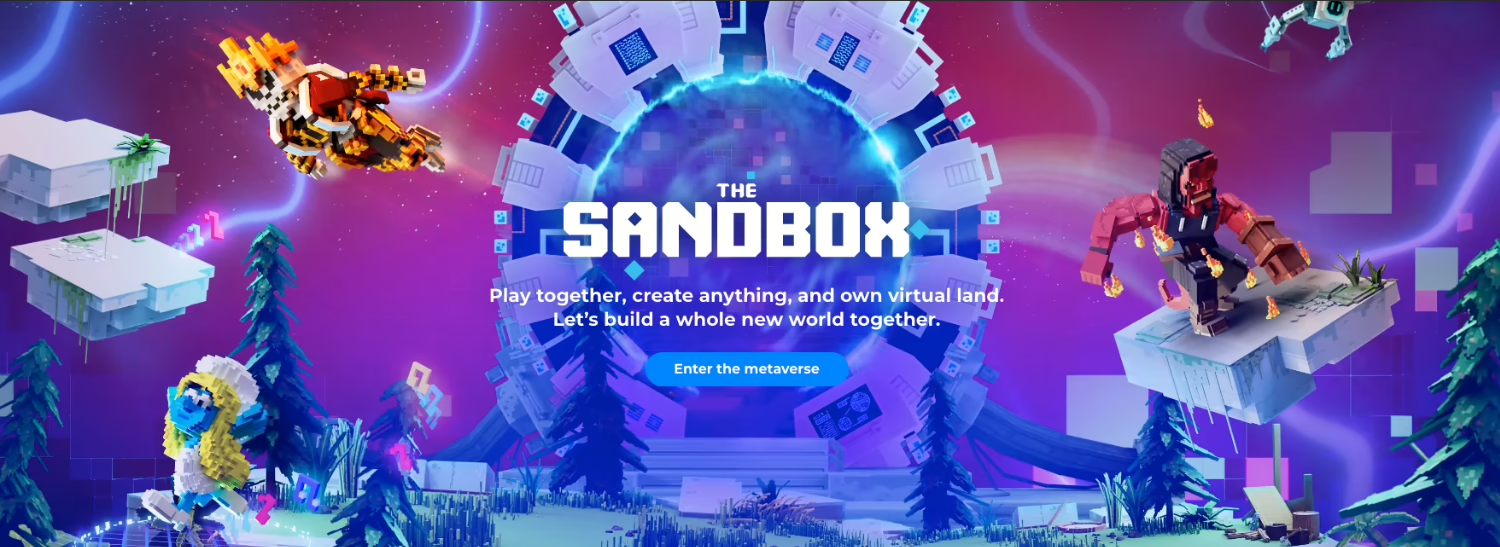
The Sandbox is one of the best play-to-earn crypto games. It is a virtual world where players can create, own, and sell their own content. You can buy LAND, build on it, rent it out, or sell creations as NFTs. Big names like Adidas and Snoop Dogg have also set up spaces in the game.
For businesses, The Sandbox provides a clear example of how user-generated content, virtual property, and community events can drive engagement. Players earn in different ways, but the main lesson is how to build a space where people want to spend time and keep returning. Events and prize contests help maintain community activity and keep the economy alive.
How to Earn:
- Create and sell NFTs using VoxEdit
- Build games on your LAND and charge players
- Buy and sell LAND parcels as NFT real estate
- Stake SAND or related tokens on supported platforms
- Rent LAND to other creators
|
Pros |
Cons |
|
Strong brand partnerships |
Significant investment required for land ownership |
|
Established NFT land market |
Success depends on creative skills |
|
Unlimited creative potential |
3. Illuvium

- Blockchain: Ethereum/Immutable X
- Main Tokens: ILV, sILV
- Genre: Open-world RPG/Auto-battler
- Entry Cost: Free to play base game
- Average Earnings: Varies by tournament and NFT sales
- Player Base: Growing with Epic Games Store presence
As one of the best play-to-earn crypto games, Illuvium takes blockchain gaming to a new level with AAA-quality graphics and complex gameplay. Players explore open worlds, capture NFT creatures called Illuvials, and battle them in auto-battler fights. It’s a step up from most crypto games, which makes it attractive to serious players and investors.
Illuvium shows how to keep players engaged with premium gameplay, tokenized assets, and community-driven governance. The game also tests cross-platform play and runs tournaments. This keeps the community active and helps scale the ecosystem. Illuvium’s roadmap focuses on adding new features and expanding play options, which is a smart move for long-term growth.
How to Earn:
- Capture and trade Illuvials (NFT creatures)
- Stake ILV tokens through the V3 system
- Earn from in-game marketplace fees
- Compete in tournaments for prize pools
|
Pros |
Cons |
|
Console-quality graphics and gameplay |
Complex mechanics have a learning curve |
|
3 interconnected games |
Some treasury liquidity concerns |
|
DAO governance |
4. Gods Unchained
- Blockchain: Ethereum/Immutable X
- Main Tokens: GODS
- Genre: Trading card game
- Entry Cost: Completely free to start
- Average Earnings: Varies by skill and card collection
- Player Base: Strong NFT trading activity
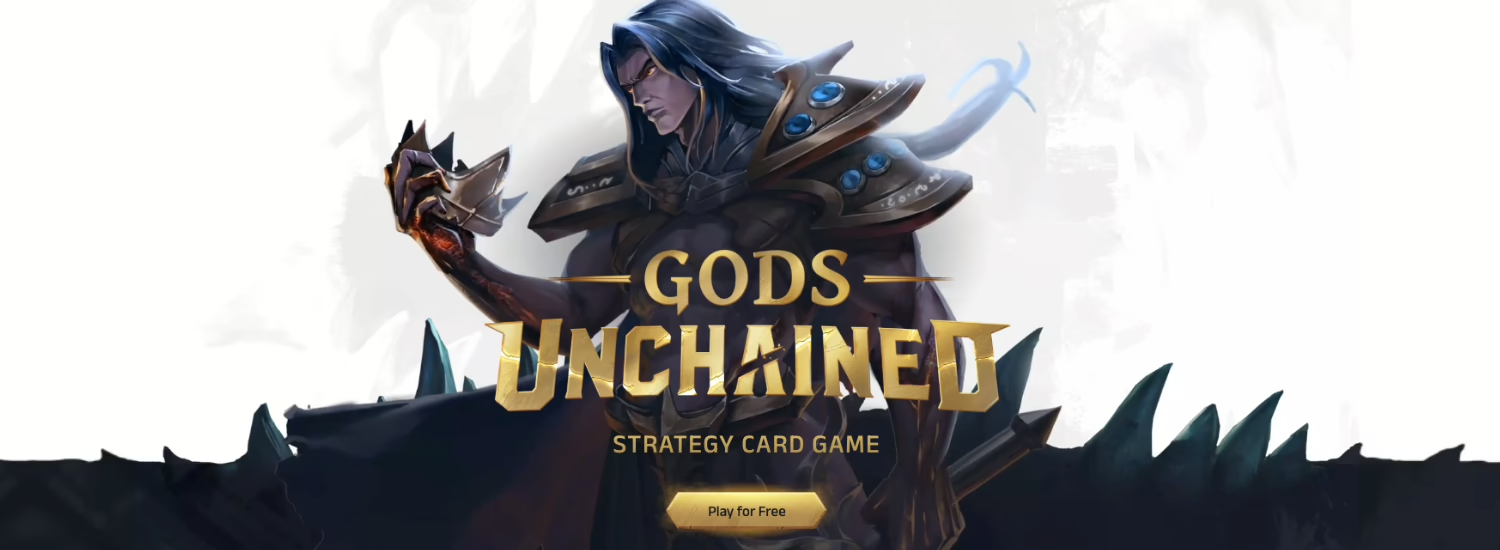
Gods Unchained is a top play-to-earn crypto game that will feel familiar to anyone who has played Hearthstone or Magic The Gathering. The key difference is that players actually own their cards. Developed by one of the earliest blockchain gaming companies, it has steadily grown its community since launching in 2018.
The game demonstrates how tokenized assets and true digital ownership can create an engaged ecosystem around collectibles and in-game content.
How to Earn:
- Earn GODS tokens through daily rewards, quests, and tournaments
- Craft NFT cards by combining base cards
- Trade cards on secondary markets for profit
- Stake GODS tokens to receive rewards
|
Pros |
Cons |
|
Zero entry cost |
Competitive learning curve |
|
Depth rivals traditional card games |
Token values fluctuate with market conditions |
|
True ownership |
5. Big Time

- Blockchain: Proprietary (off-chain with on-chain NFTs)
- Main Tokens: Time Crystals (in-game)
- Genre: Multiplayer action RPG
- Entry Cost: Free to play
- Average Earnings: Depends on time invested and market prices
- Player Base: High trading volume indicates strong activity
Big Time is a multiplayer action RPG that mixes time travel mechanics with a player-driven economy. Players collect materials, craft gear, and trade items in a marketplace that shows strong activity. Unlike games that focus purely on token farming, as one of the best play-to-earn crypto games of 2026, Big Time encourages strategic crafting and market engagement. This structure attracts attention from top NFT marketing firms that study how in-game economies and digital assets can drive long-term engagement.
Players who dedicate time to farming resources, crafting equipment, and selling items can influence supply and demand on the marketplace. For B2B audiences, Big Time demonstrates how player-driven economies and liquid marketplaces can maintain high engagement and generate continuous transactions.
How to Earn:
- Farm materials and craft gear to sell on the marketplace
- Earn Time Crystals, a rare in-game currency
- Trade crafted items and rare gear with other players
|
Pros |
Cons |
|
Player-driven economy feels organic |
Success requires significant time investment |
|
Marketplace is highly active |
Earnings depend on market conditions |
|
Actual fun gameplay |
6. Decentraland

- Blockchain: Ethereum/Polygon
- Main Tokens: MANA
- Genre: Virtual world/Metaverse
- Entry Cost: Free to explore, expensive for land
- Average Earnings: Highly variable
- Player Base: 600 million+ active monthly users (per Finder.com)
Decentraland is one of the best play-to-earn crypto games where users actually control their experience. Players can create, own, and manage virtual spaces ranging from casinos, art galleries, to music festivals. The platform is community-built and community-governed, which means users have a real say in how the world develops. For businesses, Decentraland is an example of how user-driven ecosystems and virtual real estate can be monetized and maintained over time.
The platform hosts major events and experiences, drawing large audiences. There is even a play-to-earn poker game that attracts thousands of daily players. For companies looking at metaverse marketing, Decentraland shows how digital goods, experiences, and land ownership can become revenue streams while keeping the community active.
How to Earn:
- Create and sell avatar wearables
- Earn royalties on secondary market sales
- Design play-to-earn games and experiences
- Stake MANA through third-party providers
- Rent or sell virtual land parcels
|
Pros |
Cons |
|
Established metaverse with major events |
Land prices are steep |
|
User-governed platform |
Building compelling experiences requires time and skill |
|
Diverse earning options |
7. Gala Games Ecosystem
- Blockchain: GalaChain (proprietary)
- Main Tokens: GALA
- Genre: Multi-game platform
- Entry Cost: Varies by game
- Average Earnings: Depends on node operation and game activity
- Player Base: Growing across multiple titles
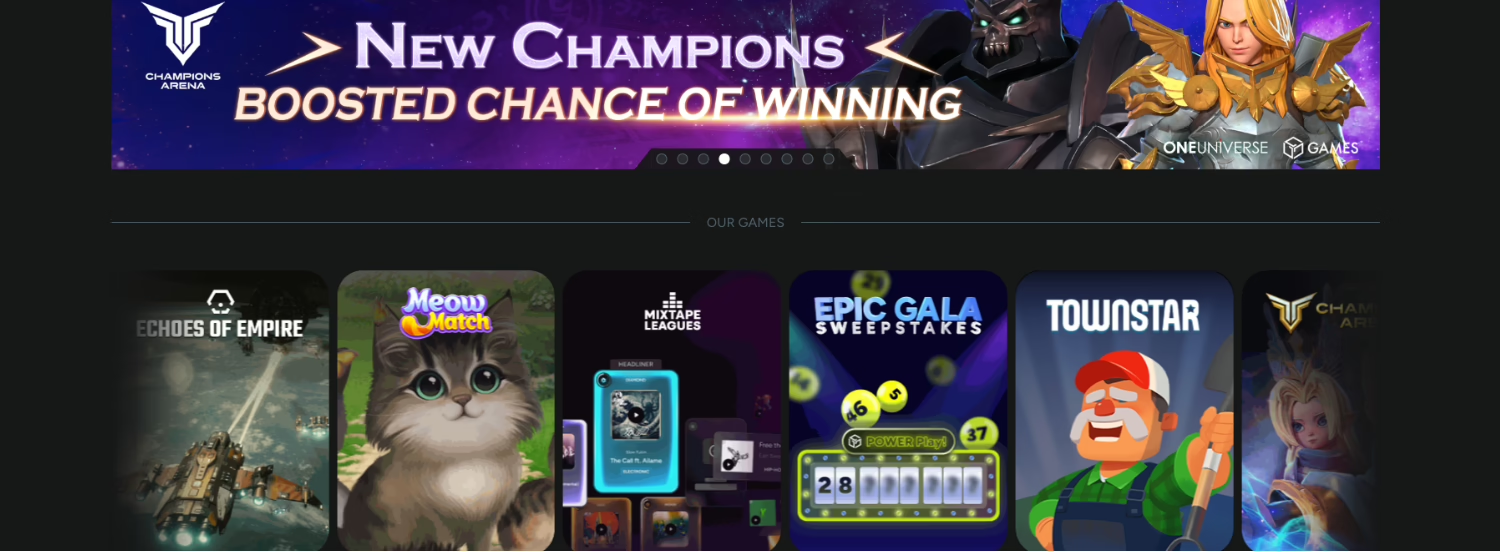
Gala Games is a platform that hosts multiple blockchain games within one ecosystem. Players can earn passively by running nodes or actively by playing titles like Superior. The platform also uses AI-driven tokens, such as $GCHIP for poker, which shows how digital assets can work across different game types.
What we like about Gala, as one of the best play-to-earn crypto games, is that it shows how a multi-game ecosystem can keep players engaged and generate multiple revenue streams. The node system, cross-game marketplaces, and token rewards give a clear example of how to set up incentives and keep activity high across different experiences.
How to Earn:
- Run Gala Games nodes to earn rewards and NFTs
- Play various games to earn GALA tokens
- Trade NFT assets across the ecosystem
- Compete in tournaments across different titles
|
Pros |
Cons |
|
A diverse game portfolio means something for everyone |
Node investment required for maximum earnings |
|
Node rewards provide passive income |
Learning multiple games takes time |
|
AAA partnerships |
8. Alien Worlds
- Blockchain: Ethereum, WAX, BNB Smart Chain
- Main Tokens: TLM (Trillium)
- Genre: Space exploration/Mining simulation
- Entry Cost: Free to start
- Average Earnings: Low per-transaction but consistent
- Player Base: Highest transaction count per wallet in gaming
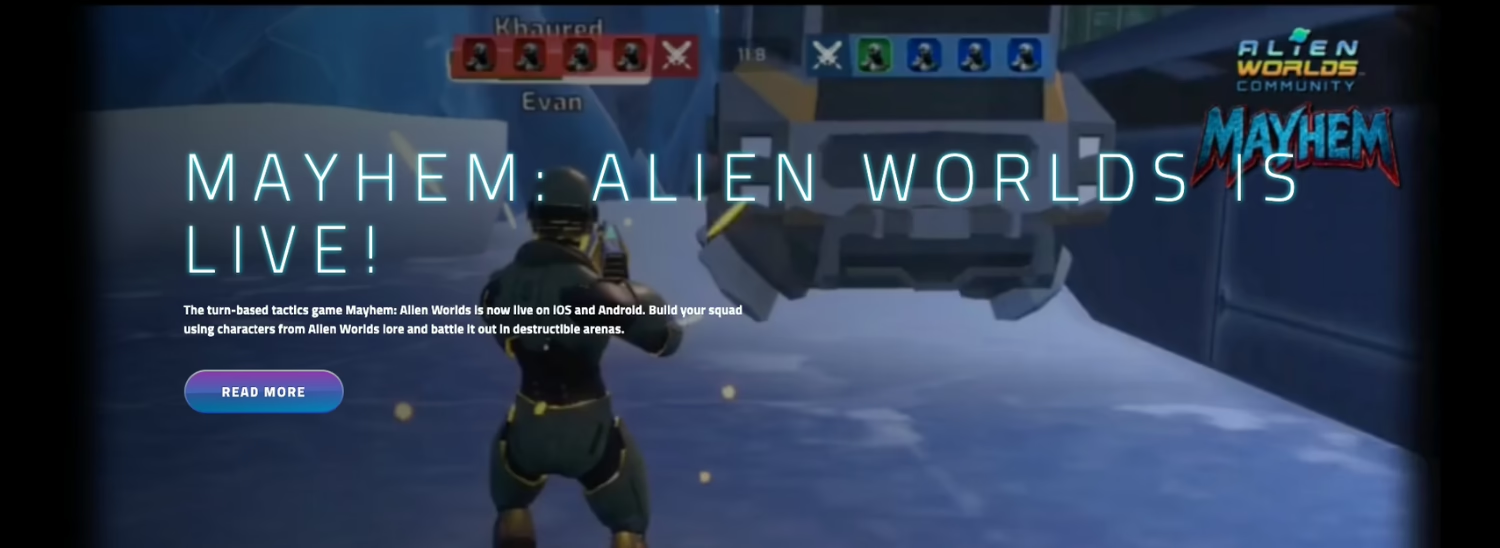
Alien Worlds takes the crown for pure on-chain engagement. DappRadar shows it recorded 598.7 transactions per wallet, the highest among all gaming dapps. People are actively playing this game.
The concept is straightforward: mine Trillium (TLM) tokens on various alien planets and participate in planetary governance through DAOs. It runs across three blockchains, giving players flexibility in how they interact with the game.
How to Earn:
- Mine TLM tokens on various planets
- Stake TLM for Planet DAO governance participation
- Buy or lease land for mining commissions
- Trade NFT mining tools and assets
|
Pros |
Cons |
|
Extremely low barrier to entry |
Mining mechanics are fairly simple |
|
Multi-chain support offers flexibility |
Strategic land selection matters for earnings |
|
DAO governance gives players real influence |
9. Splinterlands
- Blockchain: Hive
- Main Tokens: DEC, SPS
- Genre: Trading card game
- Entry Cost: Low (starter deck available)
- Average Earnings: Tournament and rental dependent
- Player Base: 100,000+ daily active players
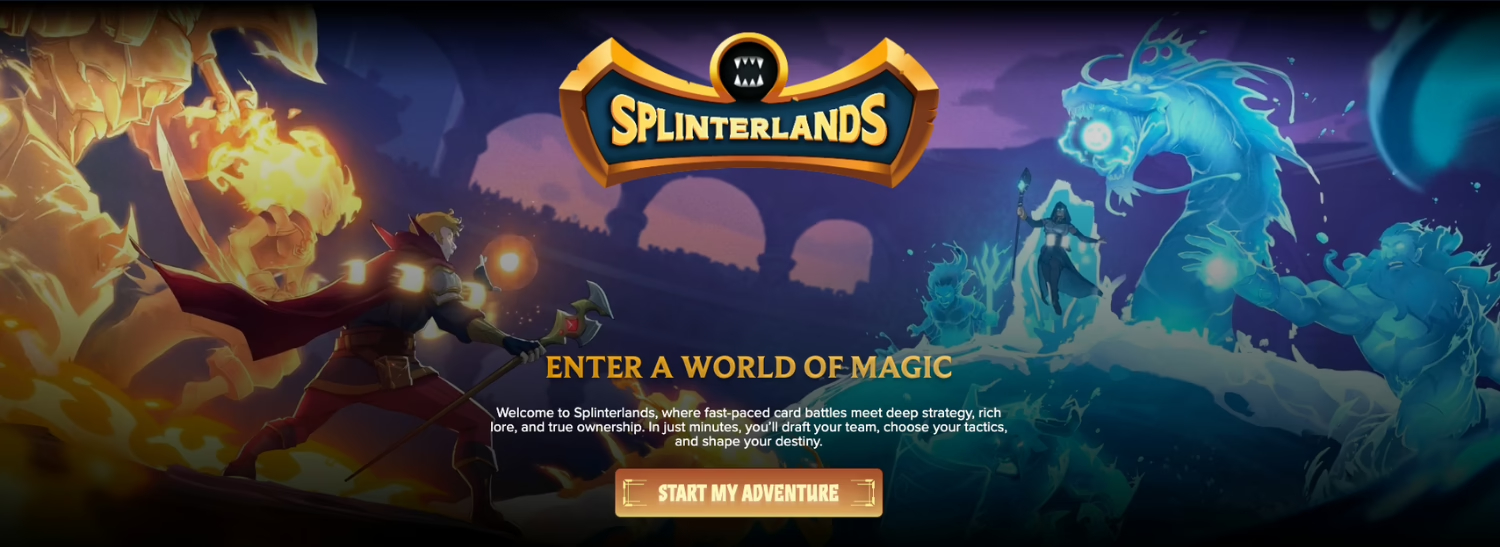
Splinterlands has quietly built one of the most dedicated communities in blockchain gaming. Daily active users consistently exceed 100,000, and players are constantly engaging with battles, trading, and tournaments.
The concept is simple but deep: collect cards, battle other players, and manage your deck to maximize rewards. As one of the top play-to-earn crypto games, Splinterlands runs on the Hive blockchain, and the community keeps things lively by creating content on social media, videos, and blogs.
How to Earn:
- Win battles for DEC tokens
- Trade and sell cards as NFTs
- Stake SPS tokens for governance and rewards
- Rent cards to other players
- Compete in tournaments for prize pools
|
Pros |
Cons |
|
Tactical depth keeps gameplay interesting |
Multiple token economies can confuse newcomers |
|
Active development cycle |
Competitive players have a skill advantage |
|
Community is genuinely engaged |
10. Star Atlas
Quick Stats:
- Blockchain: Solana (custom Zink SVM)
- Main Tokens: ATLAS, POLIS
- Genre: Space MMO
- Entry Cost: Variable (ship purchases)
- Average Earnings: To be determined (full launch pending)
- Player Base: Growing test community
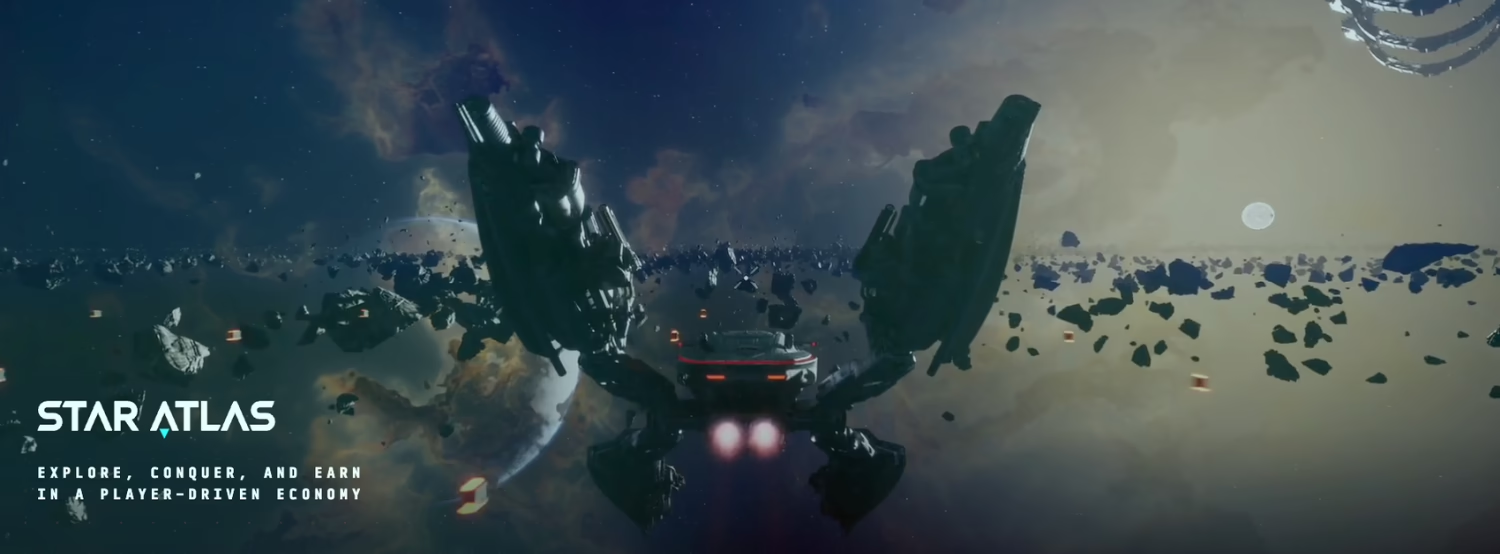
Star Atlas is one of the most ambitious blockchain games available. It is a full-scale, open-world space MMO set in the year 2620, with three competing factions and a player-driven economy. Players can explore planets, mine resources, and build or operate NFT spaceships and space stations. The game runs on Zink, a custom Solana Virtual Machine chain built specifically for Star Atlas. A test version is playable on the Epic Games Store, while the full launch is expected by early 2026.
We included Star Atlas in our list of best play-to-earn crypto games for different reasons. For example, it provides insights into how large-scale virtual worlds with tokenized economies can attract and engage players. Its combination of faction-based gameplay, NFTs, and dual-token systems offers lessons on building complex ecosystems and balancing governance, rewards, and in-game incentives.
How to Earn:
- Mine resources across planets
- Trade ATLAS and POLIS tokens
- Own and operate NFT spaceships and stations
- Participate in faction-based territorial conquest
- Stake POLIS tokens for governance rights
|
Pros |
Cons |
|
Massive scope rivals traditional AAA MMOs |
A long development timeline requires patience |
|
Custom infrastructure built for the game |
Gameplay complexity is high |
|
Stunning visuals |