
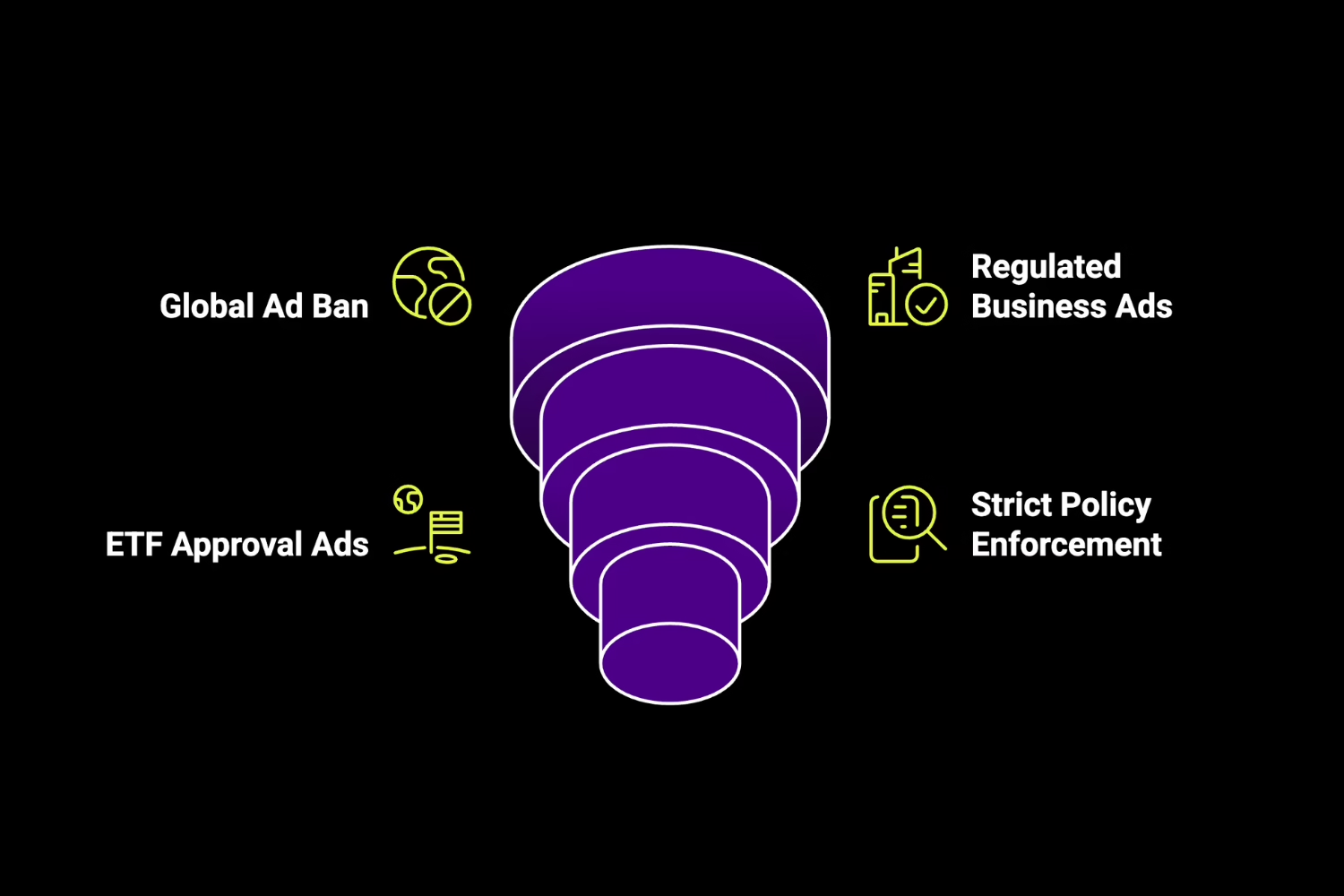
Google’s strict approach to crypto ads comes from what happened in the past. During 2017 and 2018, the ICO boom brought a wave of scams. Many projects used fake claims and misleading promises, causing people to lose money. In response, Google banned all cryptocurrency ads worldwide in 2018 to protect users.
In 2021, Google began allowing crypto ads again, but only for regulated businesses. Since then, the rules have slowly expanded in some areas. For example, after the approval of Bitcoin ETFs in 2024, Google allowed certain types of crypto-related ads in the United States.
Even with these updates, Google still takes a cautious approach. Most policies remain strict, and the main rule is simple. If a product is not approved by financial regulators in a specific country, it is unlikely to be allowed in ads. This focus on user protection continues to shape how crypto advertising works on Google.
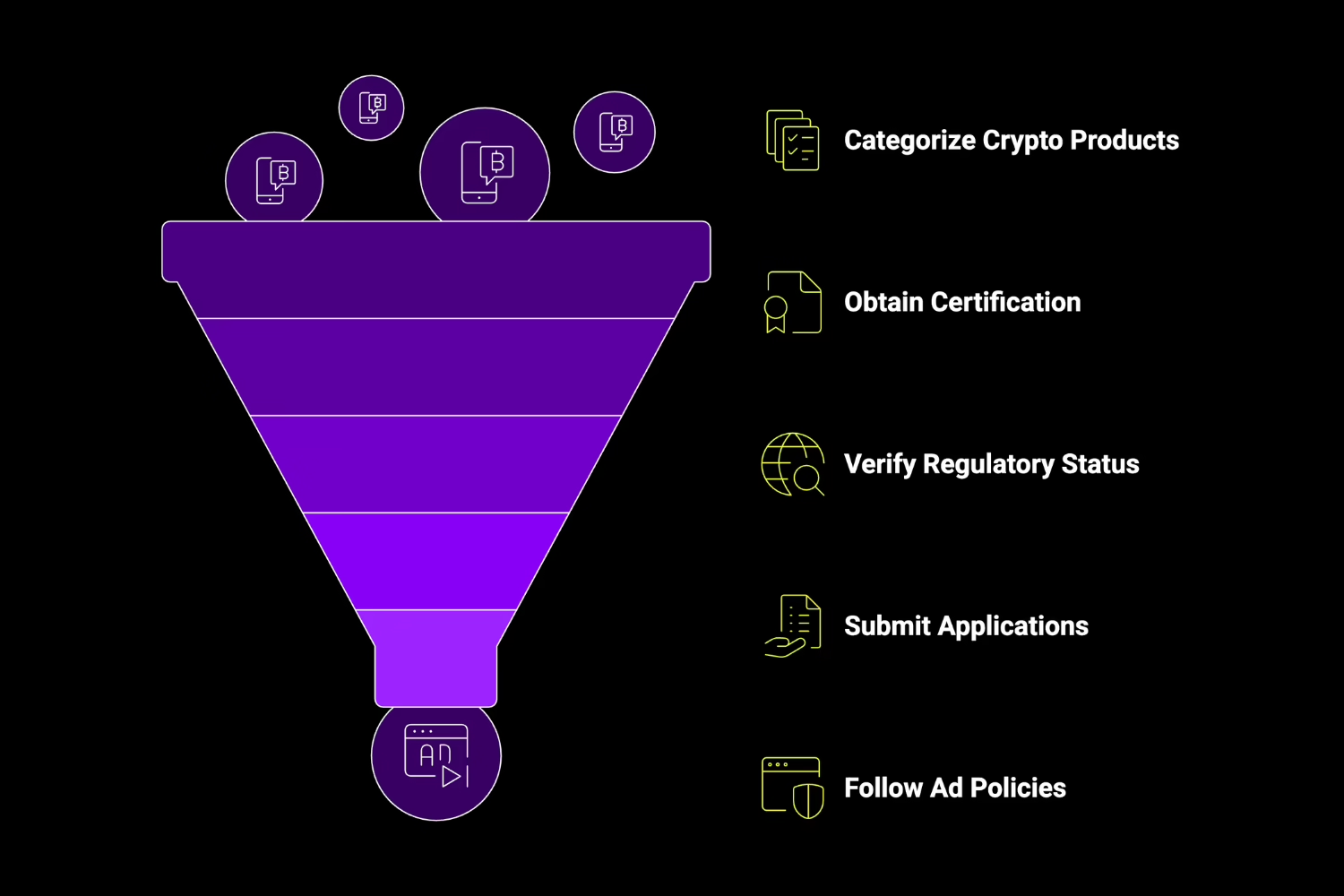
Google updates its crypto ad policies continuously. Currently, crypto ads fall into three categories: products you can advertise without certification, products that need Google’s certification, and products that are banned. Understanding which category your business falls into is the first step. Getting it wrong can put your account at risk before you even launch a campaign.
You Need Certification to Run Crypto Ads
If you run a cryptocurrency exchange, a software or hardware wallet, or a Cryptocurrency Coin Trust in the U.S., you must complete Google’s restricted financial products certification before any ads can go live.
Here’s what that looks like in practice:
- Prove your regulatory status: You need registration with the relevant financial authority in each country you target.
- In the USA, this means FinCEN registration plus at least one state money transmitter license.
- In the UK, FCA registration has been required since January 2025.
- In the EU, a MiCA CASP license is needed from April 2025.
- Canada requires FINTRAC registration.
- Argentina added a CNV VASP registry requirement in September 2025.
- Complete Google’s general advertiser verification first: This step is required before applying for the crypto-specific certification.
- Submit separate applications for each country: If you target 10 markets, you must submit 10 applications. A U.S. certification does not cover Europe or Asia.
- Prepare for a long wait: Google manually checks each application against public regulatory registries. Expect several weeks at a minimum.
Google can also revoke certification at any time if your campaigns generate complaints or your regulatory status changes. Certification is not a “set it and forget it” process.
Only Certain Crypto Businesses Are Allowed
Not every crypto product can run ads on Google. According to their official policy page, even if it has all the necessary licenses.
What’s permanently banned:
Some products are never allowed. This includes ICOs, STOs, IEOs, and token presales. Unregulated DeFi trading protocols, DApps, and crypto broker review sites are also banned. If your project is in DeFi or NFTs, paid ads on Google are usually not an option. Using other crypto ad networks may be a better fit.
What you can advertise without certification:
- Mining hardware
- Crypto tax and legal services
- Educational blockchain content
- Platforms that use blockchain operationally but don’t sell tokens
- Hardware wallets (with conditions)
- NFT games (must comply with local laws)
What you can advertise with certification:
- Cryptocurrency exchanges (Coinbase, Kraken, Binance, etc.)
- Software wallets
- Hardware wallets for private key storage
- Cryptocurrency Coin Trusts (U.S. only, post-Bitcoin ETF approval)
Deceptive or Misleading Claims Are Prohibited
Your ad copy must be a study in utility and security and steer clear of speculation. Google’s 2026 AI models instantly flag any sentiment relating to ‘guaranteed returns’ or ‘100x gains.’ We architect copy that emphasizes protocol security, regulatory compliance, and ease of use—narratives that pass the compliance filter while still maintaining a competitive CTR (Click-Through Rate).
Your ad must describe your product accurately. “Licensed Crypto Exchange” or “Secure Software Wallet” is fine. Ads cannot promise gains. They also cannot reference ICOs, DeFi, or other banned products.
Landing Pages Must Be Transparent
Google checks the landing page too. The domain must match the one in your certification.
Pages must avoid prohibited content. This includes ICO mentions, DeFi references, or any text that looks like investment advice. Risk warnings must be clear and visible. They cannot be hidden in footers or terms of service. In the EU, a “Capital at Risk” warning is required under MiCA rules.
License links must go directly to the public regulatory registry. If you advertise in multiple countries, make sure users from certified markets do not see pages for non-certified regions.
You Must Follow Local Laws and Regulations
Google’s rules follow what financial regulators allow in each country. Approval from Google does not replace local law. You are responsible for making sure your ads meet the rules in every market you target.
Each country has its own regulator. In the U.S., it is FinCEN. In the UK, it is the FCA. The EU uses MiCA, Singapore uses MAS, Canada uses FINTRAC, and Argentina uses CNV. Each market requires a separate certification. Approval in one country does not cover another. Running campaigns in multiple regions adds real compliance work.
No Promotion of Trading Signals or Investment Advice
Trading signals, investment advice, and broker comparison sites are banned. This applies even if your main product is a certified exchange or wallet. Secondary offerings cannot bypass these rules.
Framing content as educational is allowed. It is also cheaper. According to Fortis Media citing Adweek, the cost per thousand impressions for crypto educational ads on Google dropped 41% between 2023 and 2025.
Restricted Targeting and Ad Formats
Even after certification, ads will appear as “Eligible (Limited)” in Google Ads. This means restrictions on when, where, and how often ads show. Search ads, Display ads, and YouTube pre-roll are allowed, but all follow strict geo and content rules.
Display ads must focus on utility, security, or education. Ads showing price speculation, token charts, or hype will be rejected. Do not use VPNs or geo-masking to serve ads in uncertified countries. Google can detect this and may suspend your account.
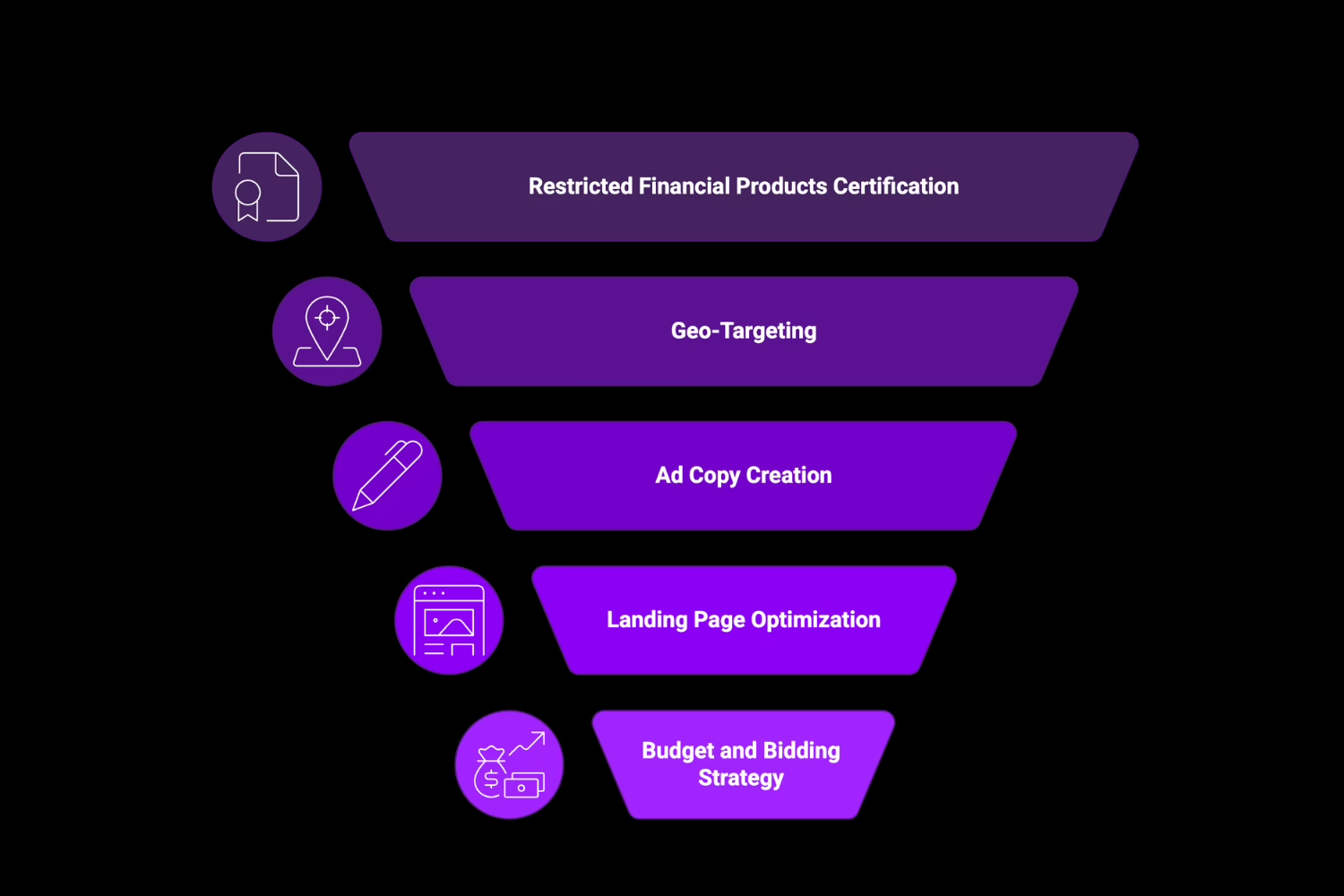
Getting certified is only part of the process. Setting up a campaign requires care at every stage. Here is a step-by-step approach based on what works for Web3 clients running paid search.
Step 1: Set Up Your Google Ads Account
Create a Google Ads account or log in to an existing one. Complete the general advertiser identity verification first. This is required before applying for any restricted category certification.
Once verified, submit your restricted financial products certification. You must fill out a separate form for each country or region you plan to target. Attach the required regulatory documents. This could include FinCEN registration, FCA approval, or a MiCA CASP license. Plan for a review that takes several weeks.
Step 2: Choose the Right Locations (Geo-Targeting)
Only run ads where you have a license and certification. Currently approved countries include the U.S., UK, Japan, South Korea, Hong Kong, UAE, Germany, France, Spain, Poland, Australia, Singapore, Canada, and Argentina.
Exclude countries where you are not certified. Avoid broad regional targeting like “Europe.” Double-check your settings before going live.
Step 3: Write Clear and Compliant Ad Copy
Describe your product clearly. For example, “Licensed Crypto Exchange” or “Secure Software Wallet.” Avoid financial promises.
Do not mention ICOs, DeFi, or other banned products. Add disclaimers if you can. Focus on security and practical benefits.
Step 4: Make Sure Your Landing Page Meets Requirements
Make sure the domain matches your certification. Remove banned references from the page. Show risk warnings clearly. Link your license to the public registry. Test the page from the same country as your audience.
Step 5: Set Your Budget and Bidding Strategy
Crypto keywords are expensive. CPC ranges from three dollars eighty cents to ten dollars.
Start with specific, high-intent searches rather than broad terms. For example, “licensed ETH wallet for Canadians” will perform better and cost less. Avoid automated bidding until you have enough conversion data. Budget for testing because early campaigns often get disapproved.
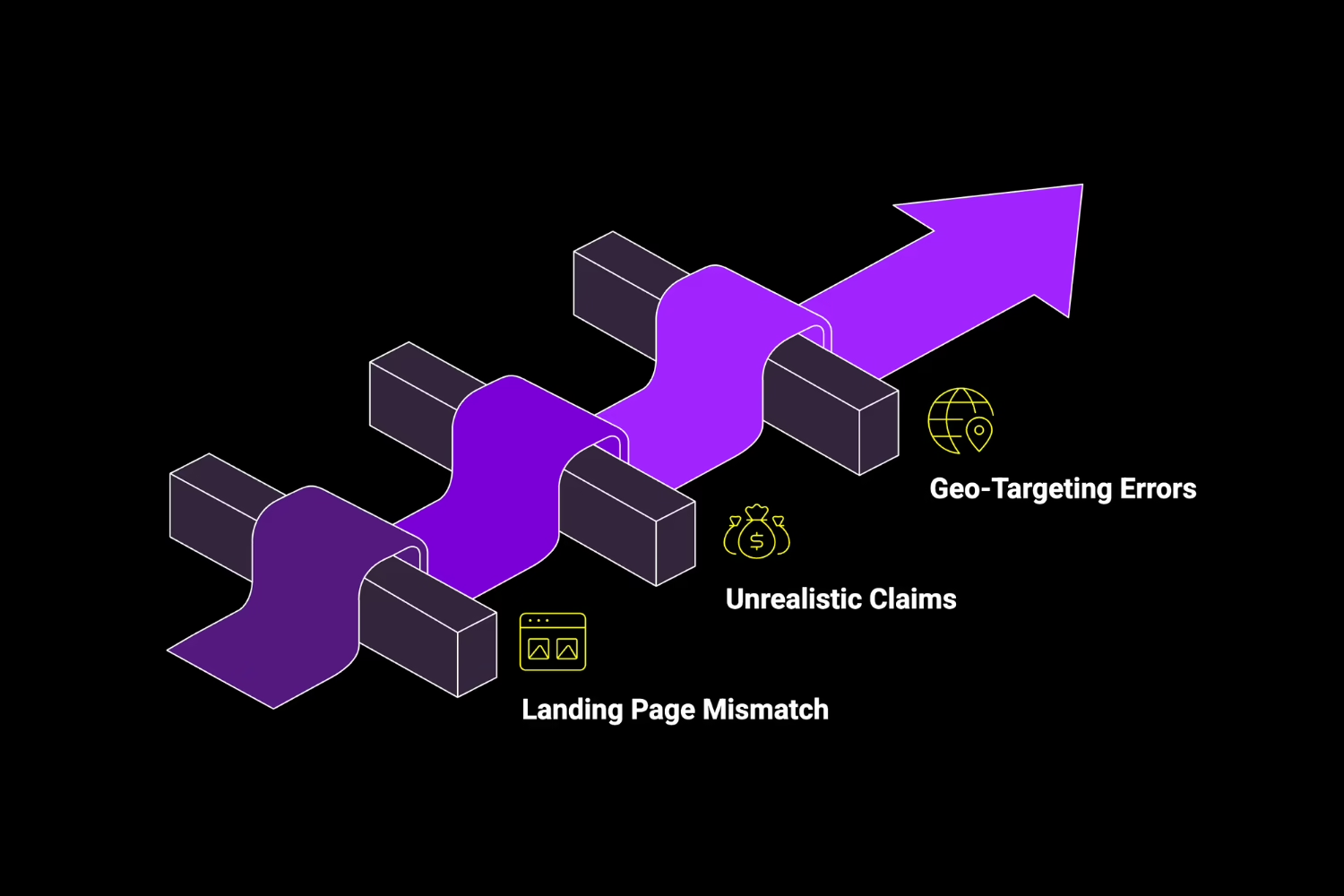
Many cryptocurrency companies have difficulty accessing paid advertising channels, often because they underestimate how strict the compliance requirements actually are. Here’s where things usually go wrong.
Landing Page Does Not Match the Ad
This is the main reason ads get rejected. Your ad might say “Licensed U.S. Exchange,” but your landing page could still include ICO marketing content, DeFi farming, or token presales. Even one mention is enough for Google to block the ad.
Check your whole site before you launch. Remove any ICO marketing or other restricted content, even if it is on blog posts or linked pages. Google reviews more than just the main section.
Make sure your landing page matches your ad exactly. If your ad is about a compliant product, everything on the page should reflect that.
Claims That Sound Too Good to Be True
Phrases like “Guaranteed returns,” “Risk-free crypto,” or “Earn 10x” will get caught instantly. Certification does not protect you from this.
Focus your ad copy on what your product actually does. Explain features, security, or utility instead of promised profits. If needed, work with a marketing or crypto PR team to make sure the wording is safe and clear.
Geo-Targeting Mistakes That Get Ads Blocked
Showing ads in countries where you are not certified will get your campaign blocked. Broad targeting is the main reason for this mistake. For example, selecting “Europe” when you only have licenses in Germany and France will cause violations if the ad reaches Poland or Italy.
Set your targeting for each country individually. Exclude all places where you are not approved. Always double-check these settings before launching any campaign.
How to Appeal Crypto Ad Disapprovals
First, fix the problem. Google checks the actual compliance, not your intentions. After you fix it, submit a review through the Policy Manager in your Google Ads account.
Include in your appeal:
- Ad ID and customer ID
- The specific policy from the disapproval notice
- Before and after screenshots with timestamps
- Your license or certification documents
Keep the appeal clear and short. About 150 to 300 words is ideal. Explain the issue, show the fix, list the steps you took, and provide contact details.
Do not make a new account to bypass a suspension. Google will permanently ban you across all accounts if you try.