

The scale of this market should change the way you talk to investors, partners, and your own team.
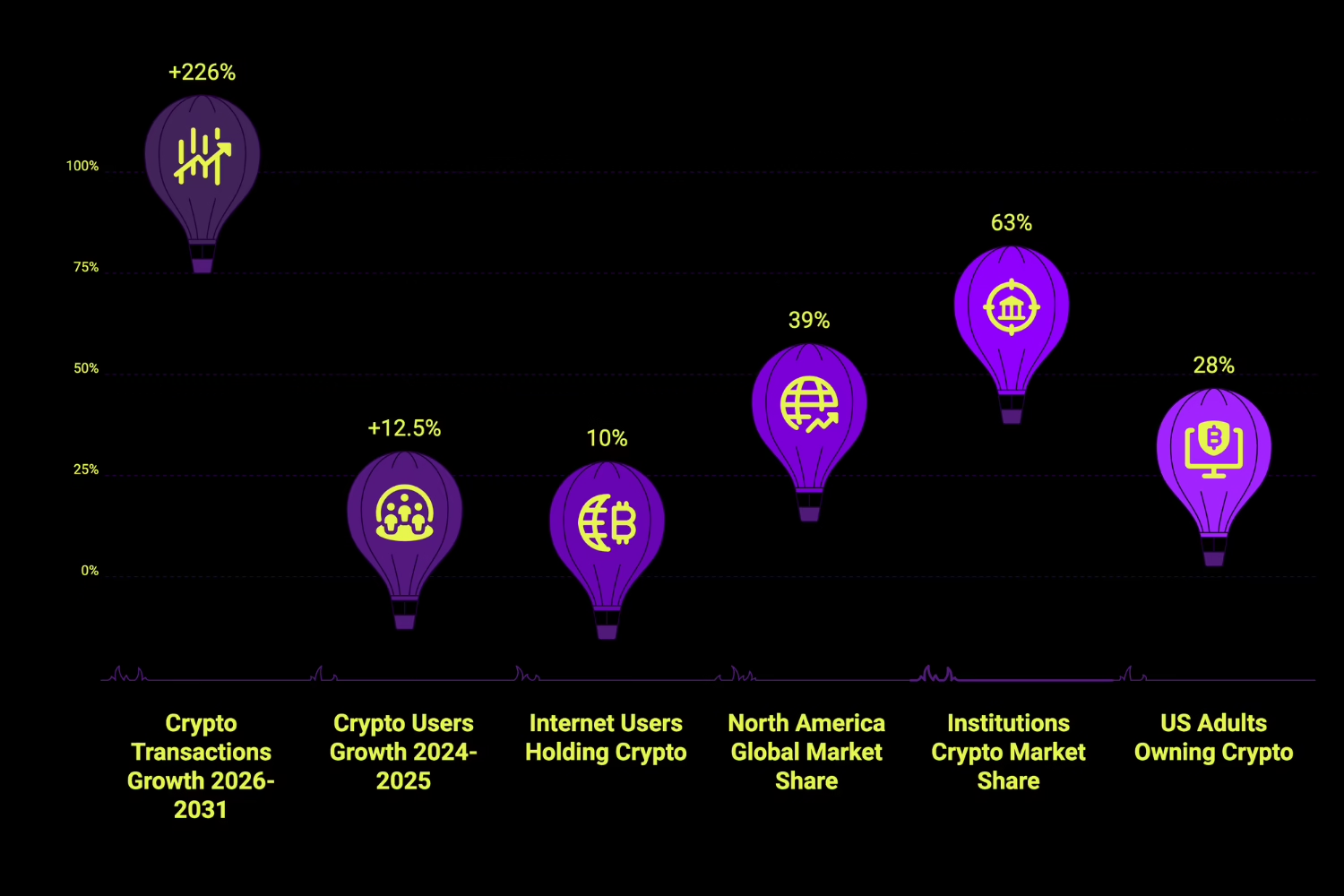
- Crypto transactions hit $6.16 trillion in 2026 and are expected to reach $20 trillion by 2031. That is 3x growth in 5 years. If you are building a crypto marketing strategy right now, the market you are targeting will triple before your Series B closes.
- 741 million people owned crypto in 2025, up 82 million in just one year. Every new user needs education and trust signals. That is exactly where crypto influencer marketing comes in.
- About 1 in 10 internet users now holds crypto (roughly 559 million people). That number is still climbing fast.
- North America holds 39% of the global market, but the Asia Pacific is growing fastest at 34.7% per year. If you have no APAC strategy, you are missing where the real growth is.
- Institutions own 63% of the crypto market, but retail is the fastest-growing group at 28.3% per year. You need two different messages: one for big investors, one for everyday people.
- 28% of US adults, about 65 million people, own crypto. Up from 21% just a few years ago. This is no longer a niche product.
Knowing the market size is one thing. Knowing who is in it helps you market smarter. These stats should shape your audience targeting, your social media strategy, and your KOL marketing campaigns.
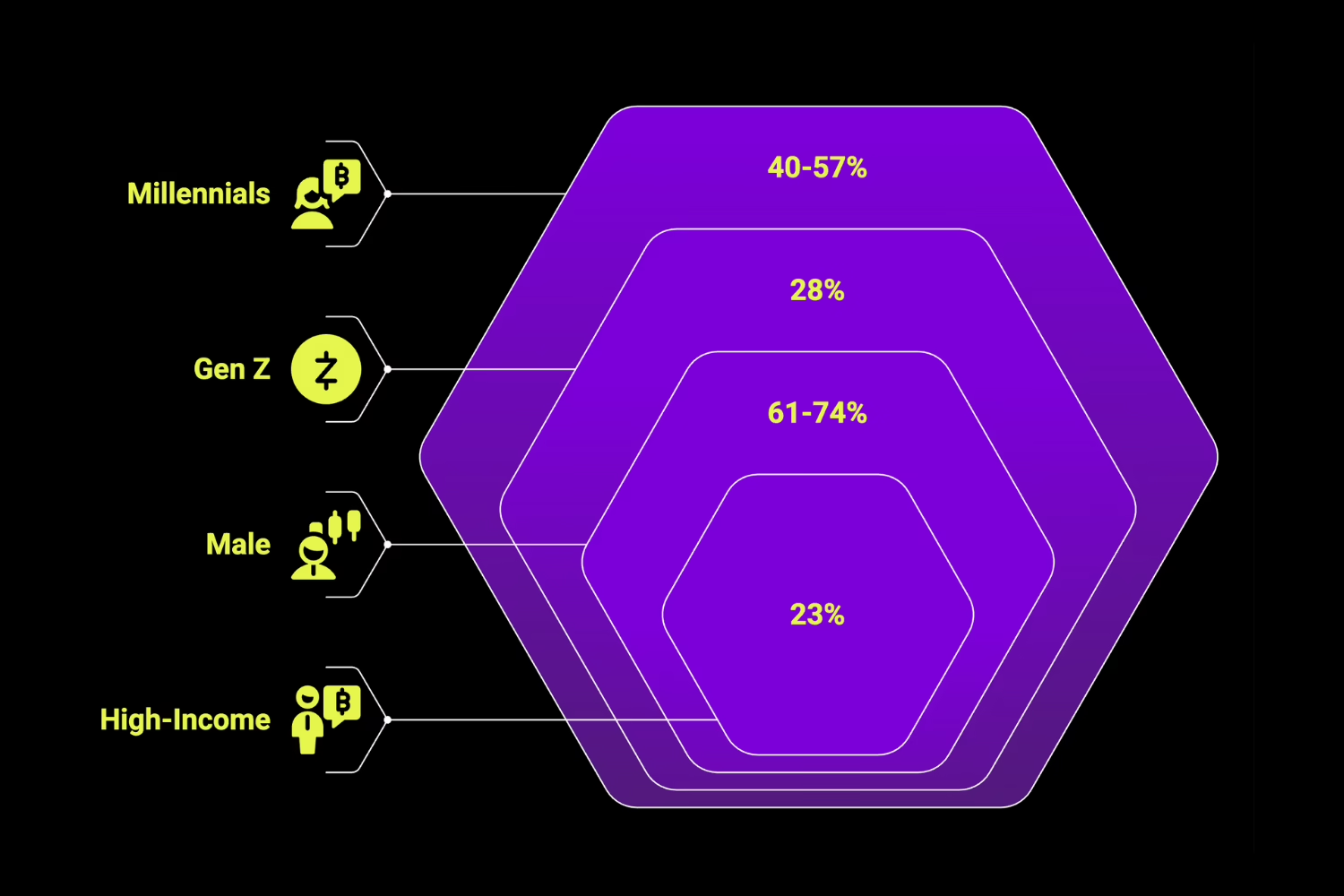
- Millennials (ages 25 to 43) make up 40 to 57% of crypto investors worldwide. The 25 to 34 age group is the biggest single slice. They grew up with early Bitcoin, lived through the ICO boom, and survived multiple bear markets. They do not respond to hype. They respond to utility and track record.
- Gen Z makes up 28% of all crypto users, and 38% of first-time DeFi wallet holders. They are entering crypto through DeFi protocols and on-chain apps, not through centralised exchanges. If your marketing funnel starts and ends at a CEX listing, you are missing the fastest-growing audience entirely.
- Around 61 to 74% of crypto investors are male, roughly 343 million men versus 219 million women worldwide. The gap is narrowing. Brands that run inclusive campaigns now will build loyalty with a growing audience before competitors catch on.
- 23% of high-income US households use crypto, compared to 18% middle income and 14% lower income. If you are targeting wealthier users, lean into high-intent channels like crypto podcasts and YouTube channels rather than broad paid social.
- India ranks number one in crypto adoption globally, with the US at number two. South Asia grew transaction volume 80% in the first half of 2025. Projects that localise their community management and KOL outreach for Indian and Southeast Asian audiences see dramatically better engagement than those running English-only campaigns.
Crypto is shifting from a speculative asset to a real financial layer. The marketing implications of that shift are massive.
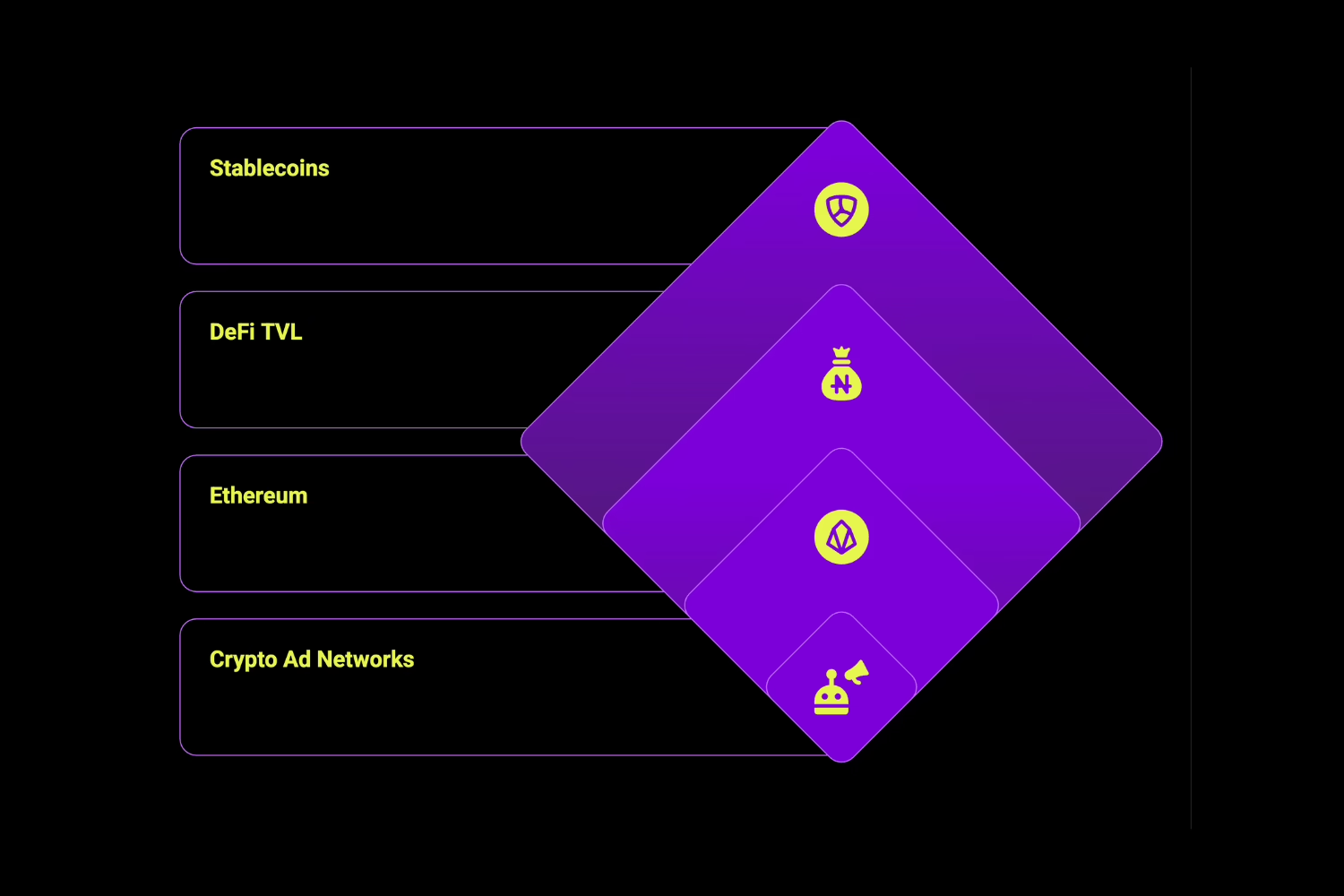
- Stablecoins now have $300 billion in total value, with $3.4 trillion moving through them monthly. That beats Visa’s $1.3 trillion. Stablecoins are becoming a real payment rail, not just a trading tool. Payments-focused messaging is resonating with mainstream audiences in a way that “numbers go up” narratives never did.
- DeFi TVL sits between $130 and $140 billion in early 2026, recovering after the FTX collapse. Ethereum still hosts 63% of all DeFi liquidity. If you are planning DeFi marketing campaigns, Ethereum native users are still the largest addressable audience in decentralised finance.
- Ethereum user count grew 22.6% in 2025, from 142 million to 175 million. If your project is on Ethereum or an L2, your potential audience is growing fast.
- By the end of 2026, roughly 1 in 8 internet users will own crypto (12.24% penetration). The audience is now large enough that broad reach channels like crypto ad networks and PR campaigns across 30+ publications can genuinely move the needle.
Technology changes in 2026 aren’t just reshaping products; they’re reshaping how and where marketers can reach users.
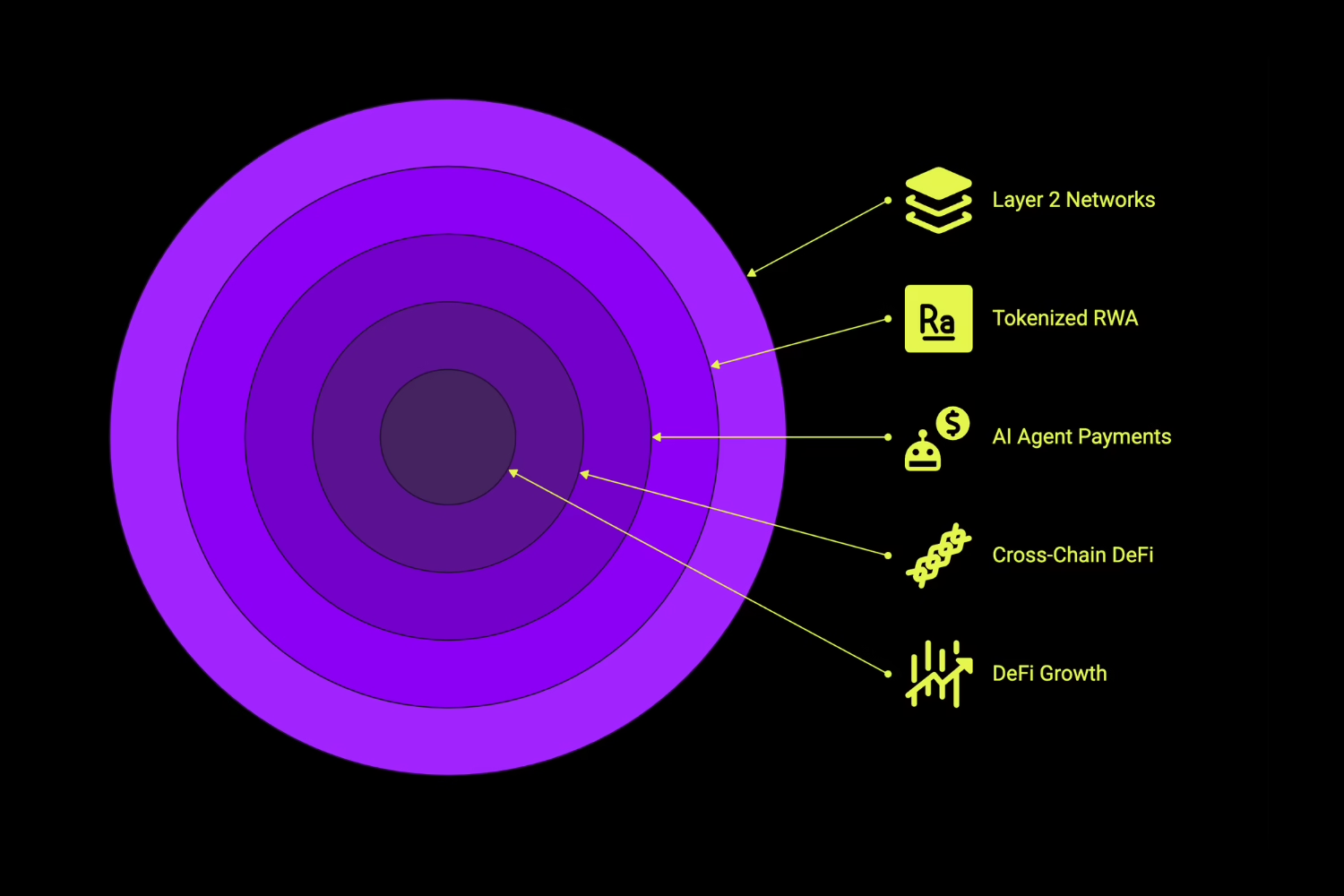
- Over 92% of Ethereum transactions now happen on Layer 2 networks like Base, Arbitrum, and Optimism. Fees are often under $0.01. That changes user behavior. When transactions are almost free, people are more willing to click, test, mint, stake, and interact. On-chain actions are no longer a big commitment, but part of the normal user flow.
- The tokenized Real World Assets market passed $36 billion in on-chain supply in 2025, up 300% from 2024. This shows that blockchain infrastructure is now strong enough to support real financial assets. Traditional finance users are entering Web3 because the technology can handle larger amounts of capital.
- The x402 protocol for AI agent payments was adopted by Google Cloud, AWS, and Anthropic in 2025. This allows AI systems to make automatic on-chain payments. Commerce is no longer only between people. Machines can now transact directly with other machines.
- DeFi is projected to grow by 26.2% CAGR through 2030 and beyond. This signals that DeFi technology is becoming long term financial infrastructure. Projects being built today are building on systems that are stabilizing, not temporary trends.
Cross-chain DeFi activity increased by 52% in 2025, with over 2,000 decentralized apps running integrated DeFi modules. Multi-chain marketing isn’t optional anymore. If your project only exists on one chain, your competitor on five chains is getting five times the distribution through crypto Discord groups, Telegram channels, and chain-specific
Token-level data tells the real story about where value is moving and where marketing budgets should follow.
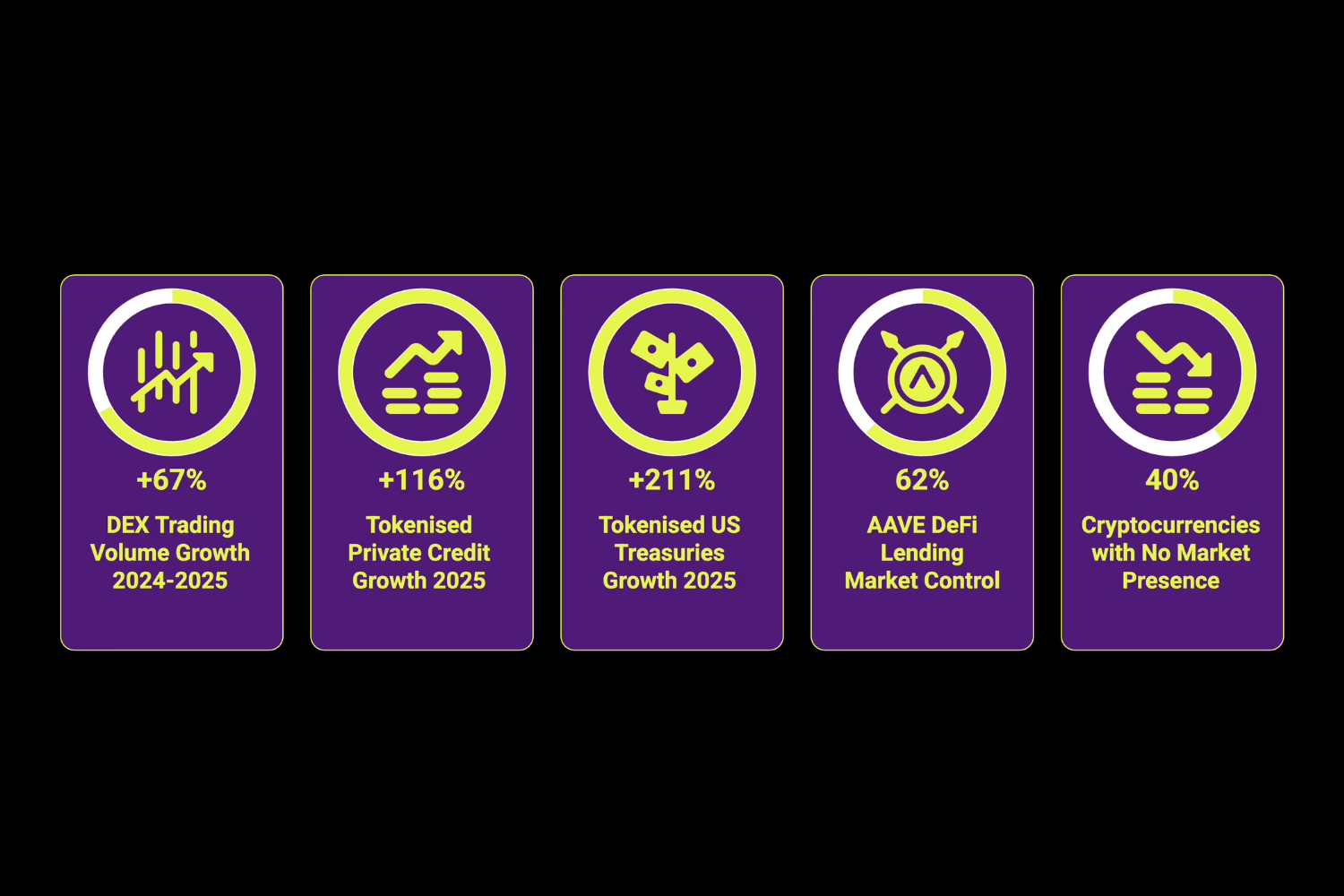
- DEX trading volume grew from $6.8 trillion in 2024 to $11.4 trillion in 2025, up 67%. On-chain trading is pulling volume away from centralised exchanges. Projects that market to DEX native communities are tapping into an audience growing faster than the CEX crowd.
- VCs invested $1.5 billion into stablecoin companies in 2025. Total stablecoin value sits around $300 billion, with volumes rivalling traditional payment rails. When that much capital is flowing into stablecoin infrastructure, the marketing opportunity around payments and remittances is about to explode.
- AAVE controls 62% of the DeFi lending market with $24.4 billion in TVL across 13 blockchains. Its financial footprint of $71.1 billion is comparable to that of the 37th-largest US bank. That is the kind of scale that institutional fintech marketing teams are starting to pay serious attention to.
- Tokenised private credit grew 116% year over year in 2025, while tokenised US Treasuries grew 211%. BlackRock’s BUIDL fund alone holds $2.9 billion in tokenised Treasuries. When BlackRock is this deep into tokenisation, the marketing narrative for RWA projects writes itself: institutional validation is already here.
- Of roughly 17,134 cryptocurrencies in existence, only about 10,385 are actively traded. That means roughly 40% of all tokens have no real market presence. Without strong crypto marketing strategies, your project is fighting for attention in a market where thousands of tokens have already failed to register.
Derivatives data reveals where the real volume lives and how professional and institutional traders are engaging with crypto.
- Crypto derivatives trading hit $85.7 to $86 trillion in 2025, with a daily average of around $265 billion. Derivatives are now the dominant trading venue in crypto, and that changes the marketing calculus for exchanges, trading platforms, and any product targeting active traders.
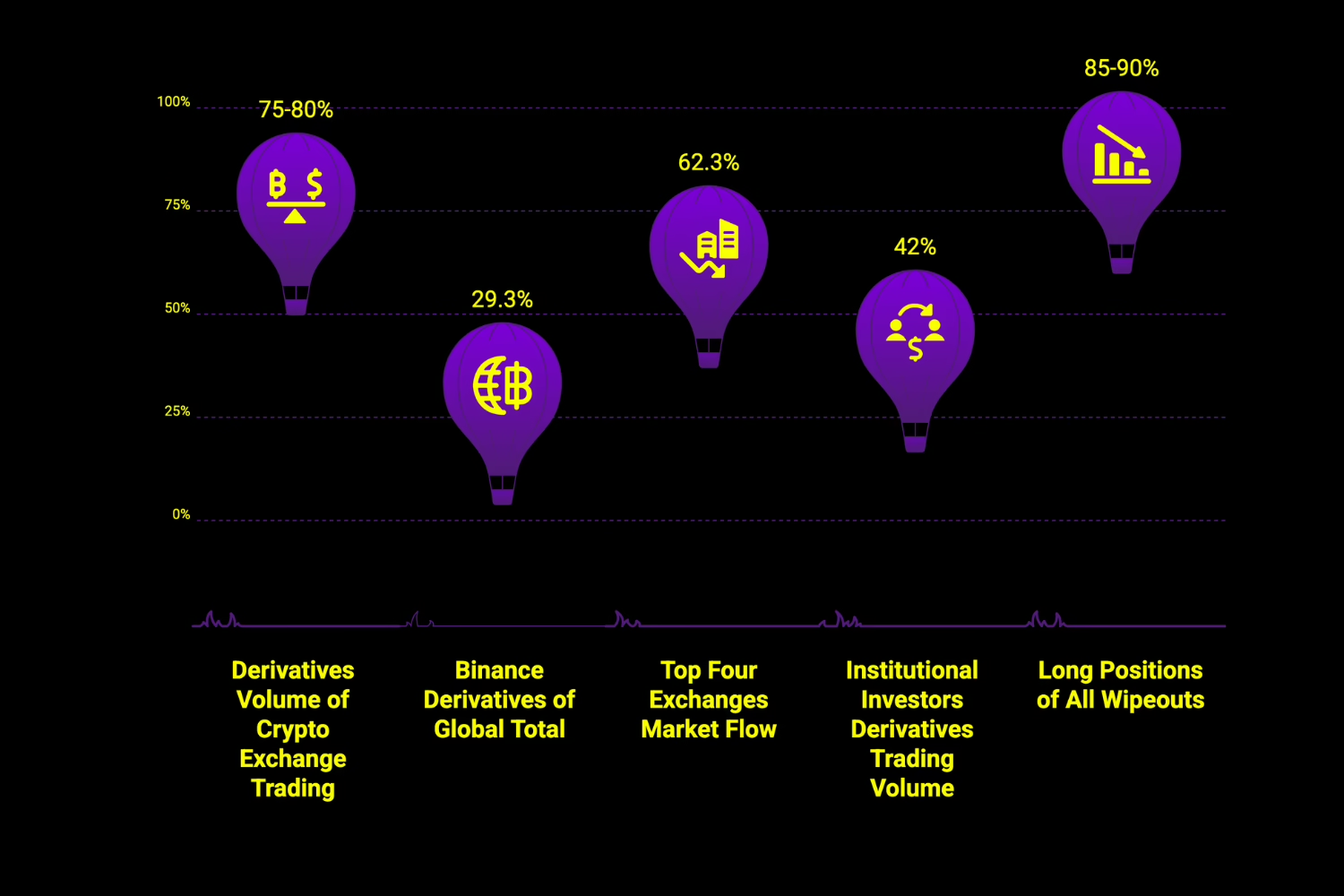
- Derivatives account for 75-80% of all crypto exchange trading volume, with perpetual swap contracts accounting for around 78% of that activity. Spot markets get the headlines, but perps drive the volume. Marketing teams that allocate budget proportionally to where actual trading happens should be spending 3 to 4 times more on derivatives-focused campaigns than spot.
- Binance alone processed $25.09 trillion in derivatives in 2025, which is 29.3% of the global total. The top four exchanges (Binance, OKX, Bybit, and Bitget) controlled 62.3% of total market flow. If you are running crypto affiliate programs or paid campaigns for a trading product, those four platforms are where the liquidity sits.
- Institutional investors now account for 42% of derivatives trading volume, up from a retail-dominated past. The shift from retail speculation to institutional hedging is a B2B marketing story that most crypto marketing teams still have not told properly.
- Total forced liquidations reached around $150 billion in 2025. A single two-day event in October, triggered by Trump’s tariff announcement, saw over $19 billion liquidated, with long positions accounting for 85 to 90% of all wipeouts. Those volatility events create massive spikes in search traffic for risk management tools and educational content. Smart marketing teams have campaigns pre-built and ready to deploy within hours of major liquidation events.