In 2026, a Web3 community is the primary engine of a project’s valuation and defensibility. It is a decentralized network of stakeholders—ranging from institutional token holders to active governance participants – who provide the social proof and liquidity necessary for a protocol to survive market volatility.
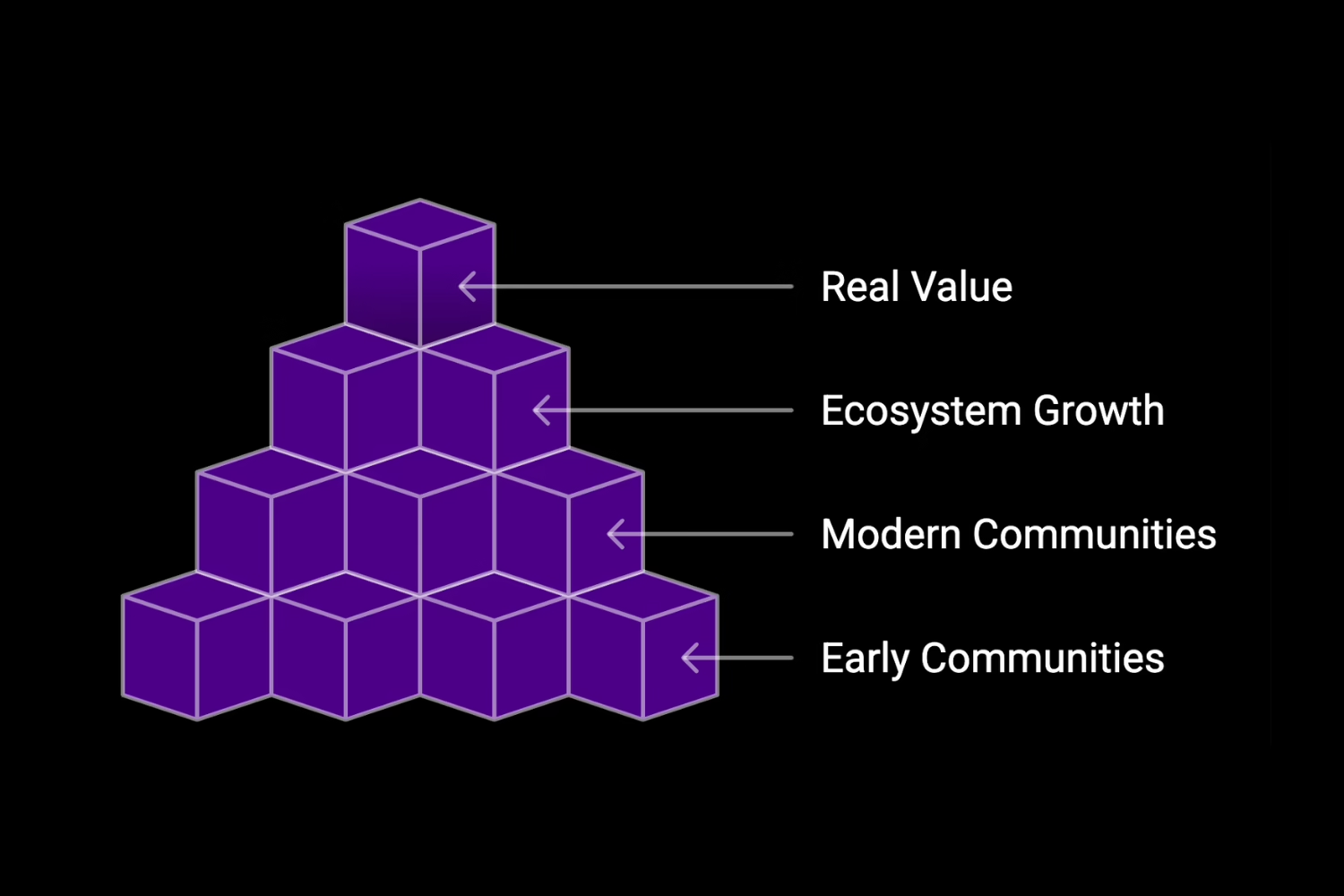
But the role of these communities has changed a lot over time. Back in 2020, most crypto communities were just Telegram groups. People asked questions, shared memes, and waited for price moves.
Today, things look very different. In 2026, communities play a much bigger role. They help guide decisions, give product feedback, share knowledge, and support the growth of the entire ecosystem.
This brings real value. A strong community builds trust and attracts investors and partners. It also gives you quick feedback, so you can improve faster. And most importantly, it creates a space where people feel involved and want to contribute.
All of this matters because it changes how you should think about building your community from the start.
Building a strong crypto community in 2026 isn’t as simple as spinning up a Telegram group and posting a few announcements. It’s a multi-step, strategic process that touches marketing, product, governance, and operations all at once. Here’s how our team recommends approaching it.
Identify Your Target Audience
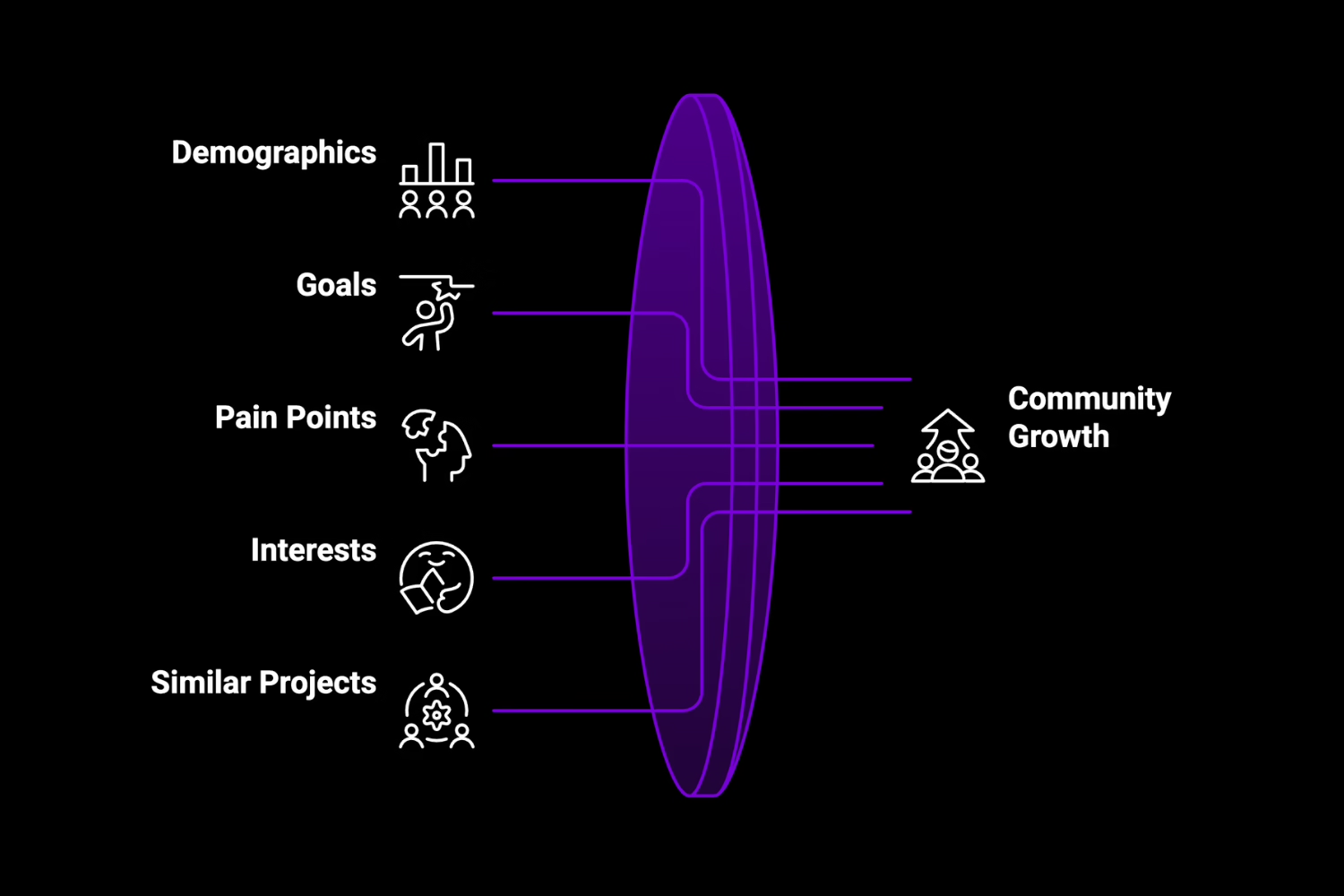
You can’t grow a community if you do not know who you are building it for. Start by mapping out the people most likely to care about your project. Look at their demographics, goals, pain points, and interests. Surveys and interviews with potential users give you a strong starting point.
Also, take a look at similar web3 projects. How big are their communities? What content gets the most engagement? This will help you set realistic goals and avoid copying strategies that may not fit your audience.
Create a Strong Project Narrative
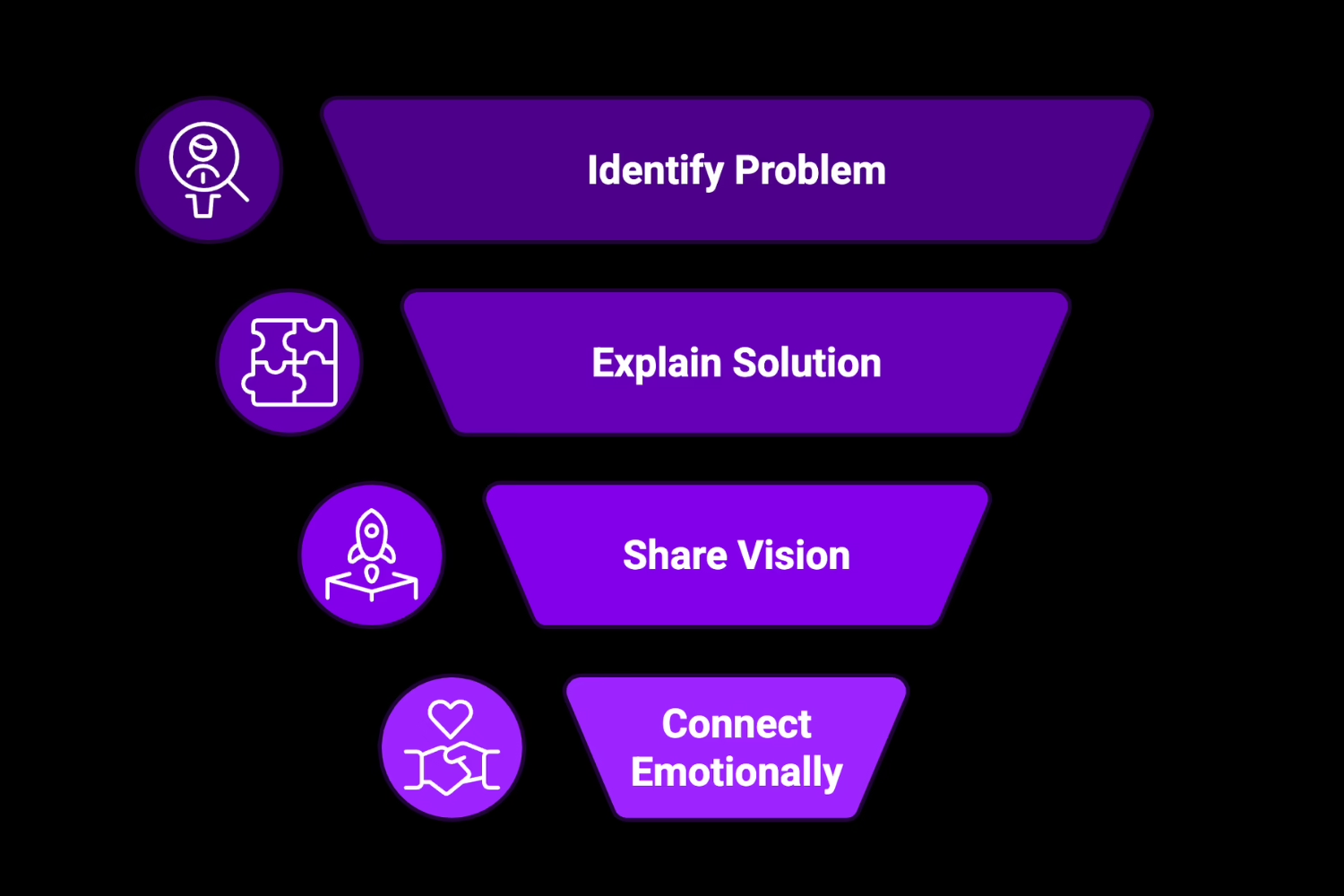
In crypto, attention is limited. Thousands of projects compete for the same eyes. Without a clear story, your project will be forgotten fast.
A strong narrative does four things. It shows the problem, explains your solution, shares a long-term vision, and connects with your audience emotionally. Think of Bitcoin. It was more than technology. It told a story about financial freedom through decentralization. That story is what helped it grow worldwide.
Every project should answer three key questions: Why does it exist? Who benefits from it? Why does it matter now? In 2026, hype alone will not fill your community with users. People want real value, whether that is access, transactions, or incentives. If your crypto marketing strategy is not working, start with your story.
Define Your Communication Channels and Strategy
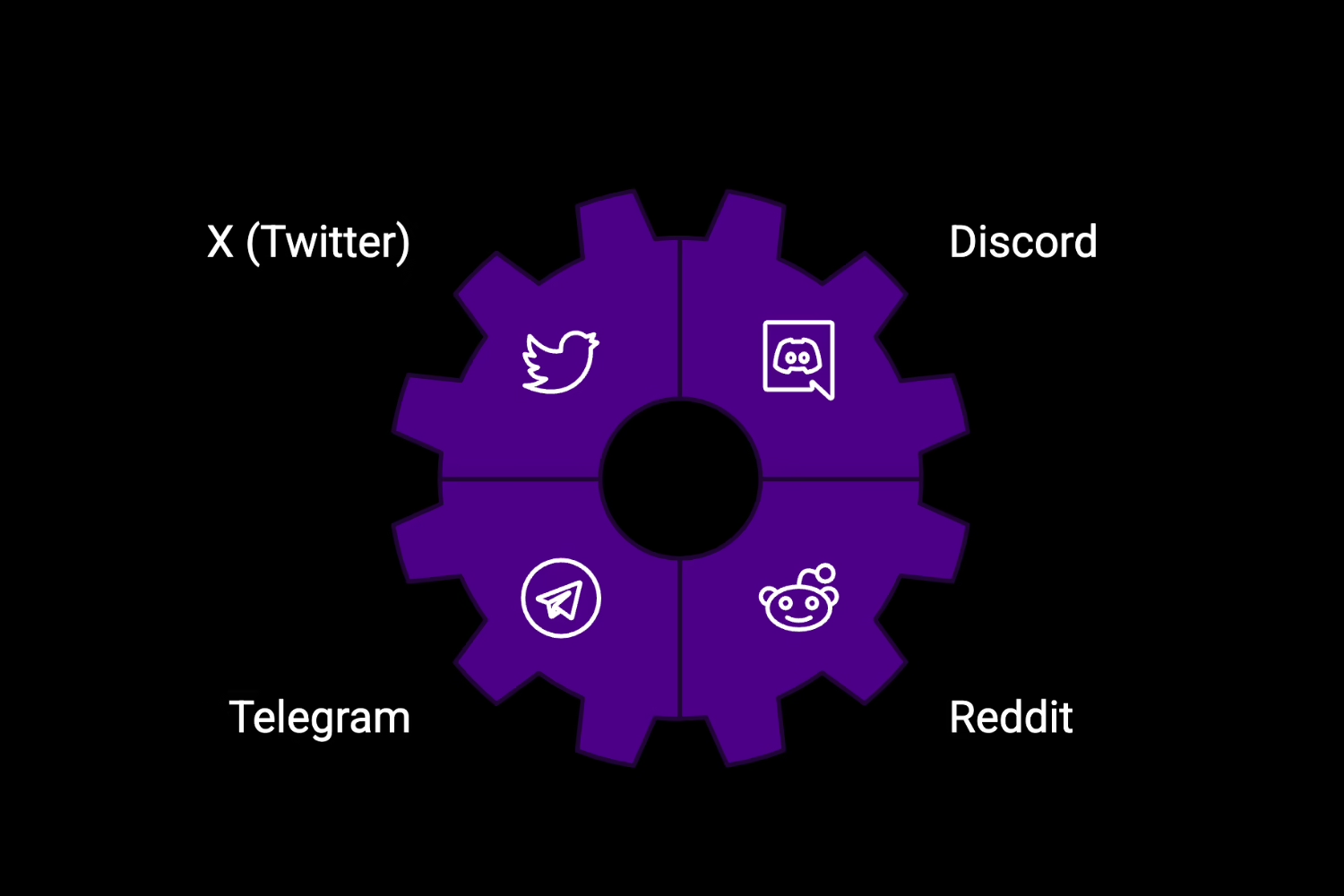
Not every platform works the same way. Posting the same announcement everywhere quickly makes your project look unplanned. Successful projects tailor their approach. You can run polls and AMAs on X, have structured governance discussions on Discord, share fast updates on Telegram, and post long-form breakdowns on Reddit.
Your choice of platform should also match your project. Discord works well for GameFi and DeFi communities. Telegram is better for fast-moving token launches and global mobile users. We will go through each platform in more detail later, so keep reading.
Be Actively Involved as a Founder or Team Member
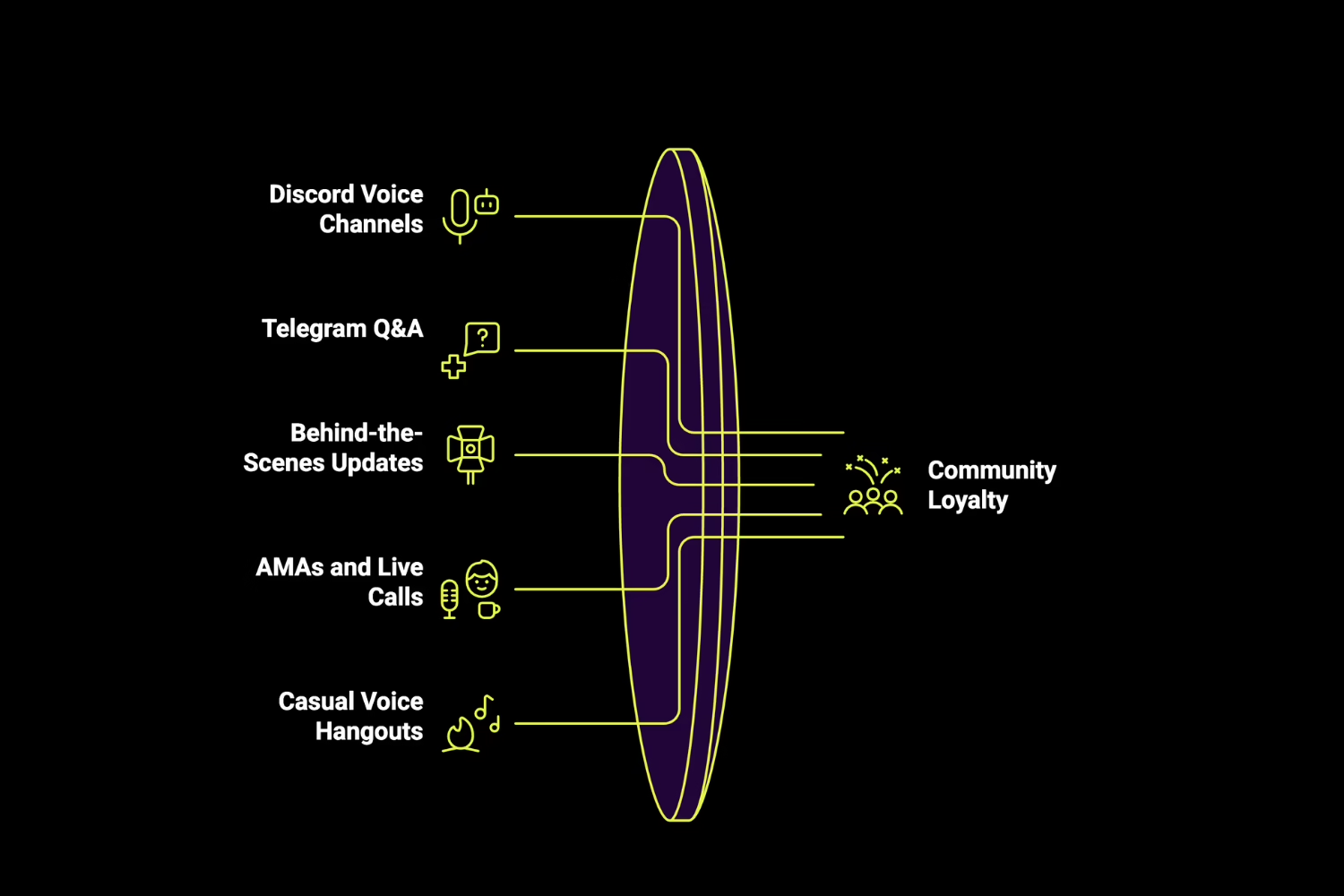
Nothing builds loyalty like real interaction from the people behind the project. Founders who join Discord voice channels, answer questions in Telegram, and share behind-the-scenes updates create trust that marketing alone cannot.
AMAs, live calls, and casual voice hangouts give your web3 community confidence that the team is real and committed. This is especially important in the early stages when members are deciding whether your project is worth their time.
Appoint Moderators and Admins From Your Community
Once your crypto community grows beyond a few hundred active members, the founding team cannot handle moderation alone. Identify your most active and trusted members and bring them on as moderators.
Community-appointed moderators already have credibility with other members. This makes them much more effective than external hires. Set clear rules and conflict resolution protocols from the start. Strong moderation that removes misinformation and clarifies confusion is one of the most important factors for a healthy community.
Collaborate With Other Web3 Communities
Working with other Web3 communities is one of the most powerful ways to grow your own. Co-host AMAs, run joint events, or launch co-marketing campaigns with projects that serve similar audiences. This puts your project in front of people who are already active and interested in crypto.
Sharing the results of these collaborations in your own channels boosts engagement and shows credibility to your current members. When influencer campaigns, community management, content marketing, and partnerships all work together, you create a flywheel effect. Each part makes the others stronger. We have seen this work repeatedly with our clients.
Encourage User-Generated Content
Another great method for growing your crypto community is to give your members reasons to create content around your project. Memes, tutorials, explainer threads, fan art, or infographics all spread naturally and make members feel like they are part of the community.
Reward this content with recognition, special roles, NFT badges, or early access to features. Gamification, like giving points for onboarding newcomers, answering questions, or creating educational posts, dramatically improves retention. It turns passive members into active contributors.
Encourage Participation with Tokenized Rewards
Tokenized rewards give Web3 communities an edge over Web2. Access tokens, staking incentives, and NFT badges for participation milestones provide real proof of contribution.
Be careful not to rely too much on incentives, as this can create short-term hype without long-term engagement. The key is to reward meaningful contributions, not just activity for the sake of activity. Loyalty programs work best when they focus on ownership, transparency, portability, and personalization. In 2026, members expect real benefits from participating, not just promises of future airdrops.
Create Content That Educates and Adds Value
The projects that succeed in 2026 are the ones that teach their communities, instead of expecting people to figure everything out alone. Blockchain, tokenomics, DAOs, and smart contracts are still confusing for many newcomers. That confusion is one of the biggest barriers to adoption.
Build a layered content library. Offer beginner tutorials for people just starting out, intermediate guides for users exploring features, and advanced resources for developers. Weekly newsletters, video walkthroughs, Twitter threads, and AMA recaps all work well.
Maintain Clear Communication During Market Downturns
Bear markets show which communities are real and which were just hype. The worst thing you can do during a downturn is go silent. Silence fuels fear faster than bad news itself.
Be open about challenges, delays, and market conditions. Address rumors directly. Platforms that communicate clearly during tough times build trust that money cannot buy. Members who stay through a bear market often become your most loyal advocates when things improve.
Integrate Community Tools
As your crypto community grows, you need bots, AI moderation tools, and analytics dashboards to keep things running smoothly. On Telegram, BotFather lets you create custom bots, and there are millions handling tasks from support to finance. On Discord, tools like MEE6, Dyno, and Carl-bot handle moderation and automation.
In 2026, AI can detect early signs of disengagement, flag spam, and identify malicious activity before it becomes a crisis. Analytics dashboards let you track engagement, measure sentiment, and spot your most valuable contributors.
Build Feedback Loops That Influence the Product
Your web3 community is not just a marketing channel. It is a partner in building your product. Surveys, governance votes, bug bounties, and testnet participation all create ways for members to share their insights.
Reward people who test features, review code, or propose changes. When community feedback actually shapes your product, users become stakeholders. They feel invested in your success, which strengthens retention and loyalty.
Measure Community Success the Right Way
Follower counts and member numbers are vanity metrics. They do not tell the full story. In 2026, what really matters are wallet activations, token purchase rates, active participation on Discord and Telegram, AMA attendance, governance vote turnout, and on-chain activity driven by your community.
Engagement rates of 10 to 20% are a good benchmark for active crypto communities. Track your growth with monthly dashboards and measure progress against project milestones, not just the calendar.
Recruit Brand Ambassadors
Brand ambassadors and KOLs help connect your project to your target audience at scale. In 2026, micro and nano KOLs with 10,000 to 100,000 followers often perform better than larger influencers. They bring tighter communities, higher engagement, and more authentic trust.
Micro-campaigns can generate hundreds of thousands of impressions with strong engagement, consistently outperforming standard metrics. Long-term relationships with tokenized compensation and aligned incentives always work better than one-off promotions.
Recruiting the right KOLs at scale takes an established network. theKOLLAB’s KOL marketing campaigns connect projects to over 250 top content creators on X and YouTube. Our model has raised over $2.5 million for presale-stage projects. This saves you months of vetting while giving instant access to proven, crypto-native voices.
Consider Professional Crypto Community Management
Running a crypto community in 2026 is a full-time job and then some. Multiple platforms, bot management, content creation, moderation, AMA scheduling, KOL coordination, and crisis response during market swings can easily overwhelm a small internal team.
Crypto markets never sleep, and neither do your members. Without professional moderation, scammers and FUD spreaders can damage trust within hours. Experienced agencies bring proven strategies to grow communities from zero to thousands of engaged members. They also train moderators across time zones and set up analytics to catch problems early.
theKOLLAB focuses on full community management on Telegram, Discord, and X. We also handle social media, crypto PR, and crypto SEO.
Our team provides 24/7 engagement, regular reports, and crisis support. For projects serious about community growth, theKOLLAB works as an extension of your founding team, not just another vendor.